A woman’s comprehensive nutritional requirements escalate exponentially during her childbearing years and throughout the various stages of pregnancy. Navigating the dense landscape of maternal health advice can be incredibly overwhelming for expectant mothers trying to balance fetal development with personal well-being. Amidst the continuous flow of dietary recommendations found across media platforms, red meat is frequently subjected to intense and often unjustified criticism. Many lifestyle guides routinely advocate for the absolute elimination of beef and lamb due to systemic anxieties regarding cardiovascular impacts or gestational weight gain.
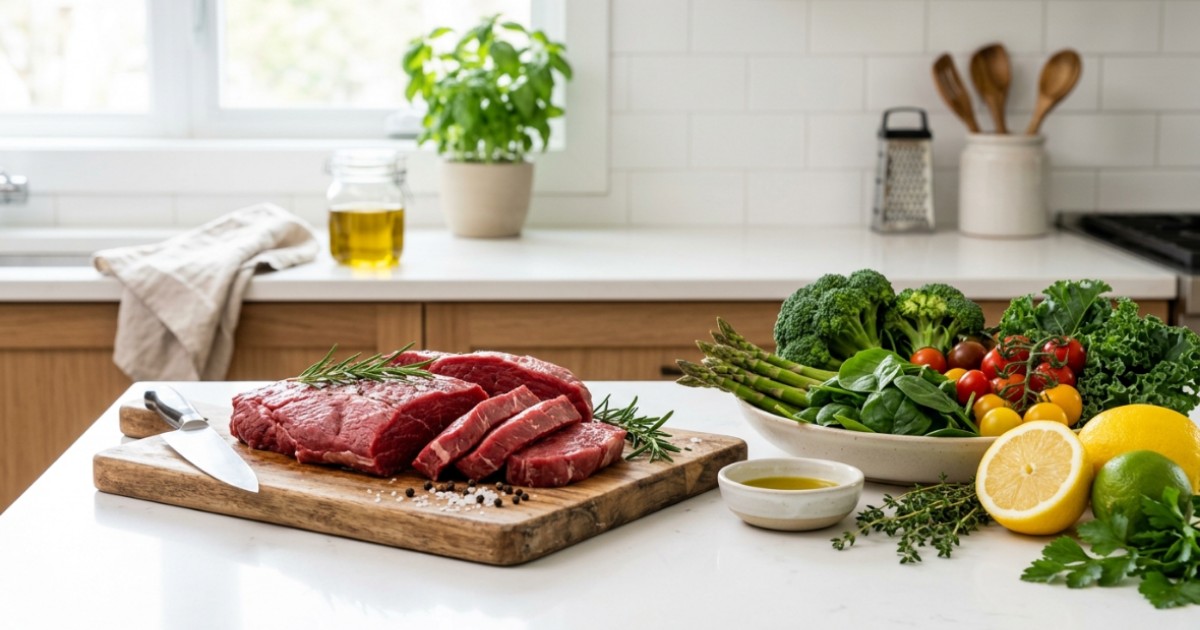
However, contemporary nutritional science and clinical evaluations are revealing a far more nuanced and supportive reality. Integrating high-quality, lean red meat into a daily meal plan represents one of the most efficient, bioavailable methods to supply a woman`s body with critical building blocks like heme iron, vitamin B12, and complete biological proteins.
The profound physiological and hormonal transformations that occur during gestation require a massive, sustained influx of structural energy. Many pregnant women note that incorporating moderate portions of red meat into their regular meals acts as a primary defense against debilitating exhaustion, helping them sustain stable vitality levels. This bodily shift is directly tied to the fact that during pregnancy, a woman`s total blood volume expands by approximately fifty percent to support the growing fetus and construct a functional placenta.
Generating this massive volume of new red blood cells places an unprecedented demand on internal mineral reserves. Relying exclusively on plant-based dietary inputs to satisfy this elevated requirement often falls short, making the inclusion of dense animal nutrients an essential strategy for preventing maternal exhaustion and supporting fetal survivability.
The Biological Efficiency of Heme Iron and Neural Function
Iron deficiency and chronic anemia represent a persistent global health crisis affecting millions of women throughout their reproductive lives, severely compromising their cognitive focus and physical strength. Statistical indicators published by the Australian Bureau of Statistics demonstrate that approximately forty percent of women aged fourteen to fifty fail to meet their basic daily iron requirements through standard food intake. Once pregnancy initiates, this baseline structural requirement effectively doubles.
When internal iron stores deplete, individuals encounter severe systemic symptoms including chronic muscle fatigue, persistent cognitive disruptions or brain fog, acute shortness of breath during minor exertion, severe headaches, and accelerated hair loss. These indicators are frequently misdiagnosed as standard maternal exhaustion, a delay that can negatively impact eventual birth weights and overall placental health.
The primary scientific advantage of red meat resides in its heavy concentration of heme iron, a specific chemical form found exclusively in animal tissue. In contrast, plant sources like raw spinach or legumes yield non-heme iron, which possesses a completely different molecular architecture that the human gastrointestinal tract struggles to process efficiently. Clinical data reveals that the human body absorbs up to thirty-five percent of dietary heme iron directly into the bloodstream, whereas the systemic absorption rate for non-heme plant iron drops below ten percent.
For instance, a single one-hundred-gram portion of cooked lean beef mince yields roughly 2.7 milligrams of high-quality iron, immediately covering twenty percent of the daily requirement for a non-pregnant woman while acting as a vital foundational input for expectant mothers.
Beyond its mineral density, red meat serves as an exceptional natural repository for vitamin B12, an essential nutrient required to maintain central nervous system integrity and optimize cognitive pathways. Because this specific vitamin is synthesized naturally only within animal organisms, individuals adhering to strict vegetarian or unmonitored vegan lifestyles face a substantial risk of developing severe neurological deficits over time. During pregnancy, the demand for B12 intensifies significantly as it works in tandem with folate to govern fetal DNA synthesis and early brain architecture development. Consuming a one-hundred-gram beef steak provides approximately 2.5 micrograms of vitamin B12, completely satisfying over one hundred percent of the standard adult daily intake requirement while supporting healthy red blood cell production.
Real Food Synergy Versus Synthetic Supplements and Quality Standards
While modern obstetricians frequently prescribe synthetic multivitamin sheets and iron pills to manage prenatal deficits, clinical nutritionists consistently emphasize obtaining core nutrients from whole food matrices. The human digestive tract is evolutionarily optimized to break down and assimilate natural food structures, processing them far more gently than isolated chemical compounds. High-dose synthetic iron supplements are notorious for triggering distressing gastrointestinal side effects, including severe constipation, abdominal cramping, and nausea—complications that do not manifest when consuming whole food inputs.
Additionally, red meat delivers an interconnected, synergistic matrix of secondary micronutrients, including highly bioavailable zinc, selenium, and choline. Choline plays an irreplaceable role in structuring early infant brain tissue, yet it remains completely missing from a vast majority of commercial prenatal supplement formulas.
Evaluating red meat requirements requires careful attention to sourcing, as the structural quality of the product directly impacts its therapeutic value. Expectant mothers should prioritize lean cuts obtained from grass-fed cattle. Research indicates that grass-fed beef contains significantly higher concentrations of anti-inflammatory omega-3 fatty acids and lower ratios of pro-inflammatory omega-6 lipids compared to grain-fed alternatives, actively reducing internal systemic stress.
Concurrently, securing verified hormone-free and antibiotic-free meat prevents external chemical disruptors from interfering with delicate maternal endocrine balances. Depending on personal convictions or religious alignments, selecting certified halal options from localized, ethically managed pasture networks ensures maximum safety and biochemical purity.
Adopting a balanced dietary framework does not mean consuming large portions of heavy steak every single day. Integrating a modest portion of lean red meat into your menu two to three times a week is entirely sufficient to induce measurable improvements in maternal energy metrics. The dense protein profile stabilizes blood sugar parameters and extends post-meal satiety, which effectively manages the sudden gestational appetite spikes common during the second and third trimesters.
Implementing any major modification to a prenatal diet should always be executed in coordination with a registered dietitian or a certified obstetrician. Finally, ensuring that all red meat items are thoroughly cooked to high internal temperatures remains a mandatory safety rule to neutralize potential foodborne pathogens, protecting both maternal health and fetal development across the gestational lifecycle.