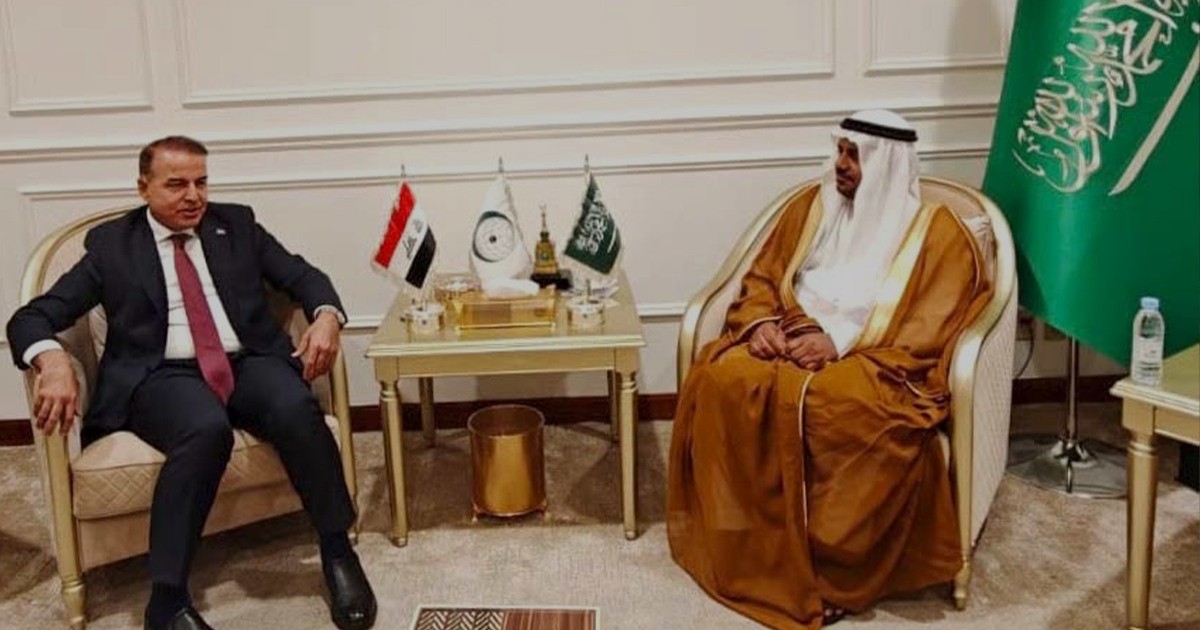
Saudi Arabia and Iraq held a high-level diplomatic meeting in Jeddah on Saturday to discuss ways to make the activities of the Organization of Islamic Cooperation more dynamic and effective, according to official reports from the Saudi Press Agency and the OIC Secretariat. The bilateral session took place at the headquarters of the Saudi permanent mission to the OIC in Jeddah. During the deliberations, both envoys focused on developing joint Islamic action, enhancing diplomatic coordination among member states, and strengthening the organization`s capacity to address contemporary global challenges facing the Muslim world.
Dr. Saleh bin Hamad Al-Suhaibani, Saudi Arabia`s permanent representative to the OIC, met with Ambassador Maulud Ahmed Al-Mashhadani, the newly appointed permanent representative of Iraq to the OIC and Consul General in Jeddah. The dialogue represented the first official engagement between the two diplomats since Ambassador Al-Mashhadani formally presented his credentials to the OIC Secretariat earlier this month. Held in a brotherly and cooperative atmosphere, the participants emphasized the immediate necessity of reinforcing bilateral consultation mechanisms within the overarching institutional framework of the OIC.
The diplomats exchanged views on expanding cooperation regarding issues of mutual interest to the Muslim world and increasing the operational efficiency of the organization`s various subsidiary bodies and specialized institutions. They noted that the current geopolitical realities require the OIC to enhance its responsiveness to economic and humanitarian challenges across member states. The discussions highlighted the importance of multilateral cooperation, expanding collaborative networks, and consolidating the OIC`s leadership position on the international stage to safeguard the collective interests of the Islamic Ummah.
The timing of the Jeddah meeting is particularly significant given that Iraq is currently chairing the fifty-second session of the OIC Council of Foreign Ministers. The close cooperation between Iraq, as the current chair, and Saudi Arabia, as the host nation of the OIC headquarters, is viewed by political analysts as a critical step toward implementing administrative and structural reforms within the pan-Islamic body. What remains unclear is how the shifting geopolitical alignments in the Middle East will affect the long-term execution of these proposed institutional reforms on the ground. Observers hope this renewed dynamism will enable the OIC to act as a unified voice for the Ummah in international forums, especially concerning ongoing humanitarian crises.
The discussions also touched upon modernizing the administrative workflows of the general secretariat and enhancing oversight mechanisms for various Islamic development funds. Both representatives agreed that the OIC must adapt its policies to prioritize modern education and technology-driven employment opportunities for the youth generation across member nations. The OIC General Secretariat welcomed the bilateral engagement, stating that close alignment between major member states accelerates the achievement of charter objectives. Both nations expressed optimism that continuous multilateral dialogues will solidify Islamic solidarity and foster sustainable development.