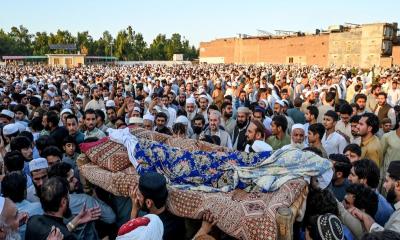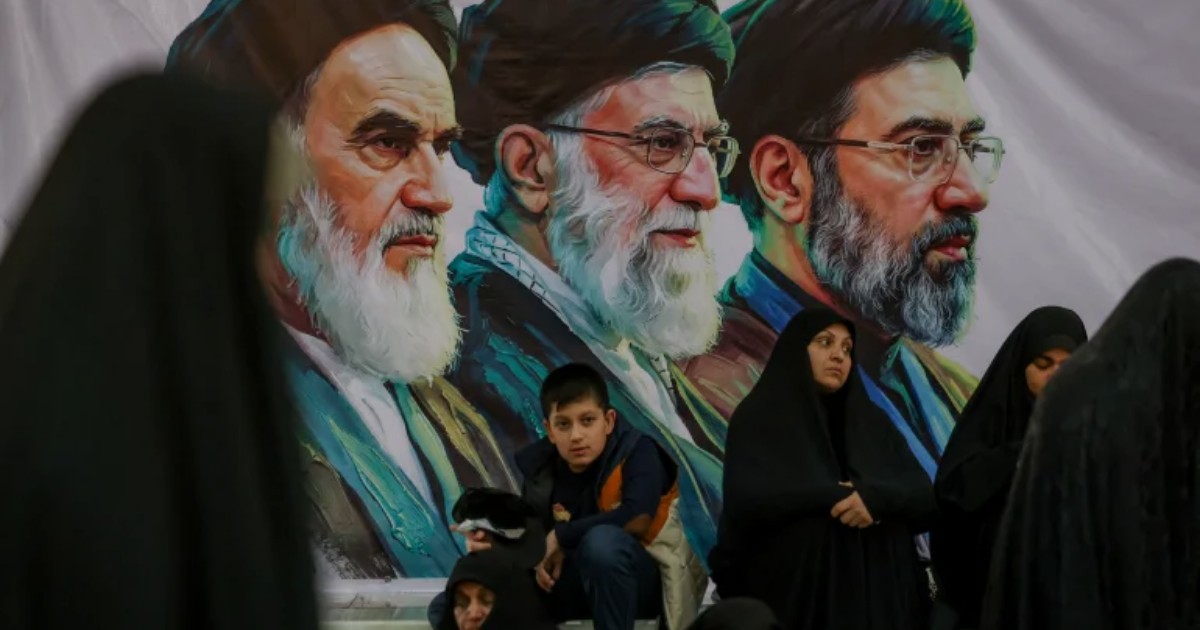
The national funeral of Iran`s late Supreme Leader Ali Khamenei will commence in Tehran on July 4, state media confirmed on Saturday, according to Al Jazeera and Reuters. The state burial, which was originally scheduled for March, had been indefinitely postponed due to the sudden escalation of the military conflict across the region. According to the revised official schedule, a three-day national funeral ceremony will be held in the capital city starting July 4, followed by a separate religious ceremony in the holy city of Qom on July 7. The late leader will be laid to rest in his historic hometown of Mashhad on July 9. The commencement date of the official national mourning period directly coincides with the United States Independence Day.
The eighty-six-year-old leader was killed in February during a coordinated United States and Israeli airstrike targeting his official administrative compound in Tehran. His sudden demise triggered a large-scale military confrontation in the Persian Gulf, forcing regional administrations to recalibrate their security postures. Khamenei had led the Islamic Republic since 1989, inheriting the position following the death of Ayatollah Ruhollah Khomeini, the principal ideological pioneer of the 1979 Islamic revolution. While Khomeini served as the foundational political architect who dismantled the Pahlavi monarchy, Khamenei spent his multi-decade tenure shaping the modern structural dimensions of the nation`s military and paramilitary apparatus.
Following his passing, his son Mojtaba Khamenei was positioned as his successor, though he has remained entirely out of public view since the outbreak of the war. What remains unclear is how this sensitive leadership transition will affect Iran`s domestic political stability and its long-term defensive strategies within the Middle East. However, earlier this month, United States Secretary of State Marco Rubio indicated that Mojtaba Khamenei appears to be adopting a far more active role behind the scenes as diplomatic negotiations progress following an April 8 military truce.
The interim administration in Tehran has reportedly engaged in back-channel diplomacy with western counterparts to secure a sustainable resolution to the conflict. The Islamic Revolutionary Guard Corps has placed major urban centers, particularly Tehran and Mashhad, under a maximum state of security alert ahead of the historic ceremonies. Millions of observers across the global Muslim Ummah are closely monitoring the developments, as the upcoming ceremonies are expected to gather high-profile diplomatic delegations from allied regional states. The outcome of the ongoing leadership transition will undoubtedly dictate the future trajectory of regional geopolitics and international maritime security.
Local correspondents report that a sense of structural normalcy has gradually returned to the streets of Tehran since the implementation of the April ceasefire. Despite the relative calm, the upcoming funeral is anticipated to draw unprecedented crowds of mourners, presenting a significant logistical challenge for municipal authorities. Diplomatic sources suggest that the state ceremonies will also serve as a platform for the new leadership to signal its foreign policy directions to international observers. The current leadership continues to reiterate its commitment to the foundational principles of state sovereignty established during the initial revolution.