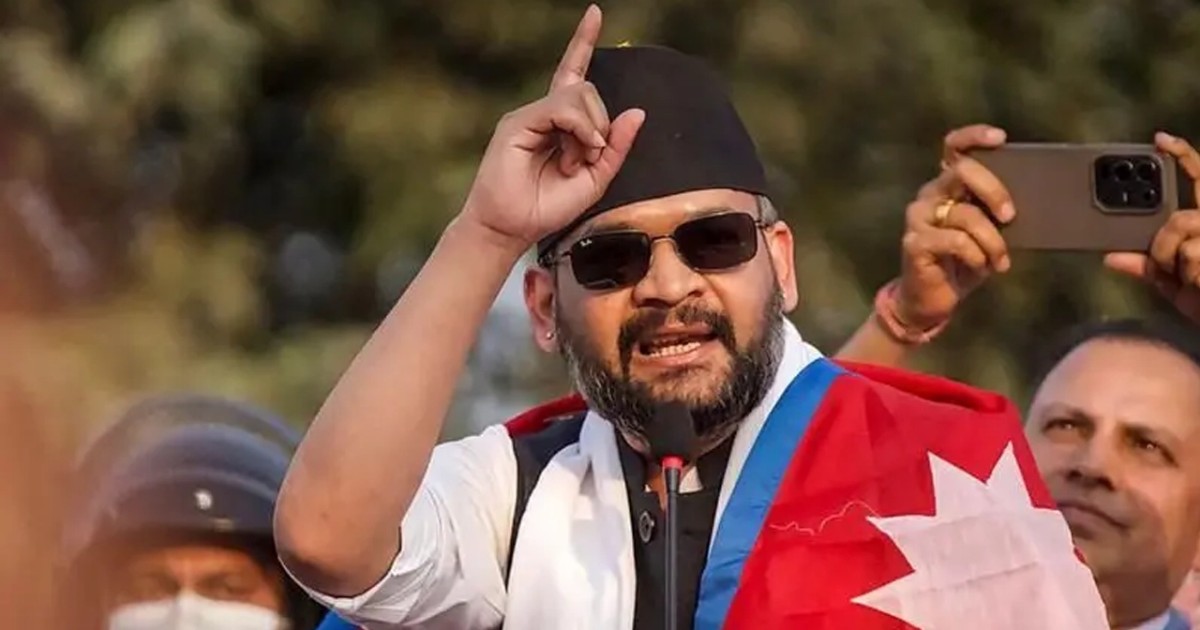
In a surprising diplomatic development, Nepal`s Prime Minister Balendra Shah has stated that territory occupation is reciprocal along the shared frontier, asserting that Nepal also holds portions of Indian land. The Prime Minister made the remarks during an official parliamentary session on Sunday, addressing long-standing territorial frictions between the two South Asian neighbors. He emphasized that both governments must actively engage in high-level bilateral talks to systematically resolve the historical boundary friction.The two democratic nations share an open border extending roughly 1,751 kilometers.
Responding directly to inquiries raised by Aren Rai, a lawmaker representing the Labor Culture Party, Prime Minister Shah explained that he became fully aware of the complex cross-occupations immediately after assuming the executive office. He reiterated that regional stability cannot be sustained through unilateral statements or continuous border standoffs. The administration expressed a proactive willingness to address sovereignty disputes over three highly strategic and geographically sensitive areas: Lipulekh, Limpiyadhura, and Kalapani.
Further questions were raised by Padma Aryal, the deputy parliamentary leader of the Communist Party of Nepal (UML), concerning the commercial trade corridor operating between India and China through the Lipulekh pass. Prime Minister Shah informed the parliament that Kathmandu has already dispatched a formal diplomatic proposal to New Delhi to initiate structured border negotiations. The Prime Minister confirmed that the Indian government has returned a positive and encouraging response to the diplomatic outreach.
According to the official communication, India has expressed an interest in establishing a specialized joint task force comprised of representatives from both administrations. This collaborative committee will include prominent historians, professional land surveyors, and regional geographers from both nations. The expert panel will be tasked with cross-referencing historical archives and cartographic data to determine accurate boundary lines. Shah noted that utilizing scientific data rather than political rhetoric remains the only viable mechanism to resolve the friction permanently.
The Prime Minister also revealed that Nepal has initiated backchannel diplomatic dialogues with both Beijing and London regarding the historical context of the border demarcation. The root of the modern dispute traces back to conflicting interpretations of the 1816 Treaty of Sugauli, signed between the Kingdom of Nepal and the British East India Company. Kathmandu maintains that since the friction originated during the colonial era, the United Kingdom holds a historical responsibility to provide archival clarity to assist the contemporary resolution process.