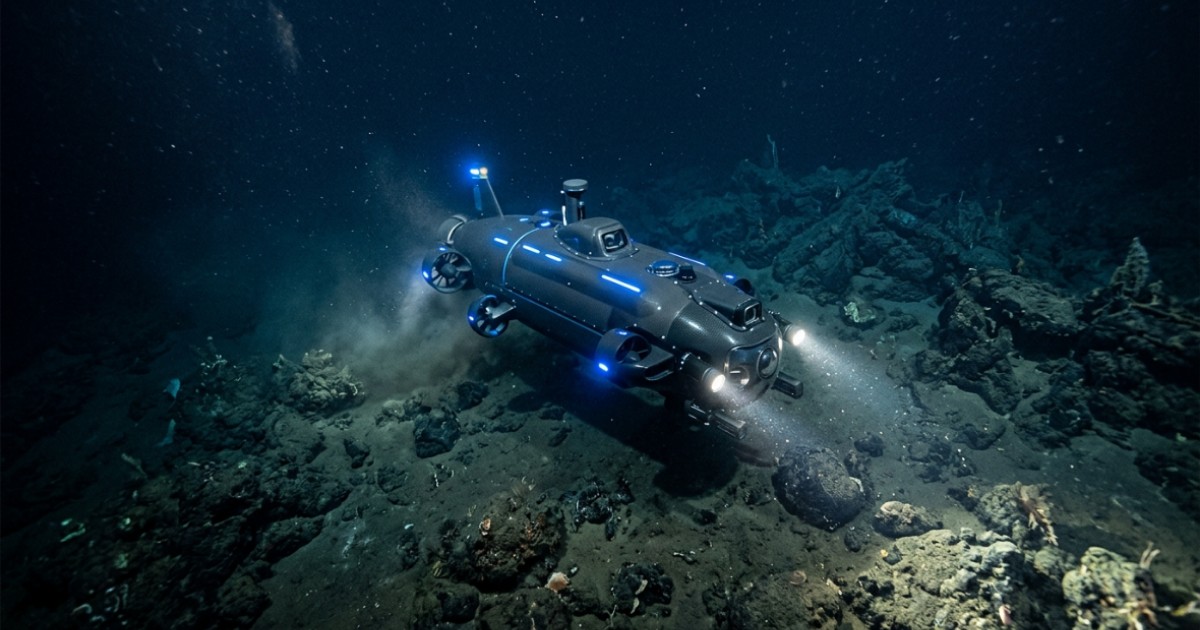
The United States, the United Kingdom, and Australia have announced a joint defense initiative to co-develop advanced autonomous underwater drones. Operating under the trilateral AUKUS security pact, the program aims to significantly enhance underwater reconnaissance and bolster maritime infrastructure defenses. Defense chiefs from the three allied nations unveiled the tactical project during a high-profile security summit held in Singapore on Saturday.The high-tech unmanned undersea vehicles are scheduled to be fully operational by next year.
While the comprehensive budget for the military initiative remains undisclosed, British Defense Secretary John Healey confirmed that London would contribute 150 million pounds, or roughly 201 million dollars, toward the project. The joint announcement arrives amid mounting scrutiny regarding the slow bureaucratic execution of the AUKUS security platform since its establishment. Addressing these institutional concerns, Healey explicitly acknowledged that the alliance had historically over-promised and under-delivered on tangible military systems. He emphasized that the current administrations are actively shifting toward a high-output production model to supply advanced defense technologies rapidly.
Established in 2021, the primary strategic objective of the AUKUS pact is to counter China`s expanding naval presence and assertive maneuvers across the Indo-Pacific and the South China Sea. The foundational treaty facilitates the collaborative construction of nuclear-powered submarines and the seamless sharing of top-tier military intelligence. This newly revealed drone initiative marks the first major project launched under AUKUS Pillar Two, which focuses on developing cutting-edge technologies. These advanced fields include long-range hypersonic missiles, undersea robotics, and artificial intelligence integration.
According to an official joint statement, the upcoming drone fleet will feature advanced payloads and highly sophisticated sensor configurations. The uncrewed systems are designed to safeguard subsea internet cables and energy pipelines, while also executing tactical strikes, long-range reconnaissance, and logistics support. British officials noted that the technology is critical for neutralizing emerging asymmetric threats across the Pacific, the Atlantic, and the High North. The announcement follows recent intelligence reports from London alleging clandestine Russian naval operations targeting European maritime infrastructure, claims that Moscow has repeatedly denied.
Security analysts indicate that Russian naval vessel deployments within UK sovereign waters have surged by 30 percent over the past several years. Concurrently, separate maritime investigations have linked Chinese commercial and military vessels to intentional subsea cable disruptions near Taiwan and within the Baltic Sea. Although the defense ministers declined to state whether the new drone framework explicitly targets Moscow or Beijing, they emphasized the necessity of securing vital maritime chokepoints.