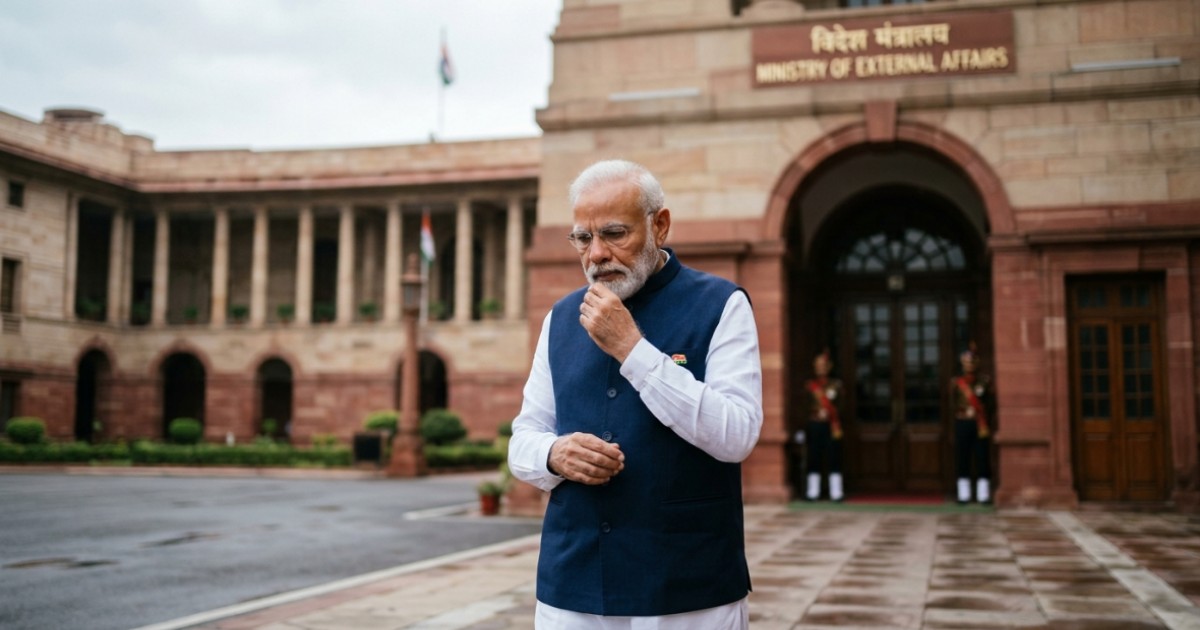
Indian Prime Minister Narendra Modi`s diplomatic efforts to systematically isolate Pakistan on the international stage have experienced a significant structural failure. A comprehensive geopolitical analysis published by the Qatar-based international news network Al Jazeera reveals that New Delhi’s multi-layered containment strategy has failed to achieve its primary objective. Initiated aggressively after Modi assumed office in 2014 and accelerated following the 2016 Uri military camp attack, this persistent campaign to categorize Islamabad as a diplomatic pariah has ultimately backfired. Instead of descending into complete global isolation, Pakistan has successfully navigated the shifting geopolitical currents of 2026 to secure vital new bilateral partnerships across multiple continents.
New Delhi’s initial containment strategy was anchored upon three distinct operational objectives. First, India sought to utilize multilateral platforms to brand Pakistan as a state sponsor of terrorism, effectively locking it out of global financial systems. Second, the policy aimed to diminish Islamabad`s strategic credibility among Western superpowers, and third, it attempted to establish absolute Indian hegemony over South Asian regional frameworks. To enforce this, India adopted an uncompromising posture within the United Nations, the G20, and the South Asian Association for Regional Cooperation (SAARC). This posture directly triggered the indefinite stagnation of SAARC after India boycotted the scheduled 2016 summit in Islamabad, neutralizing regional economic integration in favor of unilateral diplomatic pressure.
According to global foreign policy experts cited in the analysis, Modi`s diplomatic efforts were primarily neutralized by the rapid expansion of the strategic and economic alliance between Beijing and Islamabad. As a critical multi-billion-dollar corridor of China’s expansive Belt and Road Initiative, the China-Pakistan Economic Corridor (CPEC) injected massive capital into Pakistan`s infrastructure. CPEC modernized deep-sea ports, expanded energy grids, and stabilized transit networks, effectively insulating Islamabad from Western economic pressures. This profound economic integration granted Pakistan a reliable diplomatic shield at the United Nations Security Council, where Beijing`s veto power consistently neutralized hostile unilateral resolutions designed to enforce structural isolation.
Concurrently, the United States has found it logistically impossible to completely abandon its relationship with Pakistan due to lingering defense parameters. Washington`s regional security architecture remains tied to Islamabad regarding counter-terrorism intelligence sharing and stabilizing the highly complex political landscape in neighboring Afghanistan. The analysis observes that American foreign policy in the subcontinent has maintained a dual-track balancing system. While the United States has heavily elevated India as a primary strategic counterweight to China in the Indo-Pacific, it has simultaneously resisted complete compliance with New Delhi`s demands to sever vital military channels with Pakistan.
Leveraging these international dynamics, Pakistan actively expanded its diplomatic and labor-market relationships with major energy-producing nations in the Middle East. Strategic engagements with Saudi Arabia, the United Arab Emirates, and Qatar transitioned beyond formal statecraft into vital economic lifelines. Millions of Pakistani expatriate professionals and laborers working within the Gulf states generate a continuous influx of foreign remittances, which serves as the primary mechanism stabilizing the country`s central banking reserves. Al Jazeera concluded that these three distinct global networks—China, the United States, and the Gulf Arab states—collectively prevented Pakistan from becoming a completely isolated state, offering the country fresh diplomatic maneuvering space.
The ultimate failure of India`s containment strategy is also rooted in the structural transition of the global political architecture away from a unipolar model. The contemporary international landscape operates within a highly fluid, multipolar framework where state interactions are dictated by pragmatic transactional benefits rather than rigid ideological blocs. Consequently, enforcing the absolute isolation of a nuclear-armed nation occupying a critical geographical crossroads has proven to be an obsolete objective. While Pakistan continues to manage severe domestic inflation and internal political friction, its core geopolitical relevance ensures that Modi`s diplomatic efforts remain incapable of delivering the total international blockade New Delhi initially anticipated.