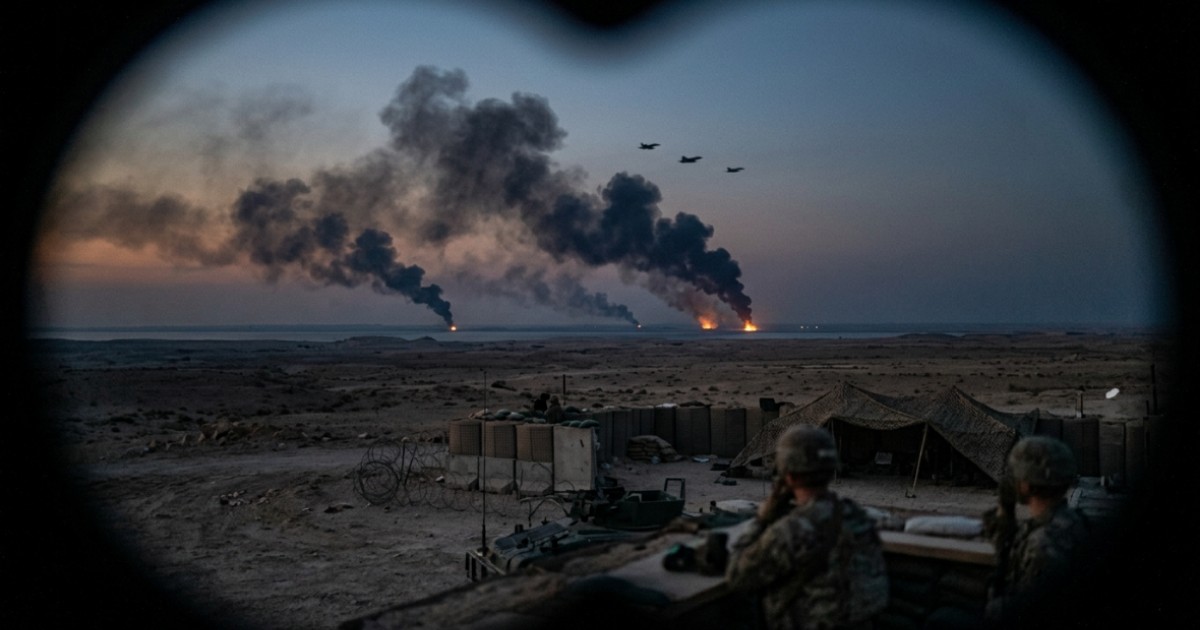
The United States and Iran traded fresh air strikes over the weekend, hitting military targets near the volatile Strait of Hormuz. The military escalation comes amid faltering diplomatic efforts, with both sides striking critical infrastructure despite ongoing backchannel negotiations. US Central Command confirmed targeted strikes against Iranian drone bases, while Tehran retaliated by targeting a military base housing American personnel in Kuwait.The strategic shipping lane remains effectively blocked.
According to a statement released by CENTCOM, US fighter aircraft conducted self-defense strikes on Iranian radar installations and drone command-and-control sites in Goruk and on Qeshm Island. The Pentagon stated that the action was a direct response to aggressive Iranian maneuvers, specifically the shootdown of an American MQ-1 Predator drone operating over international waters. The US strikes successfully neutralized an air defense system, a ground station, and two one-way attack drones that posed an immediate threat to merchant vessels in regional waters. No American casualties were reported.
In response, the Islamic Revolutionary Guard Corps announced that its aerospace forces launched a wave of drones and missiles. The IRGC targeted the Ali Al-Salem Air Base in Kuwait, asserting that the installation had been utilized by US forces to execute prior strikes against an Iranian communications infrastructure on Sirri Island. Iranian military officials warned that future American actions would face an entirely different scale of retaliation.
The General Staff of the Kuwaiti Army confirmed that its domestic air defense systems were actively engaged in intercepting hostile projectiles over the weekend. While loud explosions were reported near major areas, military officials did not specify the exact interception locations or detail civilian casualties. Kuwaiti installations have increasingly become an intersection point for regional crossfire over the last month.
The sudden military flare-up coincided with reports that President Donald Trump requested edits to an existing memorandum of understanding intended to establish a permanent truce. The proposed framework called for a 60-day cessation of hostilities, the immediate reopening of the Strait of Hormuz, and a renewed diplomatic pathway for Iran`s nuclear program. However, Tehran dismissed the sudden American revisions as political speculation, leaving the broader peace process stalled.
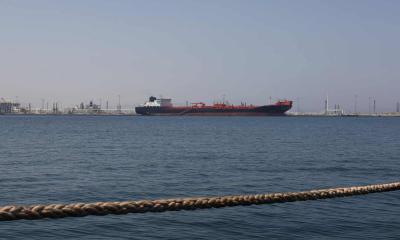
The ongoing maritime blockade continues to severely disrupt global energy distribution, as roughly 20 percent of global petroleum and liquefied natural gas shipments rely on the passage. The prolonged closure has maintained severe upward pressure on global crude prices, raising international concerns over a sustained macroeconomic shock.