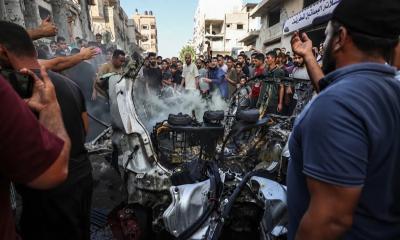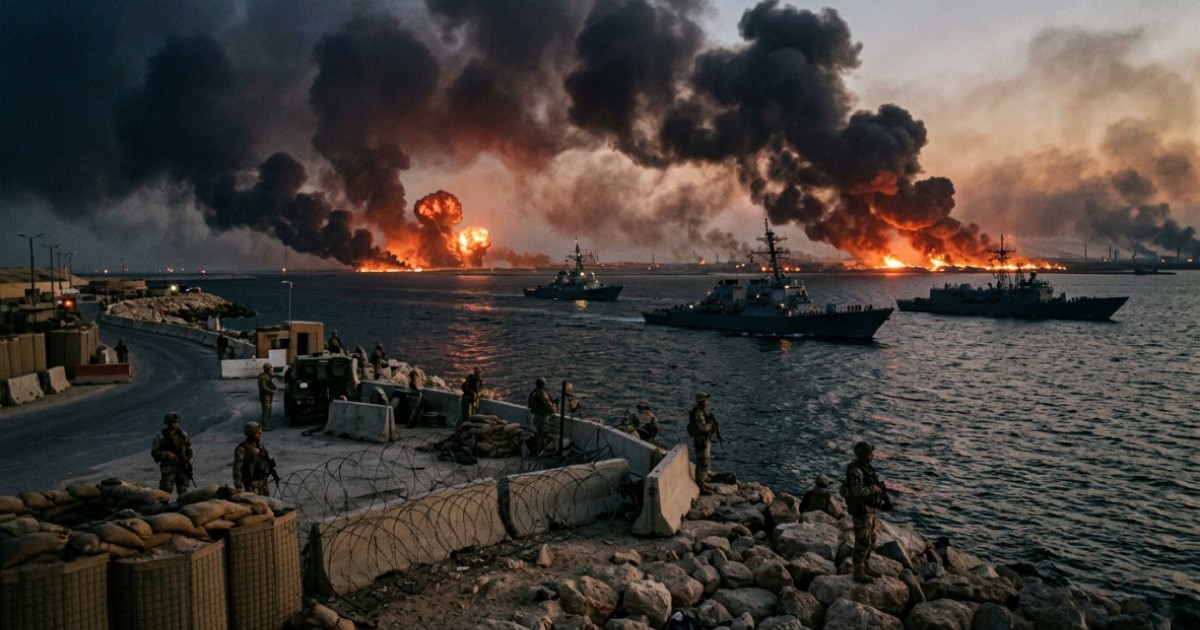
The war between the United States, Israel, and Iran entered its 96th day on Wednesday, with the conflict expanding significantly across the wider Gulf region as both sides reported fresh military engagements. The United States military confirmed it launched "self-defense" airstrikes on Iran`s strategic Qeshm Island. Meanwhile, Iranian state media reported a series of powerful explosions near the targeted zone.This dangerous escalation has rapidly spilled over into several neighboring countries.
Kuwait’s Ministry of Defense announced that its domestic air defense systems successfully intercepted multiple incoming drones and long-range missiles within its airspace. Concurrently, neighboring Bahrain activated its national emergency warning sirens to alert residents. The US Central Command (CENTCOM) confirmed it neutralized a large salvo of Iranian missiles and unmanned aerial vehicles, while Iran’s Islamic Revolutionary Guard Corps (IRGC) claimed it directly targeted American military installations across the region in response to the initial Western strikes.
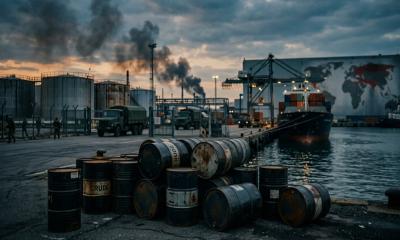
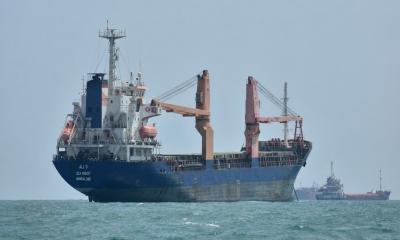
Citing official IRGC statements, the semi-official Tasnim news agency reported that the latest cycle of violence erupted when American forces targeted an Iranian commercial oil tanker near the critical Strait of Hormuz, causing severe damage to its engine room. In swift retaliation, the IRGC deployed naval guided missiles to strike a joint US-Israeli vessel operating nearby. Following that naval engagement, US warplanes obliterated an IRGC communications tower located just south of Qeshm Island. Iran responded by launching an array of ballistic missiles and suicide drones toward the headquarters of the US Fifth Fleet in Bahrain, a regional airbase, and American military helicopters stationed in neighboring territories, though these claims could not be independently verified by international monitors.
Amid the heavy kinetic exchanges, diplomatic efforts to broker a ceasefire remain fraught with deep distrust and strategic gridlock. US Secretary of State Marco Rubio informed a congressional hearing that Iran`s Supreme Leader, Mojtaba Khamenei, is alive and increasingly directing secret negotiations with Washington. The younger Khamenei had completely vanished from public view after being reportedly wounded in previous US-Israeli airstrikes that successfully eliminated his predecessor and father, Ayatollah Ali Khamenei.
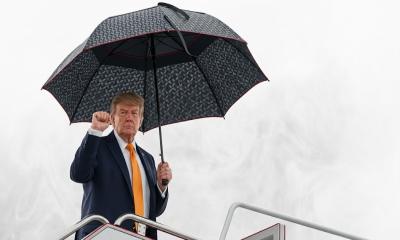
Rubio emphasized that the United States has not offered any economic sanctions relief to Tehran simply in exchange for reopening the blockaded Strait of Hormuz. Instead, the administration maintains that sanctions relief will only materialize if Iran completely surrenders its enriched uranium stockpiles and provides sweeping nuclear concessions.US President Donald Trump stated that sensitive diplomatic negotiations are ongoing, though he cautioned that the final trajectory remains highly unpredictable.
Meanwhile, chief Iranian negotiator Mohammad Bagher Ghalibaf warned that Tehran is prepared to completely abandon the diplomatic channel and pivot toward full-scale military confrontation if Israeli operations against Lebanon persist. Ghalibaf delivered the explicit warning during a high-level consultation with Lebanese Parliament Speaker Nabih Berri. Independent political analyst Alan Eyre observed that any viable diplomatic framework must offer symmetric, tangible benefits to both sovereign capitals. President Trump faces intense domestic legislative pressure to extract unprecedented nuclear rollbacks to justify a deal, while Iran desperately requires immediate economic relief through the unfreezing of its foreign banking assets. While the US-led naval blockade systematically cripples Iran`s domestic economy over the long term, Tehran`s closure of the Strait of Hormuz exerts immediate, severe leverage over global energy markets.