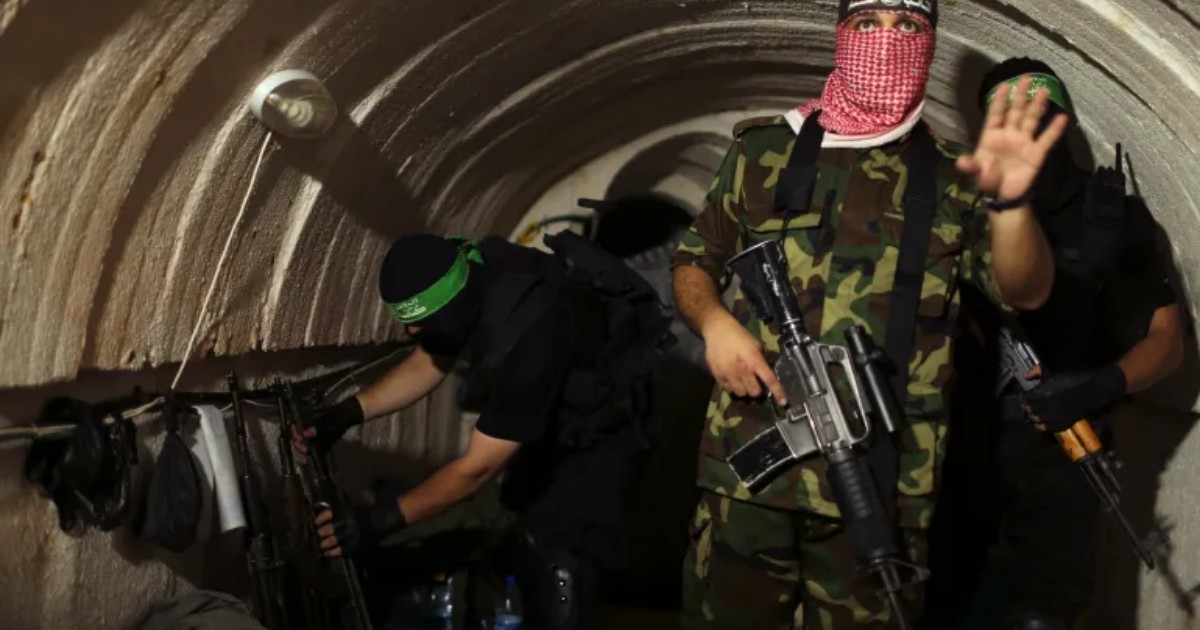
Ceasefire talks in Egypt between Palestinian factions and international mediators have faced a severe deadlock following demands by the U.S.-led "Board of Peace" for the handover of underground tunnel maps and privately held firearms in Gaza, Al Jazeera reported on Tuesday. Nickolay Mladenov, the high representative of the international body, issued a maximalist stipulation during the high-stakes Cairo negotiations that not a single bullet should remain in the enclave. This sweeping disarmament framework, backed by U.S. President Donald Trump`s administration, requires the complete dismantling of Hamas`s military capabilities and the surrender of personal protection weapons held by individual Palestinian families.
The core of the current diplomatic impasse revolves around Clause 8 of the United States-brokered October 2025 ceasefire plan, which governs post-war disarmament and the transfer of security functions to a unified Palestinian entity. Informed sources close to the negotiations revealed that Hamas had initially demonstrated high positivity toward this clause by engaging in discussions regarding its arsenal. For the first time, the movement agreed to surrender its extensive inventory and storage of heavy weapons, including long-range rockets, guided missiles, and Kornet anti-tank weapons. While this unprecedented concession raised hopes among regional mediators, the introduction of stricter terms has abruptly halted all diplomatic progress.
Palestinian officials have strongly rejected the new conditions, arguing that Mladenov`s extreme demands effectively transform him into a direct facilitator for Israeli strategic interests rather than an impartial mediator. They contend that the absolute surrender of tunnel maps and individual firearms would leave the local population entirely vulnerable, blocking any realistic path toward ending Israel`s genocidal military operations. Established under United Nations Security Council Resolution 2803 to oversee reconstruction and governance through the National Committee for the Administration of Gaza, the Board of Peace is now increasingly perceived by local factions as an instrument of political coercion.
What remains unclear is whether this severe breakdown will lead to the absolute collapse of the broader peace roadmap or if regional guarantors like Egypt, Qatar, and Turkiye can successfully pressure Washington to scale back its demands. Independent political analysts note that because massive humanitarian aid and infrastructural reconstruction are directly tied to the board`s security certifications, the international body is leveraging financial assistance as a political weapon. With over eighty percent of Gaza`s infrastructure destroyed and mutual trust between the warring parties sitting below zero, achieving a sustainable diplomatic breakthrough remains a profound challenge.