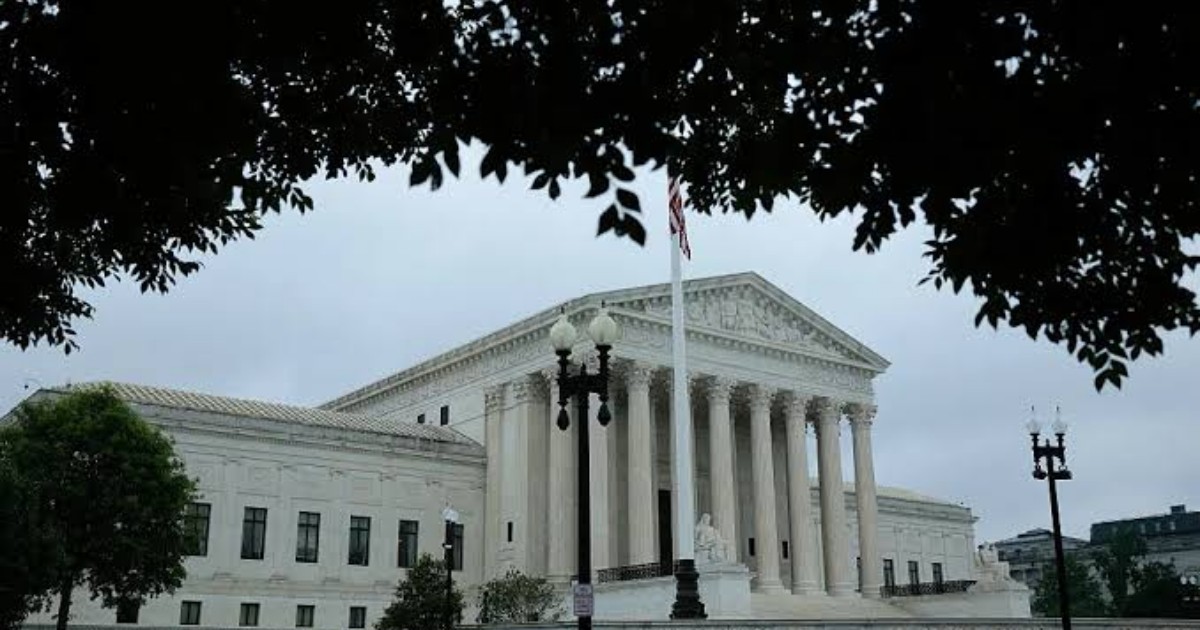
The United States Supreme Court ruled on Thursday that federal immigration authorities can legally turn away asylum seekers at the southern border before they set foot on US soil, Al Jazeera and NPR reported. This landmark ruling clears the way for the administration of President Donald Trump to revive a highly controversial immigration policy designed to block asylum seekers at the border. The decision split strictly along ideological lines, with the court`s six conservative justices forming the majority and the three liberal justices dissenting. This significant legal development effectively reverses a lower appellate court ruling that had previously deemed the border restriction practice unlawful.
Writing for the majority, conservative Justice Samuel Alito interpreted specific provisions of the Immigration and Nationality Act regarding how noncitizens qualify for humanitarian protection. He emphasized that individuals standing on the Mexican side of the boundary line have not legally arrived within the territory of the United States. To support this interpretation, Alito employed a simple domestic analogy from the bench. He noted that a guest does not arrive inside a house when he merely stands outside and knocks on the front door. Consequently, federal agents are under no statutory obligation to inspect or process applications for individuals who remain physically outside the international boundary line.
In contrast, Justice Sonia Sotomayor penned a biting 35-page dissent on behalf of the three liberal members of the high court. She argued passionately that the majority`s conclusion allows the executive branch to easily circumvent domestic and international laws meant to protect vulnerable refugees fleeing persecution. Sotomayor emphasized that the newly validated protocol could turn back individuals even if designated ports of entry have ample administrative capacity to process them safely. She warned that the judicial endorsement of this policy ignores the harsh realities of transnational violence, potentially sending desperate families back to certain death in their home countries.
Humanitarian rights organizations have strongly condemned the Supreme Court`s action, warning that it will trigger an immediate humanitarian crisis along the southern border. Advocates pointed out that physically blocking formal ports of entry will not stop migration but will instead incentivize desperate families to seek far more perilous routes through dangerous deserts and turbulent rivers. The policy, historically known as "metering," began informally during previous administrations but was heavily expanded during Trump`s first term, leading to massive makeshift encampments in dangerous Mexican border towns controlled by cartels.
What remains unclear is how the current administration will handle the logistical implementation of these border restrictions as thousands of migrants continue to cluster in precarious conditions on the Mexican side. Trump administration officials praised the ruling as a critical national security tool necessary to manage unprecedented surges and prevent overcrowding at entry facilities. Geopolitical and immigration experts suggest that this ruling will fundamentally reshape the American asylum infrastructure for decades to change, signaling a much broader clampdown on legal pathways for global refugees seeking refuge within the United States.