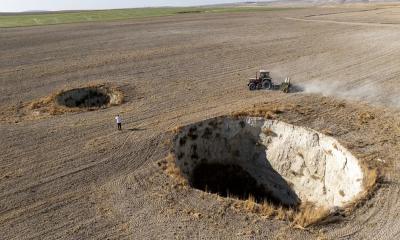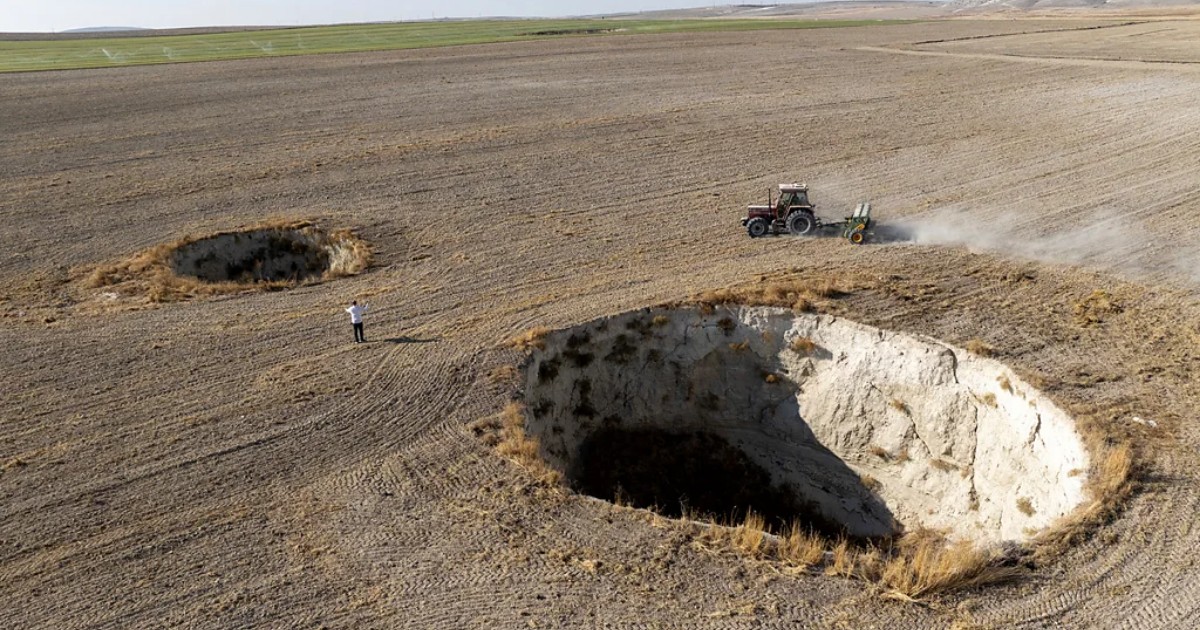
Severe droughts and unregulated agricultural practices are triggering the rapid proliferation of massive sinkholes across Turkey`s central province of Konya, international environmental agencies and local authorities confirmed, according to BBC News on Thursday. This intensifying natural disaster is posing a significant risk to the nation`s primary agricultural hub, frequently referred to as the breadbasket of Turkey. Local farmers explained that the prolonged absence of adequate rainfall has forced them to illegally tap into deep underground water resources to sustain their seasonal crops. This extensive and uncontrolled extraction has drastically weakened the subterranean geological layers, leading to sudden, catastrophic collapses of the topsoil. According to data released by the Disaster and Emergency Management Authority, over 684 massive abysses have been documented in the Konya basin, with the largest measuring 228 meters in diameter and 171 meters in depth.
A United Nations environmental report recently warned that Turkey is projected to become a water-poor country by 2030 due to ongoing climate shifts. This overarching water scarcity has combined with intensive regional farming methods to create a perfect ecological storm. Because Konya is situated within a unique closed geological basin, the rivers and underground streams feeding the area never reach the open sea, instead accumulating in localized lakes and marshes. This intricate groundwater system historically maintained the structural stability and moisture of the soft karst rock formations beneath the fields. However, a comprehensive study conducted by WWF Türkiye revealed that out of 100,000 active wells in the basin, approximately 66,000 were entirely illegal and operating without regulatory oversight.
What remains unclear is how effectively the local government will enforce strict regulations to shut down these unauthorized wells and transition farmers toward sustainable irrigation alternatives. The founder of the environmental organization Doga Dernegi stated that these subterranean rivers previously served as critical stabilization structures holding the terrain together. Due to flawed irrigation policies, the overall water capacity has plummeted, causing these underground rivers to virtually dry up and leave the landscape vulnerable. This persistent depletion means the natural support system has vanished, resulting in a continuous cycle of land collapses that pockmark the countryside in all directions.
Mehmet Akif Isikli, a veteran local farmer from the Karapinar region, stated that he has been cultivating alfalfa, corn, and wheat since 1995. Nearly 20 years ago, a massive crater suddenly opened directly in the middle of his lush family field, resembling an asteroid impact site. Recalling the terrifying incident, he noted that neighbors alerted him while he was working, and upon arrival, he witnessed the ground collapsing as water bubbled violently within the newly formed chasm. While siphoning groundwater offers a temporary solution for contemporary harvests, environmentalists warn that farmers are essentially borrowing from the future, endangering long-term national food security and leaving the land severely scarred.