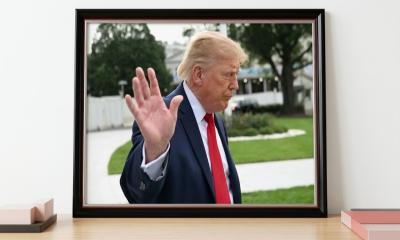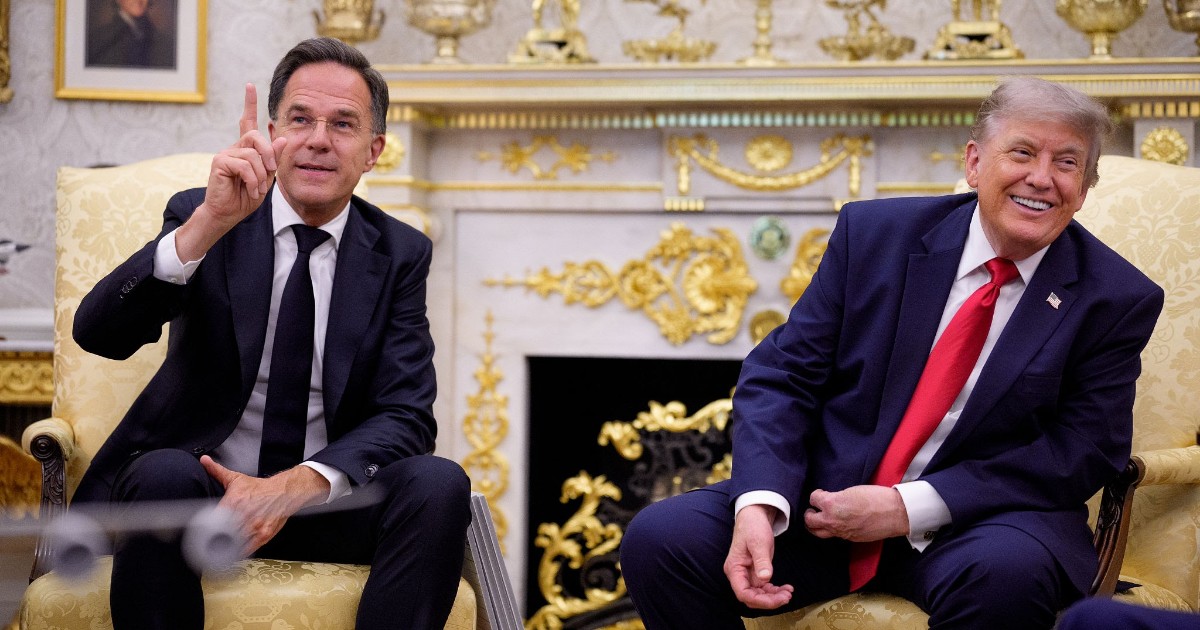
The Trump administration has expressed deep dissatisfaction with its European allies over their lack of active participation in the joint US-Israeli military campaign against Iran, according to reports from Reuters and Al Jazeera following a high-level meeting at the White House on Wednesday. During an intense closed-door session in the Oval Office with NATO Secretary General Mark Rutte, US President Donald Trump reiterated his grievances regarding the transatlantic partnership. The American leader explicitly criticized powerful allies including Italy, the United Kingdom, Germany, and France for falling short of expectations during the conflict. Trump singled out Spain, labeling their political opposition a total disaster for the traditional alliance. US Secretary of State Marco Rubio echoed these complaints from Manama, Bahrain, stating that Europe`s refusal to grant access to critical military bases fundamentally undermines the long-standing defense pact.
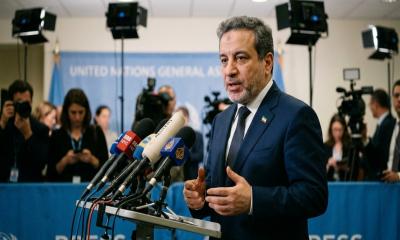
Following these public admissions, the Iranian government seized on the diplomatic friction to accuse NATO of active complicity in the devastating military offensive led by Washington and Tel Aviv. Speaking at a press conference in Tehran, Iranian Ministry of Foreign Affairs spokesperson Esmaeil Baghaei asserted that the logistical and structural support provided by European infrastructure makes the alliance directly accountable for international law violations. According to official data provided by Iranian authorities, the intense military operations have resulted in the deaths of more than 3,400 individuals across the country. The airstrikes have also caused catastrophic damage to civilian infrastructure, public schools, hospitals, and national oil installations, triggering widespread domestic outrage against Western interference.
In an effort to de-escalate the rising tensions and secure Washington`s continued commitment to the alliance, NATO chief Mark Rutte presented multiple charts demonstrating Europe`s logistical contributions. During the White House meeting, Rutte pushed back against the sweeping criticisms by highlighting that between 4,000 and 5,000 US military aircraft successfully operated from European airbases during the six-week campaign. He maintained that instances of complete non-cooperation were isolated cases rather than a systematic breakdown of the treaty. Rutte noted that Italy authorized approximately 500 technical and logistical flights, while Romania severely restricted its commercial aviation sector to accommodate US military tankers at its primary airport. The NATO secretary general also stated that multiple European states are currently deploying naval assets near the strategic Strait of Hormuz to assist American forces with critical demining operations.
European capitals defended their decision to avoid active combat roles by pointing out the complete absence of a clear international legal framework for the conflict. While Washington and Israel justified the pre-emptive strikes by claiming Tehran was on the verge of developing nuclear weapons, this rationale was openly contested by the United States` own intelligence agencies. European leaders expressed deep concern over the massive civilian casualties and the repeated destruction of humanitarian facilities, stating that the conflict did not represent a European war. Countries such as France and Spain firmly denied the Pentagon`s requests to use their sovereign airspace and military bases for offensive sorties against Middle Eastern targets, advocating instead for immediate diplomatic dialogue.
What remains unclear is how this growing ideological rift will impact the upcoming NATO leadership summit scheduled to take place next month in Ankara, Turkey. Trump has intensified his threats to draw down American troop deployments across the European continent unless member states rapidly accelerate their defense spending to hit five percent of their gross domestic product by 2035. While British Prime Minister Keir Starmer refused to join the active coalition, London permitted the deployment of defensive maneuvers from its strategic base in Diego Garcia. Meanwhile, Madrid has maintained its fierce condemnation of the military campaign, calling for an unconditional ceasefire and labeling the ongoing operations a genocide. International geopolitical observers are closely monitoring these deep fractures as the balance of global security undergoes a major transformation.