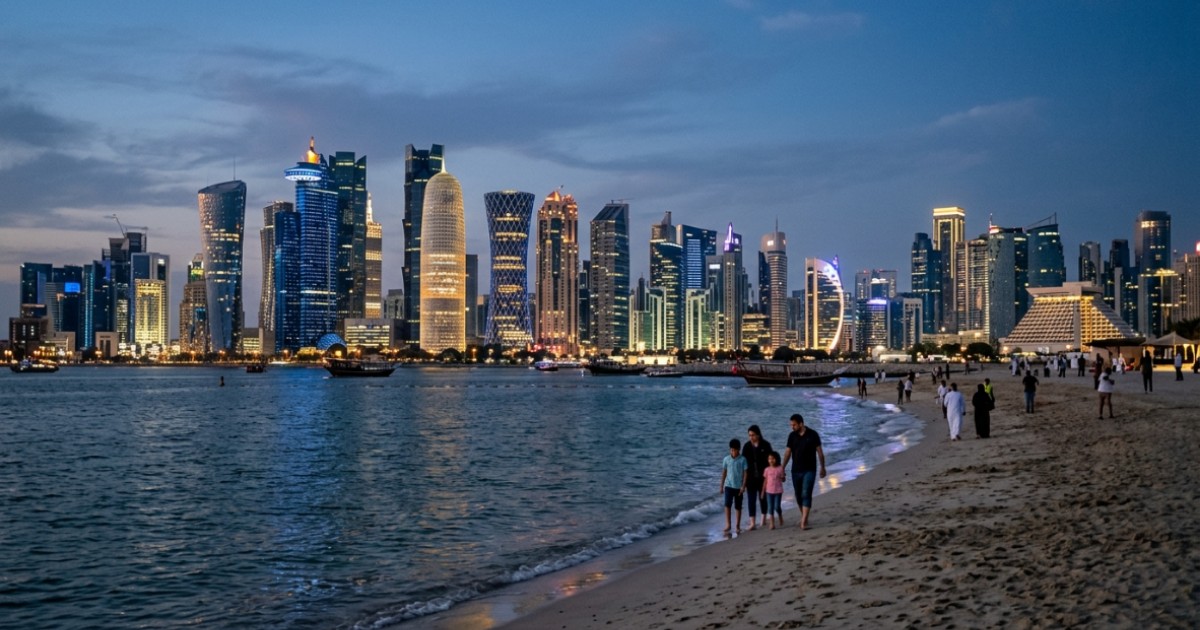
US special envoy Steve Witkoff and President Donald Trump`s son-in-law Jared Kushner arrived in the Qatari capital of Doha on Tuesday to hold talks with mediators regarding the implementation of a ceasefire agreement with Iran, Al Jazeera confirmed citing Qatar`s Ministry of Foreign Affairs. Qatari officials stated that the high-level American delegation will meet exclusively with local mediators to discuss the ongoing diplomatic framework and has no direct meetings scheduled with Iranian diplomats during their visit. Ministry spokesperson Majed bin Mohammed al-Ansari emphasized at a weekly press briefing that Washington and Tehran are not currently engaging in any direct, high-level discussions, meaning mediators will serve entirely as go-betweens. The arrival of the envoys follows recent claims by President Donald Trump that Iran had requested a diplomatic meeting, an assertion that Tehran swiftly and publicly denied.
Iran has dispatched its own expert technical delegation to Doha this week, focusing tightly on the logistical implementation of the 14-point memorandum of understanding signed between the two nations on June 17. A primary objective for the Iranian delegation is securing the release of 6 billion dollars in frozen Iranian assets out of a total 12 billion dollars currently held under international sanctions. Al-Ansari clarified that the release and transfer of these frozen funds remain strictly contingent upon the substantive progress of broader negotiations between Washington and Tehran. Iranian Foreign Ministry spokesperson Esmaeil Baghaei reiterated on Monday that Tehran maintains absolutely no plans for any direct talks with the American side at any level, emphasizing that all current technical interactions remain confined to discussions with Qatari authorities.
These critical indirect negotiations unfold amid extreme military volatility in the Persian Gulf, following a weekend of heavy crossfire linked to volatile international efforts to reopen the strategic Strait of Hormuz. The vital maritime chokepoint, through which nearly one-fifth of the world`s total oil and liquefied natural gas transits, has been severely disrupted by Iranian attacks and persistent operational threats since the outbreak of war on February 28, triggering a severe global energy crisis. Tensions escalated drastically last week when an Iranian projectile struck a commercial cargo vessel, prompting retaliatory American airstrikes and triggering mutual accusations of ceasefire violations. The regional security situation worsened further over the weekend following separate drone and missile strikes targeting Bahrain and Kuwait, underscoring how rapidly the regional conflict could spiral out of control.
Diplomatic sources indicate that deep structural disagreements persist regarding the detailed execution of several critical articles within the temporary memorandum of understanding. In particular, Article 1, which details the terms of a comprehensive ceasefire in southern Lebanon, and Article 5, which regulates maritime traffic management through the Strait of Hormuz, remain major sticking points for both sides. Tehran interprets the interim deal as granting it the sovereign authority to organize and oversee vessel movements within the strait during the 60-day negotiation window, while Washington insists that Iran must completely step aside to ensure unimpeded international transit. What remains unclear is whether Qatari and Omani mediators can effectively bridge these deep strategic divisions without direct communication between the primary adversaries, or if the interim framework will ultimately collapse under the weight of regional hostilities.
The ultimate survival of the peace process relies heavily on whether both nations demonstrate a rigorous adherence to their respective commitments under the signed text. Baghaei stated that the United States must strictly fulfill its diplomatic obligations and use its leverage to force the Israeli regime to implement its own side of the accord. Concurrently, White House Press Secretary Karoline Leavitt told Fox News that the United States is fully maintaining its end of the ceasefire agreement, noting that President Trump remains deeply committed to seeing the diplomatic process yield a lasting regional peace. International leaders are watching the developments in Doha closely, hoping to prevent a catastrophic recurrence of historical diplomatic failures that previously triggered the 12-day war in 2025 and the subsequent expanded regional conflict.