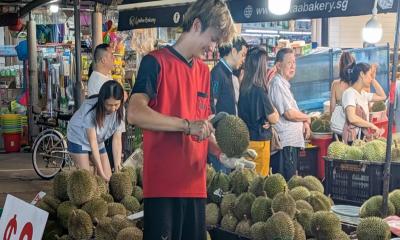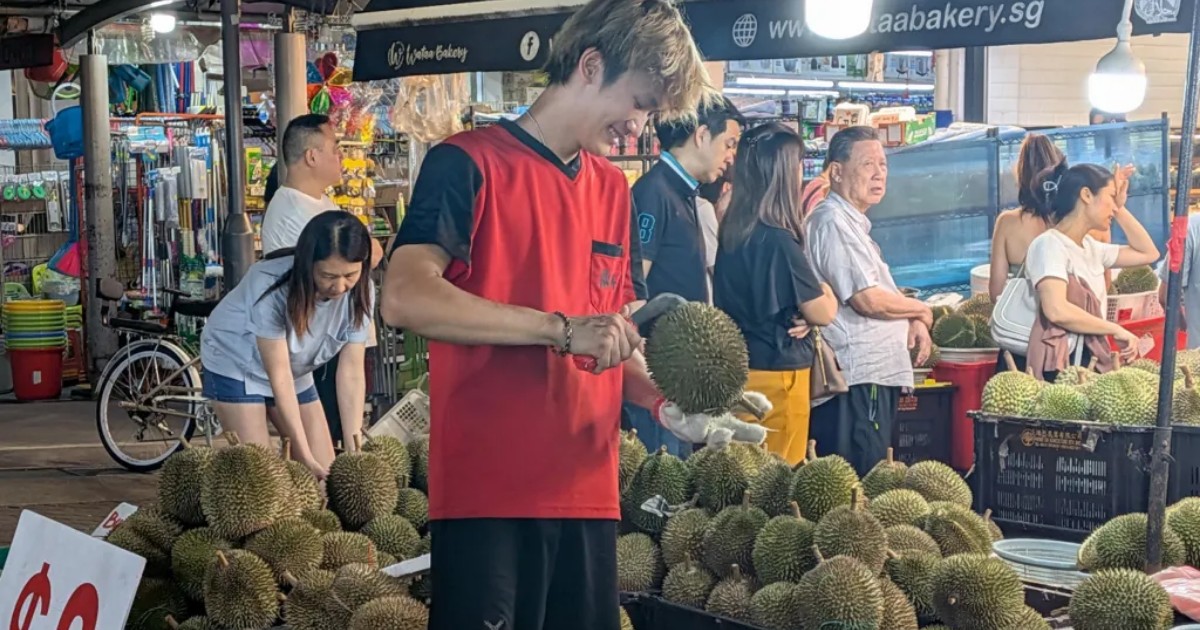
A massive market oversupply has triggered a dramatic plunge in durian prices across Singapore and Malaysia, forcing vendors to slash rates or distribute the luxury fruit for free, BBC News and AFP reported on Tuesday. An unusually abundant harvesting season in 2026 has crashed the market value of the prickly, pungent delicacy that remains highly celebrated throughout large sectors of Asia. In the busy township of Tampines in eastern Singapore, hundreds of customers have been forming daily queues outside the Durian Ninja fruit stall, where the owner is giving away about 600 kilograms of free fruit every single day. While local consumers are enthusiastically celebrating the rare opportunity to purchase high-quality yields at half price, independent Malaysian farmers are expressing deep frustration over failing profit margins.
Agricultural analysts have described this sudden domestic market inundation as a durian tsunami, which developed following a decade-long expansion boom across the Malaysian agricultural sector. Seeking to cash in on exponentially growing demand from consumer markets in China, thousands of local landowners systematically cut down traditional rubber trees and oil palms to plant premium durian orchards instead. A vast percentage of those newly established plantations reached biological maturity at the exact same time this season, resulting in an unprecedented national yield that immediately overwhelmed regional distribution networks. The structural glut has depressed overall market prices, impacting international trade operations and transforming a historically expensive commodity into a low-cost item.
Lu Yuee Thing, who operates several independent durian farms near the agricultural hub of Raub, confirmed that wholesale values have collapsed compared to historical standards. Last December, he sold premium Musang King varieties to regional retailers for an average of 13.50 ringgit, or roughly 3.30 US dollars, per kilogram, but current market rates have slashed his returns by more than 50 percent. Another prominent farmer in Johor state, Han Sing Keng, stated that intense local competition forced him to lower his retail prices for top-tier Musang King by nearly a third, bringing rates down to 50 ringgit per kilogram. Farmers noted that many young trees are producing inconsistent yields that fail to meet strict international export standards, leaving growers with no alternative but to dump the unexportable stock into the immediate local market.
The economic crisis for specialized independent growers has been further exacerbated by unseasonal weather patterns, including heavy rainfall and intense winds that severely disrupted the natural pollination process. Edwyn Chiang Kyn Hoe, the secretary-general of the Malaysia International Durian Industry Development Association, explained that regional microclimates meant weather damage was unevenly distributed across the country, though the overall macro-level oversupply remains undeniable. To prevent a widespread economic collapse among rural communities, Malaysia`s Federal Agricultural Marketing Authority has launched emergency market interventions by purchasing massive quantities of durian directly from smallholders at a guaranteed base price. The agency`s deputy director, Faisal Iswardi Ismail, told AFP news agency that authorities hope retail values will stabilize within the coming weeks as government stabilization initiatives take full effect. What remains unclear is the total volume of state funds required to sustain this emergency purchase program and whether alternative global markets can absorb future yields.