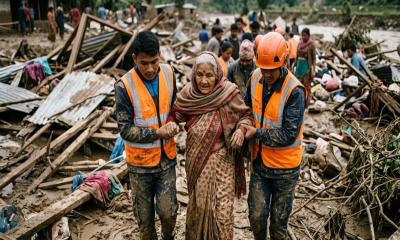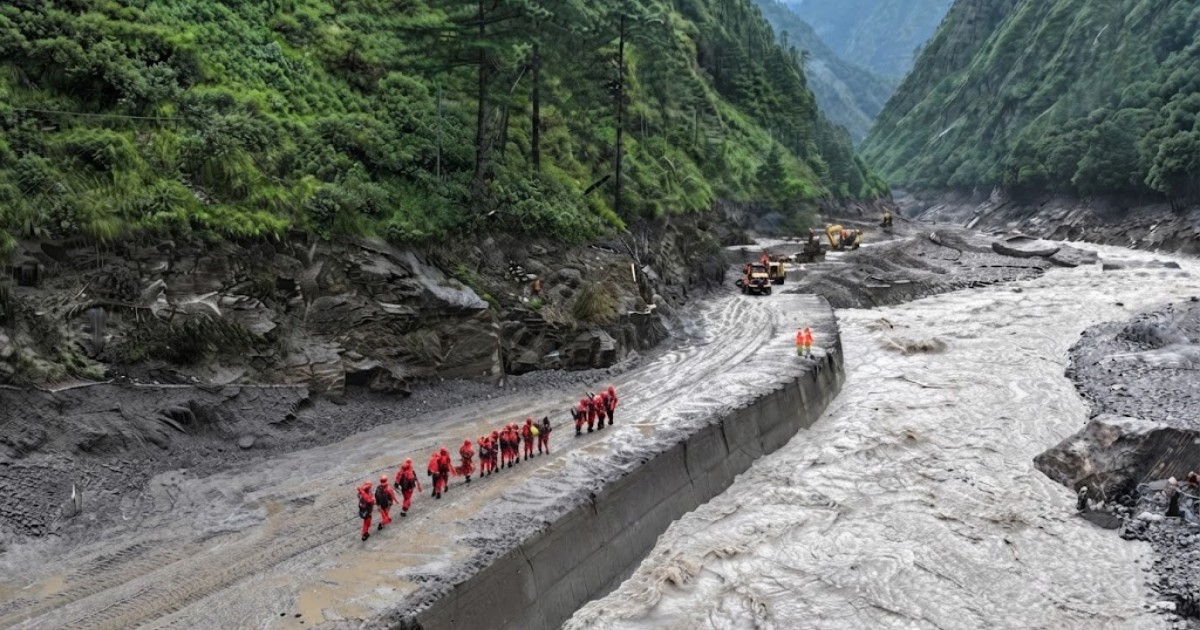
China is strictly censoring information and footage regarding the catastrophic flash floods along the Nepal-Tibet border to preserve political stability, BBC News reported on Saturday. While global news outlets broadcast dramatic footage of torrents sweeping through Gyirong Port and destroying communities last Wednesday, China`s state-run media and heavily censored internet have largely omitted the devastating scenes. The stark contrast highlights Beijing`s intense sensitivity surrounding the Himalayan region and its strict control over public narratives during times of crisis.
Chinese state broadcaster has aired only a single still-frame and brief segments of rescue operations, while opening main news bulletins with political literature by President Xi Jinping. President Xi chaired an emergency meeting to coordinate rescue efforts, and Premier Li Qiang made a rare high-level visit to inspect debris removal in the disaster zone. According to Reuters, the ruling Communist Party is deeply concerned that natural disasters in sensitive regions like Tibet could trigger public discontent or fuel criticism over official preparedness and flood prevention measures.
Emergency response teams remain deployed in the rugged terrain, but independent communication with survivors and local residents is nearly impossible. Foreign journalists face severe travel restrictions and tight deadlines when covering events in Tibet, forcing reliance on state media broadcasts. The International Campaign for Tibet reported that authorities are rapidly scrubbing social media posts and videos uploaded by witnesses, urging Beijing to release complete and verifiable information regarding casualties and structural damage.
Grassroots party members have received strict directives from local offices to maintain social order, provide emotional guidance, and suppress any potential public unrest. Those who ensure public confidence are rewarded, while individuals failing to maintain order face strict accountability. This heavy-handed approach leaves displaced families and Tibetans abroad struggling to confirm the safety and whereabouts of their relatives amid the ongoing disaster recovery.
Environmental analysts and climate experts warn that melting glaciers and extreme weather events across the Himalayan range will continue to pose severe risks to vulnerable mountain communities. However, the systematic suppression of on-the-ground details and restrictive information policies obscure the true humanitarian scope of the disaster. International human rights organizations and global observers continue to call for transparency, emphasizing that public safety, open communication, and humanitarian aid must take precedence over political censorship in times of tragedy. As rescue operations press forward, the lack of verifiable accounts ensures that the full picture of the catastrophe remains heavily shielded behind the digital firewall.