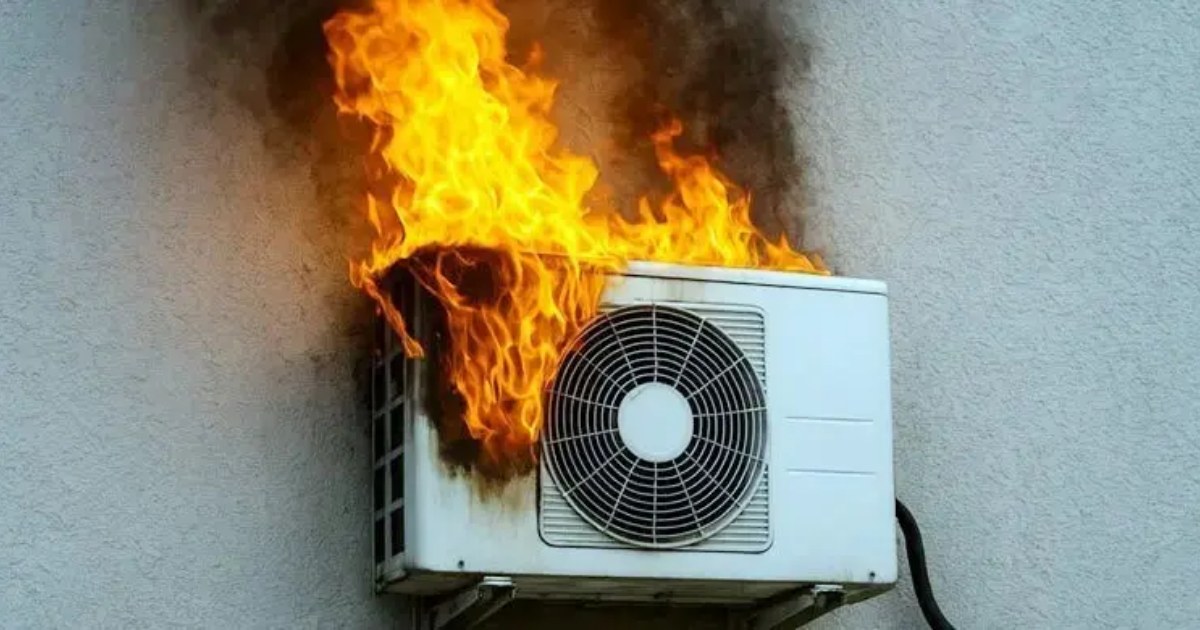
As global temperatures continue to climb and intense summer heatwaves become the norm, reliance on air conditioning units has transitioned from a luxury to an absolute necessity. However, this critical appliance can quickly turn into a fatal hazard if neglected. Without proper care, routine maintenance, and basic safety awareness, an ordinary household AC unit can cause catastrophic electrical fires or even violent compressor explosions. Heating, ventilation, and air conditioning experts, alongside fire safety departments, warn that running a flawed system continuously under extreme heat is a recipe for disaster. Fortunately, adhering to a few fundamental maintenance rules can eliminate these risks almost entirely.
The most common catalyst for an AC-related disaster is simple neglect, leading to severe mechanical strain. According to safety guidelines published by organizations like Consumer Reports, a major spike in appliance fires occurs during peak summer months. The root cause is frequently traced back to the accumulation of thick dust, dirt, and pet dander inside the unit. When an air conditioner is not cleaned regularly, its internal air filters become entirely clogged. This blockage severely restricts natural airflow, forcing the compressor to work exponentially harder to cool the room to the set temperature. This continuous, aggressive strain causes the internal components to overheat, laying the groundwork for a potential combustion. Experts strongly advise users to manually remove and clean the air filters every two to four weeks to maintain safe and healthy airflow.
Electrical inconsistencies represent another grave threat to the safety of cooling systems. The National Fire Protection Association regularly highlights that heavy-duty appliances like air conditioners must be connected to dedicated circuits using wires of the correct gauge. Using standard, thin household extension cords or poor-quality wiring can easily lead to the insulation melting under heavy loads. Loose connections, damaged plugs, and aging circuit breakers are prime culprits for sudden short circuits that spark structural fires. This danger is particularly severe in regions that experience frequent voltage fluctuations and power surges. Unstable electricity directly damages the AC`s compressor over time. To neutralize this threat, technicians recommend installing a high-quality voltage stabilizer and having a certified electrician periodically inspect the entire electrical setup.
While indoor units often get the most attention, the outdoor condenser unit is equally critical and far more exposed to the elements. Many homeowners make the mistake of installing the outdoor unit in cramped, enclosed spaces with poor ventilation. When the exterior unit is choked by debris, overgrown leaves, or bird nests, it loses its ability to dissipate the heat extracted from inside the building. When the heat gets trapped, the compressor rapidly reaches critical temperatures, increasing the risk of an explosion. Another silent but highly dangerous issue is the leakage of refrigerant gas. Counterfeit or low-grade refrigerant gases, which are often highly flammable, sometimes make their way into local markets. If a user detects an unusual chemical odor or notices a sudden, unexplained drop in cooling efficiency, the system should be powered down immediately until a professional assesses it.
To ensure long-term safety, industry professionals recommend scheduling a comprehensive servicing by a licensed technician at least two to three times a year. Daily usage habits also play a vital role in preventing mechanical fatigue. Even during the peak of summer, it is wise to turn the air conditioner off for a brief period after several hours of continuous operation. Giving the machine a rest allows the overheated components to cool down and significantly extends the lifespan of the appliance. Finally, when repairs are needed, opting for authentic replacement parts from authorized service centers rather than cheap knockoffs is essential. A proactive approach to maintenance and electrical safety is the only way to keep a household comfortable and secure during the hottest months of the year.