The United States is witnessing a strange new frontier in automation: robotic arms and self-service kiosks that actively ask customers for tips. The trend, observed at high-end automated bars and unstaffed airport stores, is raising sharp ethical and legal questions about who exactly profits when a machine extends a digital palm, according to BBC News.
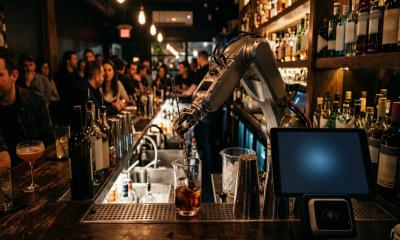
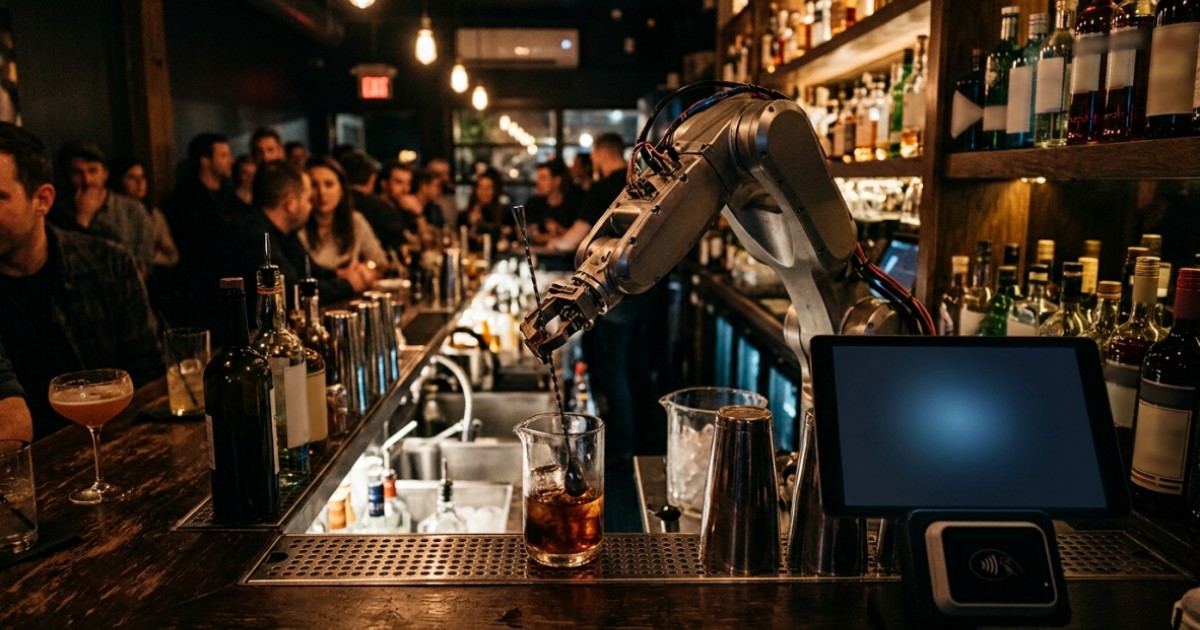
At The Tipsy Robot, a futuristic bar inside the Venetian Hotel in Las Vegas, automated robotic arms mix, shake, and serve cocktails with mechanical precision. A standard margarita costs $17, but before the machine hands over the drink, the payment screen prompts the customer for a 10 percent service fee. A similar scenario played out in New York at Artly Coffee, where a robot barista asked patrons for gratuity upon checkout.
The phenomenon is exploiting a massive gray area in US labor laws. Holona Ochs, an associate professor of political science at Lehigh University, told BBC News that while laws strictly prohibit owners and supervisors from taking a cut of a human worker`s tips, no such legal standard exists for robots. Ochs warned that unscrupulous employers might be using these machines to extract extra revenue directly from consumers while pocketing the tips themselves.
Tipping norms in the US are deeply tied to the country`s minimum wage structure. While the federal minimum wage sits at $7.25 an hour, employers can pay tipped workers a base salary of just $2.13, expecting customer gratuities to make up the difference. When a robot takes the order, makes the drink, and collects the tip, the traditional justification for gratuity collapses entirely.
Following significant consumer backlash, some companies have shifted their policies. Representatives for both Artly Coffee and The Tipsy Robot stated that corporate management takes zero share of the digital tips, distributing the funds entirely to human staff working behind the scenes. Artly Coffee has recently disabled the tipping prompt altogether to address customer complaints.
Despite these assurances, labor advocacy groups remain deeply skeptical. Organizations like One Fair Wage argue that deploying robots is merely a corporate strategy to perpetuate a low-wage ecosystem in the restaurant sector. Rather than raising base salaries to attract human workers, companies are installing machines and continuing to rely on customer generosity to subsidize operating costs.
The psychological pressure of tipping screens has created a widespread sense of tipping fatigue among consumers. Michael Lynn, an emeritus professor at Cornell University who studies consumer psychology, pointed out that people usually tip to reward exceptional effort or out of social obligation. Since neither applies to a mindless machine, the act of tipping a robot feels inherently unnatural.
A study co-authored by Katerina Berezina, an associate professor at the University of Mississippi, found that only 11 percent of people are willing to tip a robot bartender. However, that number jumps to 42 percent if the customer is explicitly guaranteed that human employees will receive the money. Until legislation catches up with the technology, consumers are left to decide whether they will continue funding the rise of automated service workers out of their own pockets.