United States President Donald Trump cited India`s voter identification rules to renew his legislative push for stricter federal voting regulations in Washington on Monday, according to Al Jazeera and The Hindu. The comparison comes as the administration attempts to secure passage of the controversial Safeguard American Voter Eligibility, or SAVE America Act, in Congress.
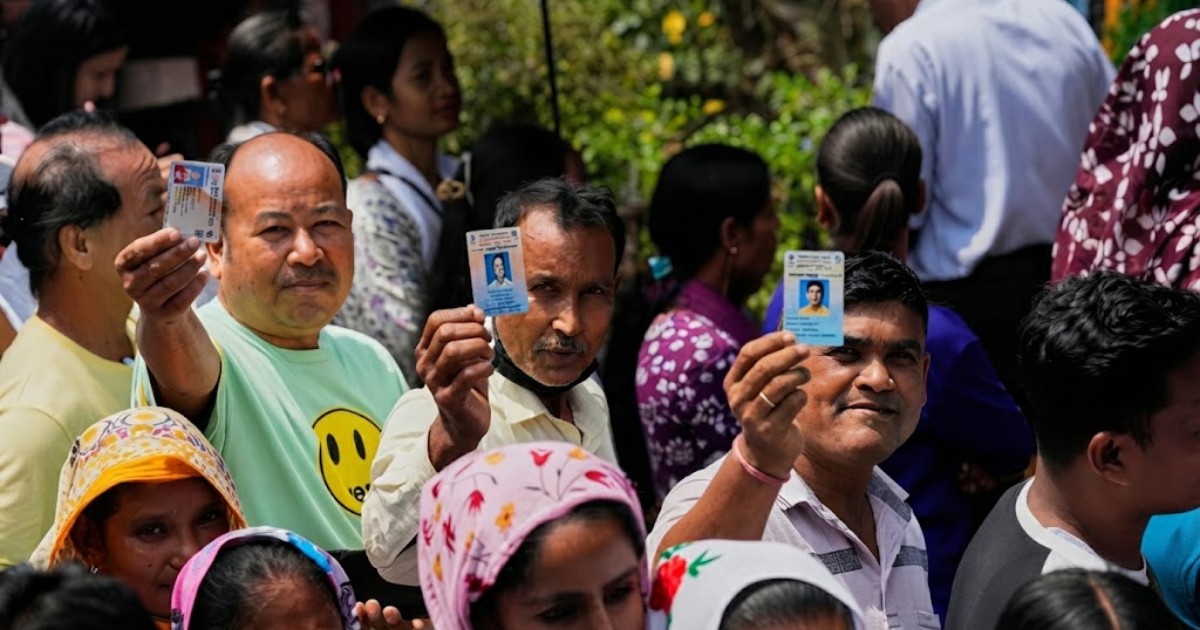
In a statement posted on his Truth Social platform, Trump said India`s Chief Election Commissioner Gyanesh Kumar had questioned American officials about holding elections without mandatory photo identification. Trump highlighted that 646 million voters participated in India`s general elections, with less than 1 percent casting postal ballots, and asserted that every participant carried a valid photo identity document.
The SAVE America Act, which was approved by the Republican-led House of Representatives in February, seeks to mandate documentary proof of US citizenship, such as a certified birth certificate or passport, during federal voter registration. It also proposes stricter identification rules at physical polling stations and aims to restrict mail-in voting primarily to specific exceptions including illness, disability, and military service.
Supporters argue the legislation is essential to prevent illegal non-citizen voting and protect institutional integrity. Critics and legal scholars counter that non-citizen participation in federal and state elections is already explicitly prohibited by law, noting that documented instances of such voting remain statistically negligible.
What remains unclear is whether the bill can secure the necessary procedural votes in the Senate to overcome legislative hurdles.
While India`s election machinery is renowned for coordinating massive logistical operations, its electoral processes have faced sustained domestic scrutiny under Prime Minister Narendra Modi. Human rights groups and opposition parties have raised documented concerns over the deletion of eligible voters from electoral rolls, instances of partisan rhetoric, and the perceived erosion of institutional autonomy within regulatory bodies. Legal experts also observe that India`s voter cards verify identity rather than prove citizenship at the polling booth, presenting a distinct administrative model from the proposed American mandates.