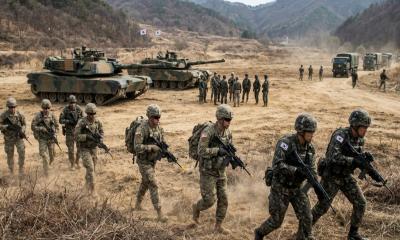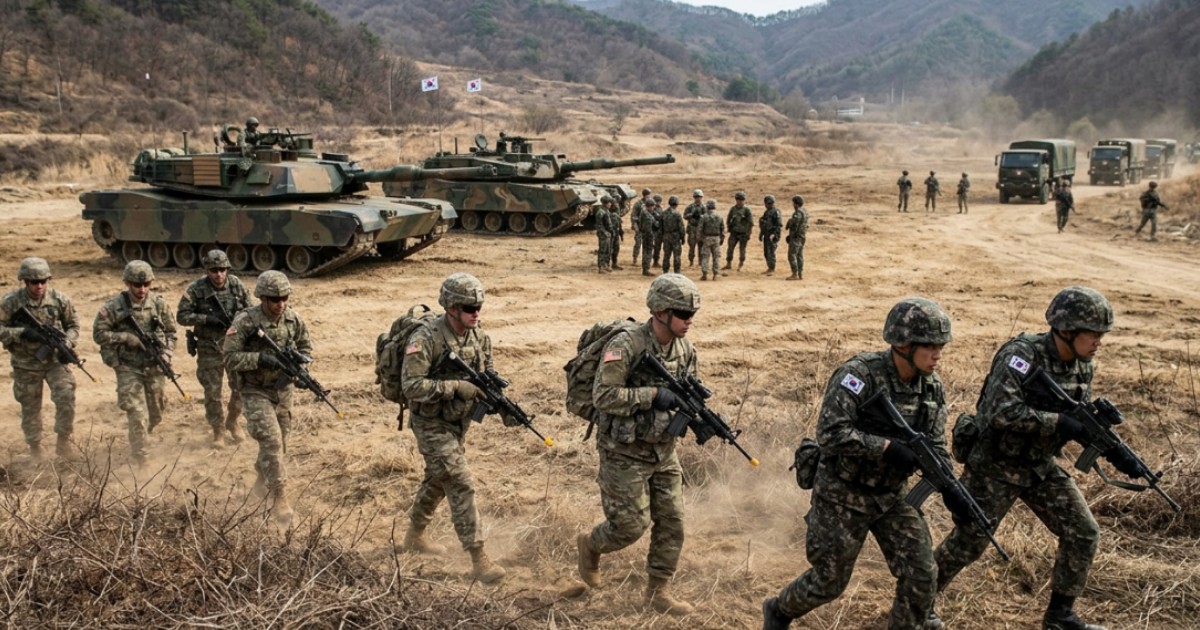
President Donald Trump has ordered the Pentagon to substantially reduce upcoming joint military exercises with South Korea, citing his strong relationship with North Korean leader Kim Jong Un and Seoul`s refusal to join United States efforts regarding Iran. The announcement, posted on social media, came just hours before the scheduled start of the annual Ulchi Freedom Shield exercises, which involve thousands of troops from both nations. Trump expressed frustration that the United States continues to participate in costly military drills that he argues send an inappropriate and hostile signal to Pyongyang, which he claimed has remained unthreatening during his time in office.
The decision has triggered immediate diplomatic reviews in Seoul, where officials expressed hope that improved communication between Washington and North Korea could pave the way for meaningful peace talks. However, South Korea`s Joint Chiefs of Staff confirmed that the military exercises commenced as previously scheduled, involving approximately eighteen thousand South Korean military personnel alongside American forces. North Korea had previously condemned the joint drills as a rehearsal for an aggressive war, maintaining heightened tension across the Korean Peninsula following recent ballistic missile tests and evolving regional security challenges.
The move highlights growing friction between Washington and its regional allies over broader geopolitical conflicts, particularly the ongoing military engagement involving Iran. Trump publicly noted that he recently asked the South Korean leadership to contribute to the denuclearization of the Islamic Republic of Iran, a request that Seoul politely declined. This diplomatic friction mirrors similar dissatisfaction expressed by the White House regarding other international allies who have hesitated to provide direct military or logistical support in Middle Eastern operations. Approximately twenty-eight thousand five hundred American military personnel remain stationed across various bases in South Korea as a cornerstone of the longstanding bilateral defense alliance.
Military experts and international relations scholars have expressed significant concern over the potential strategic fallout of scaling back joint defense exercises. Analysts warn that reducing the scale of these vital readiness drills can impair alliance coordination, slow South Korea`s transition toward assuming greater responsibility for its national defense, and weaken deterrence against potential regional conflicts in Asia. While the financial savings from downsizing military exercises are expected to be marginal, the diplomatic utility regarding engagement with North Korea remains highly uncertain and debated among foreign policy specialists. As diplomatic consultations continue between Washington and Seoul, the long-term impact on the Indo-Pacific security architecture remains under intense global scrutiny.