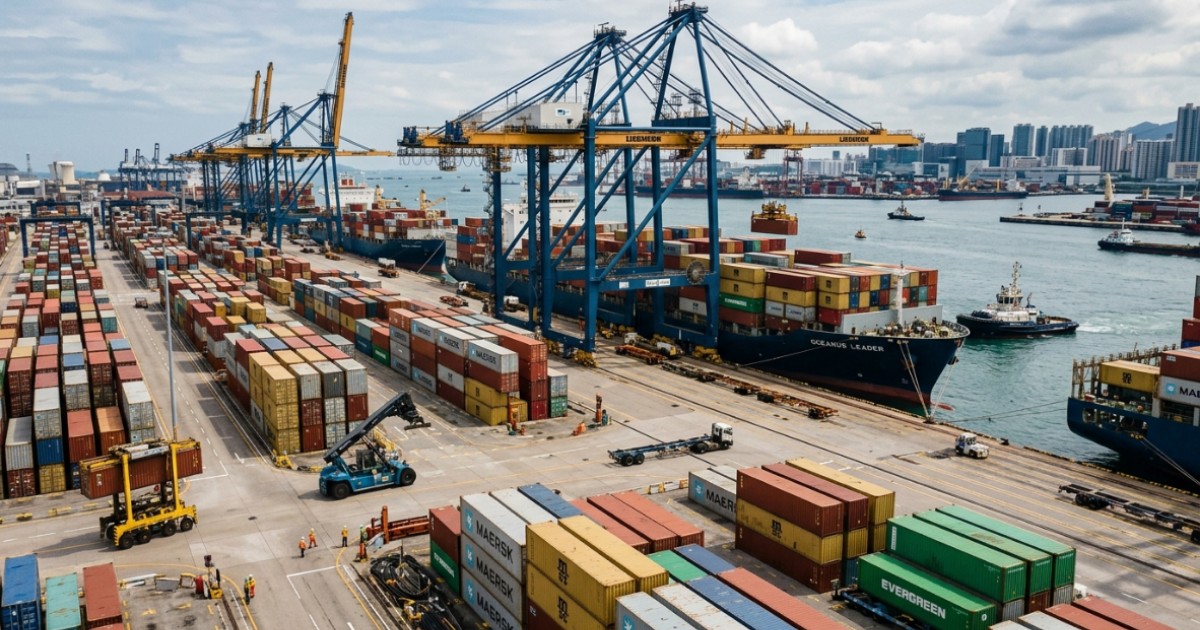
More than 40 countries have helped China circumvent United States trade levies by rerouting exports through intermediate trade hubs that face lower American duties, the White House said in a report released on Thursday, according to BBC News and Al Jazeera. The administration named key commercial partners including Canada, India, Mexico, Japan, and South Korea as facilitators in an illicit logistics loop designed to bypass steep customs penalties. White House trade and manufacturing adviser Peter Navarro characterized the operation as a sophisticated global shadow network that directly undermined American employment and drained federal revenue.
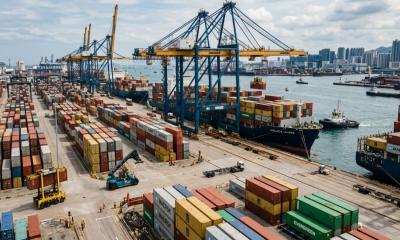
The practice at the center of the dispute is known as transshipment, where freight is transferred through an intermediary country before arriving at its final destination. The White House accused Beijing of weaponizing this mechanism by subjecting Chinese-made goods to minor processing, relabeling, and repackaging in secondary territories to obscure their true country of origin. Federal officials labeled the trade diversion fraud cloaked in paperwork, citing government and private sector calculations that estimate between 30 billion dollars and 300 billion dollars in goods have moved through these low-tariff transit corridors.
According to the Office of Trade and Manufacturing Policy, the diversion network costs the US Treasury an estimated 19 billion dollars to 26 billion dollars in lost tariff revenue annually under a baseline trade displacement model. The report indicated that unchecked transshipments have put severe economic pressure on domestic manufacturers, putting approximately 450,000 direct and indirect American jobs at risk. Industrial sectors experiencing the heaviest fallout include electrical equipment, integrated circuits, aluminum manufacturing, and motor vehicle components. In response, US Customs and Border Protection has deployed artificial intelligence monitoring systems to analyze manifest data and detect fraudulent cargo pathways in real time.
The Chinese embassy in Washington rejected the allegations, stating that trade wars have no winners and reaffirming Beijing`s opposition to unilateral tariff actions targeting Chinese enterprises. An embassy spokesperson warned that any unilateral measures concerning transit goods must not infringe upon the legitimate rights of third-party trading partners. What remains unclear is whether shifts in global trade data reflect authentic supply chain decentralization across developing economies or an organized evasion scheme.
The release of the findings comes just weeks before scheduled high-level talks between US President Donald Trump and Chinese leader Xi Jinping in Washington. Chang Pao Li, an associate professor of economics at Singapore Management University, told the BBC that the administration is likely to use the transshipment evidence to reinforce its bargaining leverage during upcoming bilateral negotiations. Market analysts observe that intermediate trading hubs in Southeast Asia and Latin America with extensive manufacturing links to China now face heightened scrutiny and potential regulatory countermeasures from Washington.