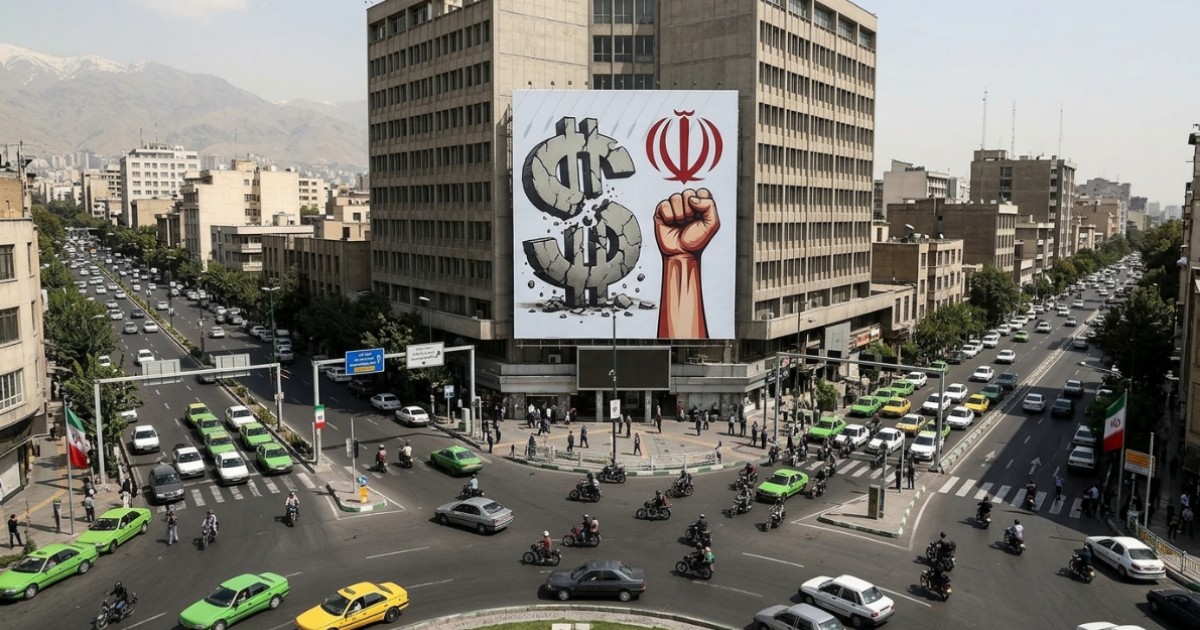
More than five months into the ongoing military confrontation between the United States, Israel, and Iran, prospects for a definitive diplomatic settlement remain complex and elusive. Earlier this week, Iranian Foreign Minister Abbas Araghchi reaffirmed that official direct negotiations between Washington and Tehran were not currently taking place. Meanwhile, belligerent rhetoric and defiant counterstatements continue to emanate from official circles in the Iranian capital. Western commentators, particularly conservative observers, frequently argue that Tehran is fundamentally incapable of reaching a lasting accommodation due to its rigid anti-American ideology. However, such assessments often overlook the complex pragmatic calculus governing the Islamic Republic`s long-term statecraft.
A careful examination of the Iranian constitution and historical precedent demonstrates that the ruling establishment is not driven solely by unyielding ideological dogmas. The regime, structured to perpetuate its own existence above all else, has repeatedly shown a willingness to pursue tactical settlements with Western powers whenever such maneuvers align with its paramount guiding principle: the preservation of the ruling system. This institutional imperative, formally known as hefz-e nezam, was famously codified during the late stages of Ayatollah Ruhollah Khomeini`s tenure when state survival was explicitly designated as the supreme religious and political obligation superseding conventional jurisprudential rulings.
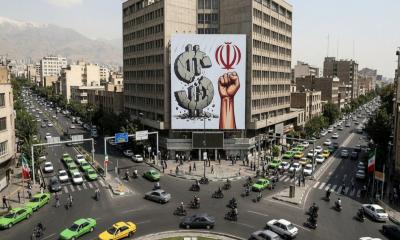
The constitutional amendments introduced in 1989 further institutionalized this pragmatism by establishing the Expediency Discernment Council, an executive mechanism designed to bypass ideological deadlocks and resolve constitutional impasses in the immediate interest of the state. Consequently, Tehran`s officially propagated anti-imperialist doctrine operates primarily as a flexible instrument of statecraft rather than an absolute moral constraint. While opposition to Western hegemony provides ideological legitimacy and regional leverage, its application has consistently remained selective, subordinated to the core objective of regime security and territorial consolidation.
Realist political theory suggests that state survival is the fundamental driver of international behavior, and Iran operates within this established framework. The regime maintains a dual-track approach where foundational enmities coexist with sophisticated mechanisms for strategic retreat when existential pressures mount. Historical precedents underscore this pragmatic flexibility. In July 1988, Supreme Leader Khomeini famously accepted a bitter ceasefire with Iraq, famously equating the decision to drinking poison, yet prioritizing state preservation over protracted conflict. Similarly, clandestine dealings during the Iran-Contra affair and diplomatic coordination following the 2001 intervention in Afghanistan illustrate that ideological red lines possess functional off-switches.
The severe strains experienced during recent military exchanges have once again tested this institutional mechanism under intense pressure. Leadership transitions and international diplomatic memorandums signed in Islamabad reflect a continuous willingness among Iranian decision-makers to engage in direct arrangements with Washington when confronted with overwhelming existential threats. By framing tactical concessions through the conceptual lens of heroic flexibility, the political leadership successfully manages domestic constituencies, transforming strategic retreats into long-term preservation efforts without fracturing its core base of support.
However, diplomatic breakthroughs abroad do not automatically translate into democratic reforms or improved liberties for citizens within domestic borders. The state has historically utilized external security crises to consolidate internal control, expand arrests, and accelerate judicial proceedings against perceived dissidents. Consequently, external sanctions relief may alleviate widespread economic hardship for ordinary Iranians, but without genuine internal political liberalization, the machinery of state repression risks remaining entirely intact. Observers analyzing the future trajectory of the region must recognize that the Islamic Republic`s ultimate calculus is anchored in institutional self-preservation, ensuring that any future accommodation with foreign adversaries will serve to fortify the ruling apparatus rather than dismantle it.