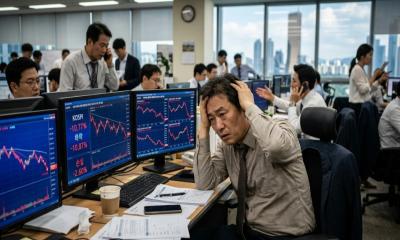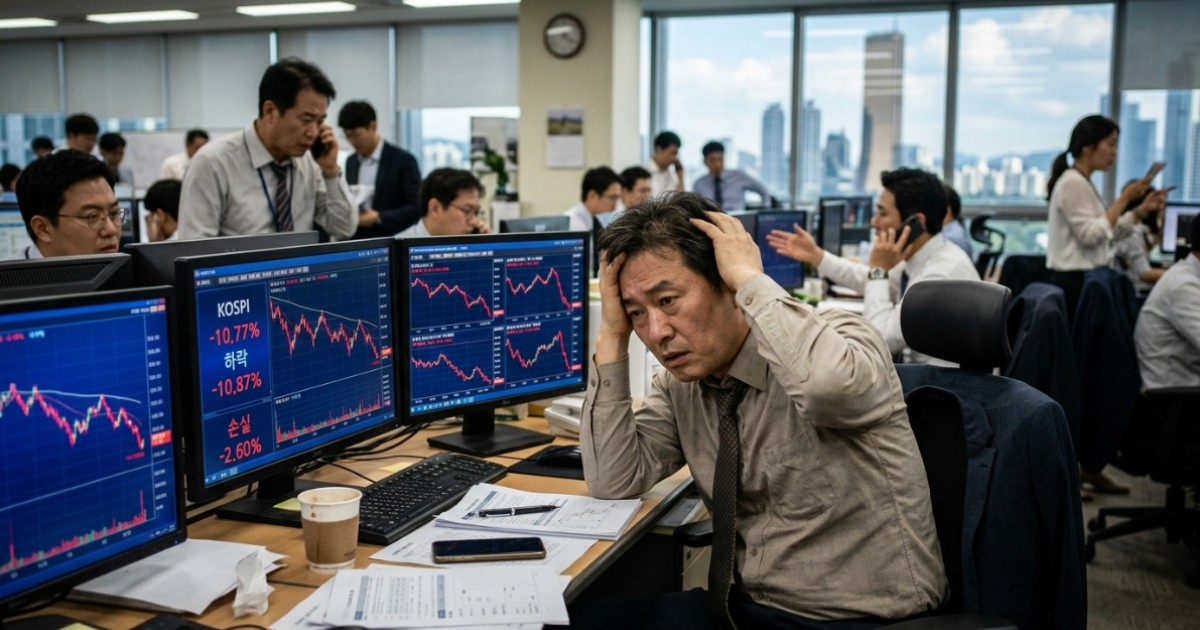
Thousands of retail investors in the South Korean stock market have suffered devastating financial losses following extreme volatility in artificial intelligence and semiconductor shares, according to a report by BBC News. The benchmark Kospi index, widely regarded as the most volatile equities benchmark in the world, has experienced sharp fluctuations as speculative hype around artificial intelligence collided with growing investor skepticism. In Seoul, bank employee Yongjoon Kim lost 20 million Korean won, roughly 14,000 US dollars, in the downturn last month. The funds had been set aside to help purchase a home ahead of his scheduled wedding later this year.
The aggressive market downturn has reverberated across South Korea, where individual retail investors have increasingly poured personal savings into high-risk technology assets. Kim noted that the value of his technology portfolio dropped by approximately 25 percent in July alone, leaving him facing months of additional work to recover his capital. He emphasized that numerous friends and peers who took far greater risks by committing their entire life savings now find themselves in desperate financial straits. Major domestic semiconductor manufacturers, including industry heavyweight SK Hynix, saw their valuations swing dramatically as market sentiment reversed.
Wee Khoon Chong, a market strategist at global financial services company BNY, characterized the recent sell-off between June and August as one of the sharpest market corrections in South Korea`s financial history. The Kospi index more than doubled its valuation earlier in the year, crossing the 9,000-point threshold in mid-June before plummeting to 5,500 points within a matter of weeks. Chong noted that the velocity of the contraction is comparable to the severe market shocks seen during the Covid-19 pandemic and the 1997 Asian financial crisis, though the index has since managed a modest recovery to around 6,800 points.
Financial analysts attribute the aggressive sell-off primarily to mounting investor anxiety regarding the massive capital expenditures poured into artificial intelligence infrastructure. Global technology firms have invested hundreds of billions of dollars into advanced computing hardware and specialized data centers, yet corporate earnings have raised doubts about whether revenue growth will justify these astronomical upfront costs. As international technology giants reassess their commercialization timelines, supply-chain partners and hardware producers across East Asia have absorbed the direct impact of shifting investor sentiment.
Another individual investor, Woongsa Kim, shared that he committed roughly half of his annual employment bonus at the beginning of the year to purchase shares in SK Hynix. While the stock initially quadrupled in value during the height of the market rally, the subsequent plunge erased the majority of those capital gains. His holding is now valued at approximately 300 million won, representing a drop of nearly 50 percent from its peak valuation. Financial regulators in Seoul have monitored the situation closely, though macroeconomic uncertainties and tightening liquidity continue to weigh on local market sentiment.
What remains unclear is whether the current correction represents a healthy recalibration of overinflated technology valuations or the onset of an extended downturn in hardware manufacturing. Market observers in Seoul caution that everyday investors who relied on margin debt or liquidated essential household savings face prolonged financial strain. The near-term stability of the Korean equities market will depend largely on whether international technology firms can deliver tangible commercial returns on their unprecedented computing investments.