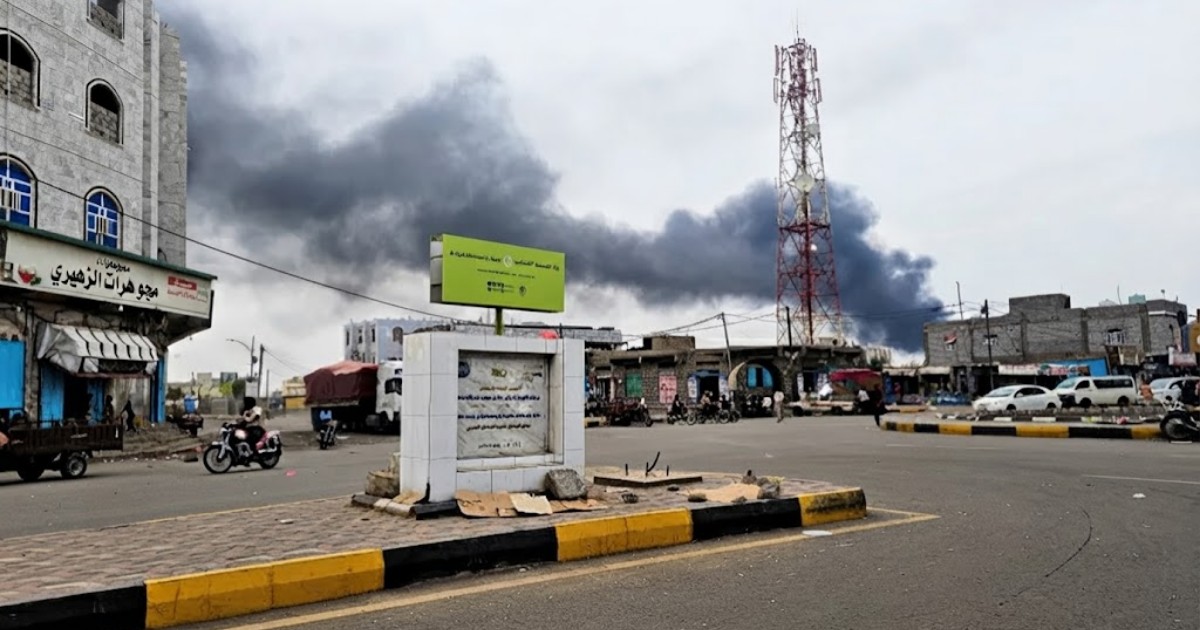
The decade-long conflict in Yemen has entered a volatile new phase as Houthi armed groups and internationally recognized government forces dramatically escalate their mutual deployment of tactical drones, according to Al Jazeera and Reuters. Following recent Houthi drone strikes targeting military camps and government gatherings, which resulted in numerous casualties among soldiers, state-aligned forces launched swift retaliatory operations using remotely piloted unmanned aerial vehicles. This technological shift along the front lines highlights how aerial warfare has become a central pillar of the ongoing civil war.
Government military units have broadcast extensive video documentation showing reusable, remotely operated drones tracking designated targets, deploying precision munitions, and neutralizing hostile armored vehicles and fortified hideouts. Marius Bales, a doctoral researcher at the Bonn International Centre for Conflict Studies, noted that government forces are successfully acquiring critical tactical capabilities. While these localized drone operations may lack the extensive strategic strike range possessed by the Houthi movement, they provide vital support for day-to-day engagement along static front lines. Similarly, Rueben Dass from the S Rajaratnam School of International Studies in Singapore observed that government forces have modified rotary-wing drones to deliver improvised payloads against ground positions.
The strategic imbalance in aerial capabilities traces back to September 2014, when the Iran-backed Houthi movement seized control of the capital, Sanaa, fracturing the central government and prompting top leaders to seek refuge abroad. For years, the Houthis maintained undisputed superiority in asymmetric aerial warfare, utilizing sophisticated networks of surveillance and kamikaze drones to strike government command centers far behind the lines of contact. Their extensive inventory includes the Qasef series, modeled on Iranian designs and capable of carrying significant explosive payloads, as well as the long-range Sammad-3 drones boasting operational ranges extending up to fifteen hundred kilometers.
Despite the Houthis` decade-long accumulation of advanced missile and drone infrastructure, government forces have aggressively closed the capability gap. In recent weeks, military units deployed drones across contested provinces including Marib, al-Jawf, Taiz, Hajjah, and al-Dhalea, releasing footage of successful interception and strike missions. Defense analysts point out that the Houthis have also begun adapting tactical innovations observed in other global conflicts, such as deploying first-person-view drones equipped with fiber-optic controls to evade electronic countermeasures.
Last month, the Yemeni Ministry of Defence officially unveiled domestically modified aerial systems during an inspection led by defense officials and military commanders. Although specific operational ranges and technical specifications were withheld, state media broadcasts confirmed that these repurposed commercial drones are now conducting daily reconnaissance and combat missions. Local military experts explained that civilian drones have been ingeniously retrofitted to spot targets and drop explosives with high accuracy. As both sides continue to expand their aerial fleets, international observers warn that the escalating drone war threatens to further destabilize the humanitarian and political landscape across the war-torn nation.