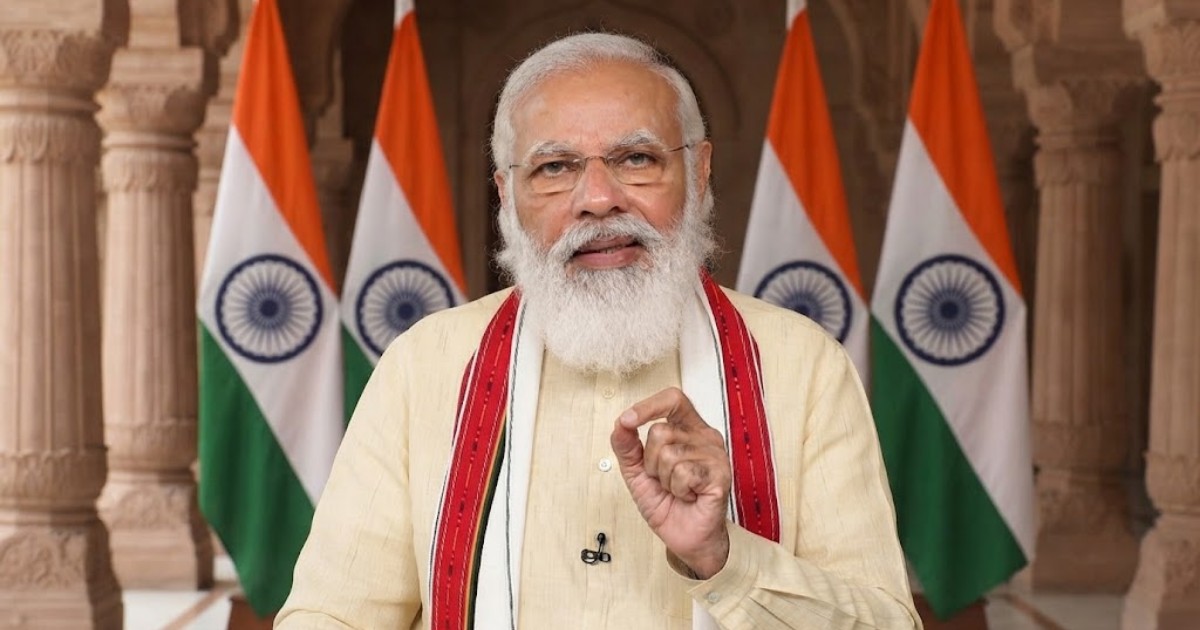
Indian Prime Minister Narendra Modi declared that the nation has largely dismantled a decades-old Maoist rebellion while warning that the movement`s ideological backers still represent a persistent internal threat. Addressing the nation from the historic ramparts of the Red Fort in New Delhi on Saturday during Independence Day celebrations, Modi emphasized that his administration has successfully marginalized armed insurgents across central and eastern regions of the country.
Modi stated that the government has succeeded in eliminating armed Naxals, referring to the Maoist-influenced movement that challenged state authority since its violent emergence in the village of Naxalbari in eastern India in nineteen sixty-seven. The decades-long armed struggle resulted in thousands of casualties among civilians, insurgents, and security personnel, while destroying the futures of multiple generations of rural youth. However, Modi cautioned that ideological backers, whom he characterized as intellectual Naxals, are actively seeking opportunities to instigate fresh social unrest and must be systematically identified and isolated by society.
The phrase echoes the politically charged term urban Naxal, frequently deployed by leaders of the ruling Bharatiya Janata Party and conservative commentators against political activists, academic researchers, and outspoken government critics. The Prime Minister`s remarks arrive just weeks after an unexpected youth-led protest movement, known as the Cockroach Janta Party, emerged as a prominent domestic challenge, ultimately forcing the resignation of the federal education minister amid widespread public discontent over governance and employment. Although Modi avoided explicitly mentioning the youth protests during his formal address, he heavily promoted new youth-oriented initiatives, including artificial intelligence skills training and tuition-free online coaching for competitive examinations.
Highlighting India`s economic trajectory over the past decade, Modi claimed the country has successfully transformed from a fragile economy into the world`s fastest-growing major economic powerhouse. He reaffirmed his administration`s overarching objective of developing India into a fully advanced nation by twenty forty-seven, coinciding with the centenary of its independence from British colonial rule. Government officials attribute the drastic reduction in Maoist violence since twenty fourteen to a dual strategy combining aggressive security crackdowns with targeted regional infrastructure and development programs in remote districts.
Independent human rights organizations and legal advocacy groups have consistently criticized the government`s security and legislative approach, accusing authorities of weaponizing anti-terror statutes, sedition provisions, and foreign funding regulations to suppress civil society and penalize dissenting journalists, human rights defenders, and political organizations. Reports from prominent international news agencies, including Al Jazeera and the Associated Press, underscore mounting domestic and international concerns regarding the narrowing space for political dissent, press freedom, and civic expression in contemporary India. As the country reflects on nearly eight decades of national sovereignty, the delicate balance between state security measures and fundamental civil liberties remains a central subject of intense debate.