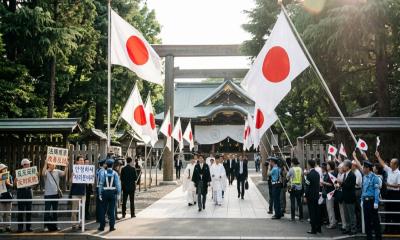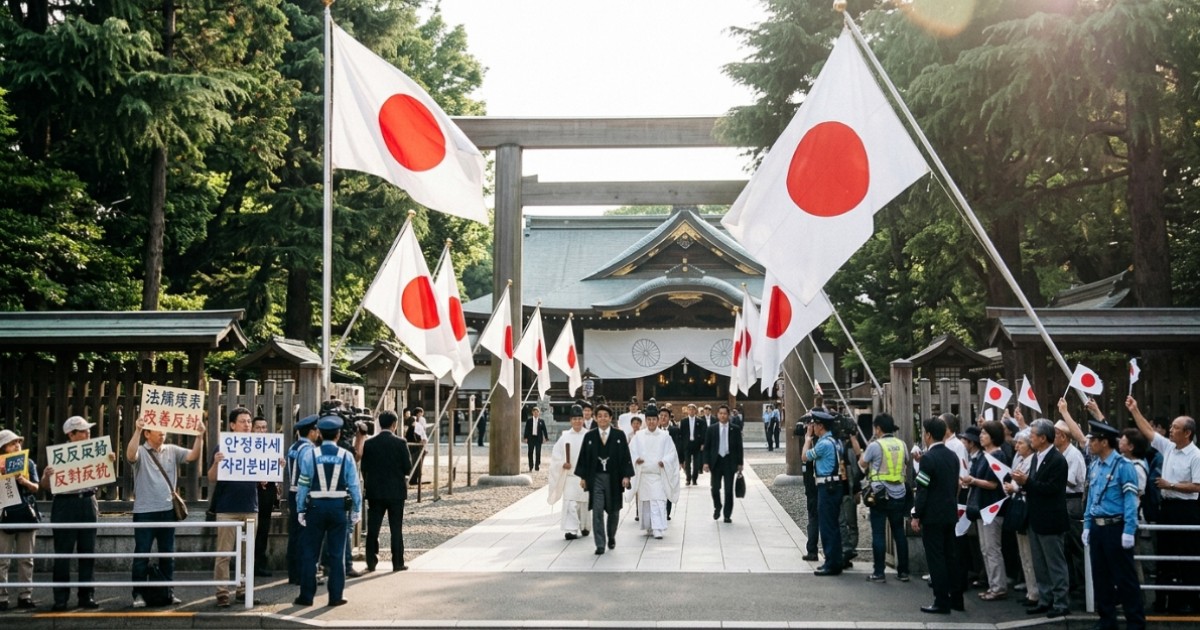
Japanese Defence Minister Shinjiro Koizumi has visited the controversial Yasukuni Shrine, sparking swift diplomatic rebukes from China and South Korea. According to reports from AFP and Reuters, the visit took place on Saturday, coinciding with the eighty-first anniversary of Japan`s surrender in the Second World War, reigniting regional tensions regarding historical accountability and wartime atrocities.
The Yasukuni Shrine in Tokyo honors approximately two point five million individuals who died in Japan`s military conflicts, including fourteen Class-A war criminals convicted by Allied tribunals after nineteen forty-five. For decades, visits to the shrine by senior Japanese political figures have drawn intense criticism from neighbouring Asian nations that suffered under Imperial Japanese occupation during the nineteen thirties and forties, who view the site as a symbol of unrepented militarism.
Koizumi, who has a history of visiting the memorial site, departed without answering questions from reporters gathered outside the premises. He later released a statement explaining that he visited to offer sincere condolences to those who sacrificed their lives for the nation. He also reaffirmed Japan`s postwar commitment to pacifism and peace, emphasizing the nation`s ongoing responsibility to maintain regional stability and renounce war.
Prior to the anniversary, political observers speculated whether Prime Minister Sanae Takaichi, who had frequently visited the shrine before assuming office, would attend in person. While Takaichi ultimately chose not to visit the shrine directly, local media reported that she followed precedent by sending a ritual offering to the memorial, mirroring actions taken by previous Japanese prime ministers.
China`s Ministry of Foreign Affairs responded to the developments with strong condemnation, stating that Beijing had lodged formal diplomatic protests with the Japanese government. Officials in Beijing expressed profound dissatisfaction over both the defence minister`s visit and the prime minister`s ritual offering. Similarly, South Korea`s Ministry of Foreign Affairs issued a statement expressing deep regret over what it termed anachronistic actions by Japanese leaders, urging them to demonstrate genuine remorse and reflection regarding their wartime history.
Diplomatic analysts note that such visits continue to strain relations between Tokyo and its neighbours, as historical grievances from the wartime era remain deeply sensitive. Despite Japanese officials maintaining that these visits are conducted in a personal capacity to mourn war dead, the ongoing friction highlights the persistent challenge of reconciling wartime memory and modern international diplomacy in East Asia.