Driven by the looming threats of drone strikes, geopolitical instability, and physical sabotage, nations and tech companies are increasingly burying their critical infrastructure deep underground. Advanced tunnel-boring machines are clearing the way for a new era of subterranean power grids and data bunkers, according to a recent report by BBC News.
In a California quarry, a start-up named Earthgrid recently tested a groundbreaking tunnel-boring machine that uses super-heated plasma reaching 27,000 degrees Celsius to melt through ultra-hard white granite. Earthgrid`s founder and chief executive, Troy Helming, told BBC News that the machine creates a violent vortex capable of sucking away vaporized rock and lava. During its January trial, the machine chewed through three meters of solid granite. Helming envisions deploying this technology to bury fiber optic cables, power lines, and even automated freight-distribution systems to remove cargo trucks from busy surface roads.
Geopolitical friction, particularly the ongoing war in Ukraine, has dramatically accelerated the demand for underground infrastructure. Robbie McGoran, a business development head at the civil engineering firm Joseph Gallagher, noted that the vulnerability of above-ground facilities to drone attacks has prompted nations bordering Russia to seek subterranean alternatives. While tunneling technology has improved significantly with laser-guidance systems and gyroscopes, drilling deep into the earth remains an expensive and technically demanding endeavor.
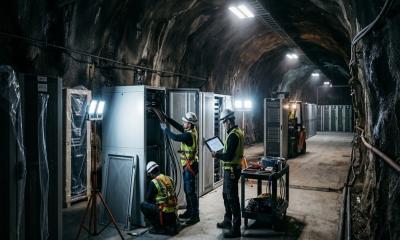
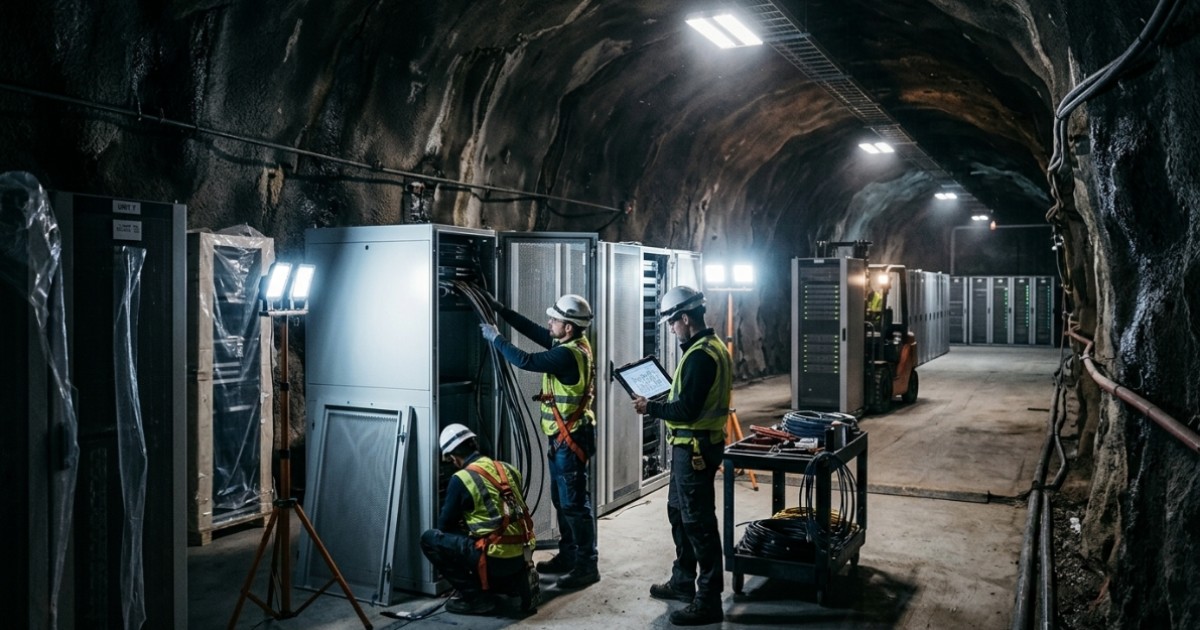
Academic experts are already documenting a global "data bunker boom." Alexander R.E. Taylor, a senior lecturer at the University of Exeter, emphasized that physical fortifications are becoming just as crucial as cybersecurity. In the Dolomite Mountains of Italy, Trentino DataMine recently completed an underground data center located 100 meters below the surface. Previously used to store sparkling wine and cheese, the naturally cool caverns offer a highly energy-efficient environment for servers. The facility`s chief executive, Dennis Bonn, stated that the 90 million cubic meters of dolomite rock provide unparalleled natural protection against seismic events and electromagnetic interference.
The push for deeper protection extends beneath the oceans as well. Subsea internet cables, which form the backbone of global telecommunications, are now being buried up to three meters deep in fault-prone areas to avoid damage from ship anchors, according to TeleGeography analyst Lane Burdette. Historically, subterranean strategy has proven highly effective. Underground tunnel networks posed severe challenges for US forces in Afghanistan, and Iran`s deeply buried nuclear facilities continue to frustrate international military planners.
In crowded urban centers, underground infrastructure is sometimes an absolute necessity. The London Power Tunnels project, for instance, required a £1 billion investment to carve out 18 miles of tunnels beneath the UK capital, according to Arup engineering consultant Mark Neller. Richard Little, editor of the Journal of Critical Infrastructure Policy, compared the current trend to Cold War-era bunker building, noting that countries like Switzerland still legally mandate nuclear bunker access for all citizens. However, Little cautioned that burying everything is economically impossible, suggesting that only hyper-critical assets, such as computer chip manufacturing plants, should be prioritized for subterranean relocation.