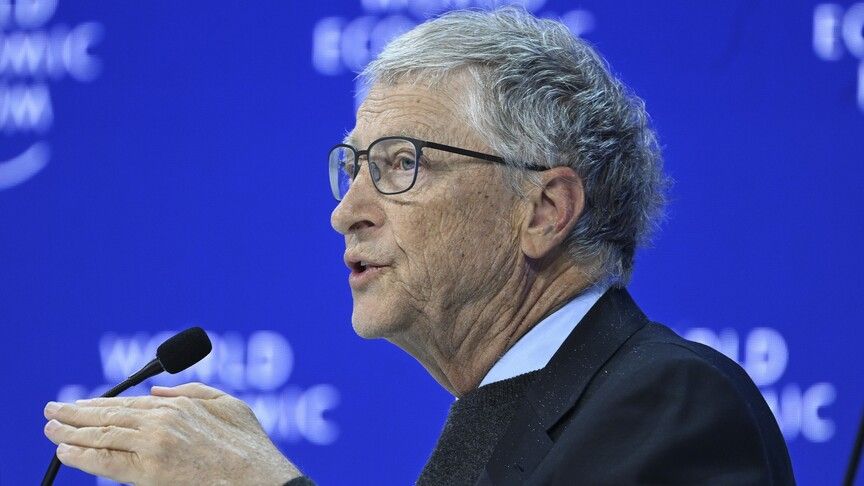
The transition to an artificial intelligence economy will trigger a chaotic two-decade period of winners and losers, according to Microsoft co-founder Bill Gates. Speaking on a podcast published on Thursday, the billionaire philanthropist explained that society faces significant upheaval before potentially reaching an era of abundance.
Gates stated that the shift will reshape employment patterns and challenge human roles across society. He noted that the twenty-year timeframe is an estimate rather than a definitive prediction. The duration could change depending on how quickly technology advances or whether societies decide to slow down development.
Future breakthroughs in artificial intelligence and humanoid robotics could enable machines to handle the vast majority of physical labor. Gates pointed out that machines might eventually construct houses, cultivate crops, and execute surgical operations.
While these innovations could alleviate shortages of various goods and services, communities might consciously choose to keep certain tasks in human hands. He suggested that childcare, culinary preparation, artistic expression, and athletic competition could remain primarily human domains.
The technology also offers major advantages for the agricultural and healthcare sectors. Despite these benefits, Gates cautioned that governments and populations are currently unprepared for the swift pace of technological growth.
He called for increased state regulation and technical protections to guard against biological dangers and cyberattacks. Private artificial intelligence firms cannot shoulder the responsibility of managing these severe risks on their own, according to the philanthropist.
Gates warned that even under the most optimistic scenarios, the expansion of artificial intelligence could trigger one of the most unstable eras in human history.
"I hate being the bearer of concerning news on this, but it’s even worse not to tell people that this is coming," Gates said. "We have choices as humans to make about how we shape it."