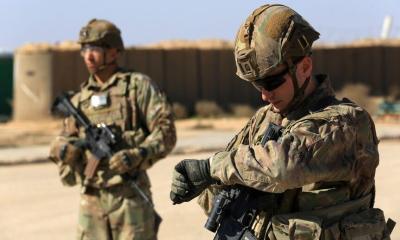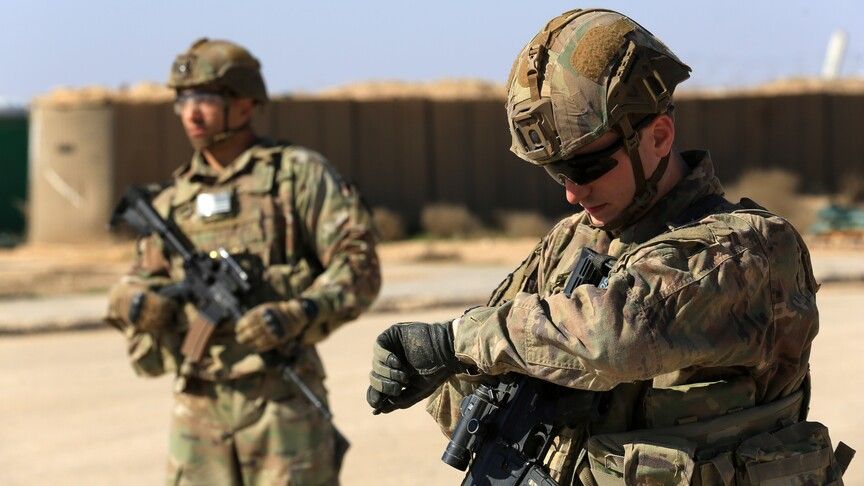
Ali Faleh Al-Zaidi announced that all foreign military forces have completely departed the country. Speaking to the Iraqi News Agency, he said the absence of these troops removed the justifications that armed factions previously used to keep their weapons.
He stated that the government policy to restrict arms solely to state institutions is final and irreversible. By June 30, 2027, there will be no weapons outside the framework of the state, according to Al-Zaidi. The administration has reached agreements regarding weapons held by three armed groups while negotiations continue with four other factions.
"Iraq is a state that has factions, not factions that own a state," he said.
Al-Zaidi recalled that the country was previously on the brink of international isolation, facing potential closures of foreign embassies and economic restrictions. Western nations had feared that certain armed groups had taken control of the state, but the government overcame that threat.
Despite the military exit, Al-Zaidi confirmed that Baghdad remains committed to strengthening its strategic partnership with Washington. Iraq selected the US as a strategic partner due to its technological and economic capabilities. American companies have already begun operating in the country and implementing bilateral cooperation projects.
Baghdad and Washington reached an agreement in September 2024 concerning a phased withdrawal of US-led coalition forces. The military mission concluded in September, and the Pentagon confirmed the departure of forces and equipment from Erbil Air Base. This shift transitioned the coalition mission against ISIS into ongoing security cooperation involving training and intelligence sharing.
Addressing regional policies, Al-Zaidi stated that Iraq will not participate in any war and intends to remain a meeting point for opposing parties. He rejected proposals to close the border with Iran, warning that such an action would impose an economic siege on Iraq itself.
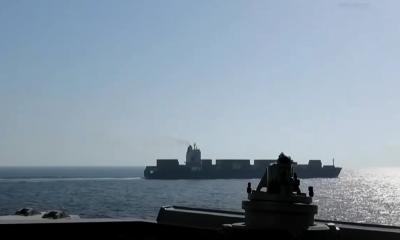
To counter maritime disruptions, Iraq is working to build a network of oil export pipelines to reduce reliance on the Strait of Hormuz. Al-Zaidi said that the Hormuz crisis has prevented the country from fully benefiting from rising oil prices. Officials are currently working to reactivate the oil export route through the Turkish port of Ceyhan.
The government plans to increase national oil production capacity to 10 million barrels per day by 2032. Al-Zaidi also described the Development Road project with Türkiye as a major transportation corridor linking southern ports to Europe, with construction slated to begin after parliamentary approval of the budget.