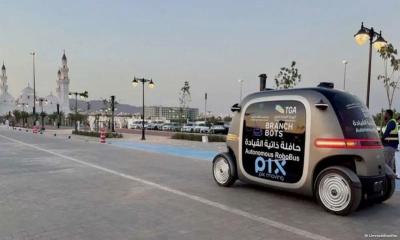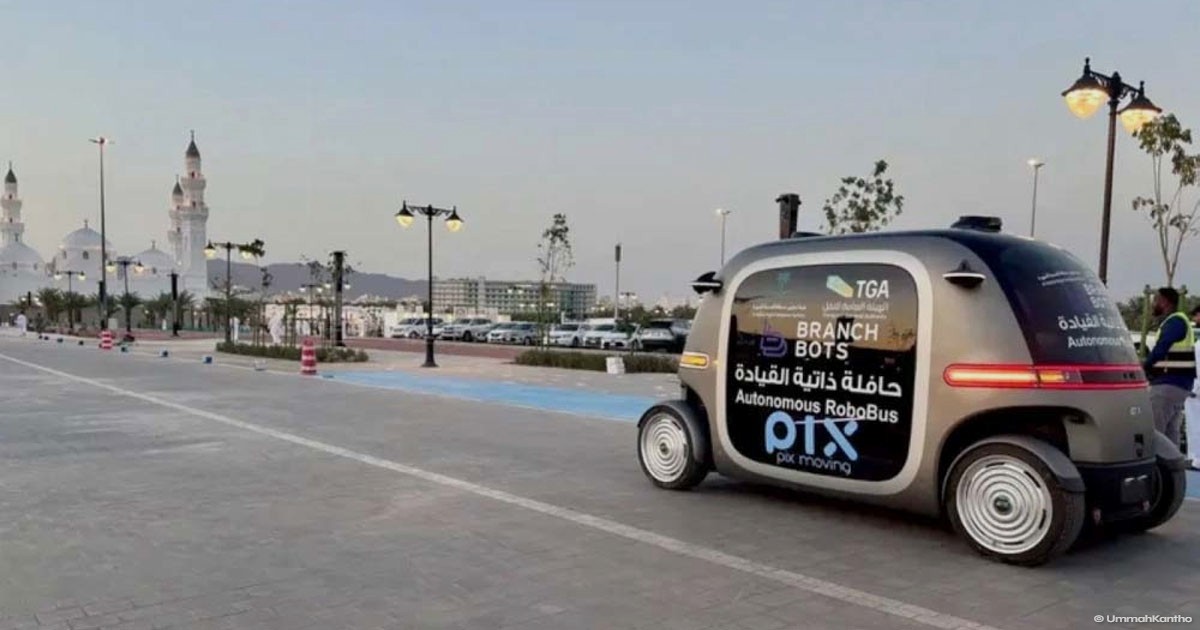
The holy city of Medina has achieved a new milestone in modern urban mobility with the launch of a pilot autonomous shuttle bus service at the historic Quba Mosque. This initiative, carried out through a strategic collaboration between the Saudi General Transport Authority and the Medina Region Development Authority, marks a significant step forward in the Kingdom’s digital transformation. The service, featuring a state-of-the-art "Robo-bus," is designed to provide a safe, innovative, and sustainable transportation experience for the millions of pilgrims and visitors who frequent the site annually.
According to reports from Saudi Gazette, the autonomous shuttle has a capacity to carry up to 20 passengers simultaneously. Driven by advanced Artificial Intelligence (AI) and the latest sensor technologies, the vehicle is equipped with high-resolution cameras that monitor the surroundings to ensure the safety of pedestrians in the mosque’s busy courtyard. The bus follows a meticulously planned route covering approximately 700 meters within the internal plaza, specifically connecting the main entry points for male and female visitors. To maintain the flow of traffic, the shuttle strictly adheres to existing golf cart lanes, ensuring seamless integration with other mobility services.
The 60-day pilot program aims to rigorously evaluate the operational efficiency and reliability of the driverless system within a real-world environment. Engineers and urban planners are utilizing high-resolution digital maps to track the vehicle`s performance and its interaction with the surrounding infrastructure. This testing phase is crucial for Saudi Arabia’s broader vision of expanding autonomous transport across various metropolitan areas. As the Kingdom has officially declared 2026 the "Year of Artificial Intelligence," this project highlights the country`s leadership in adopting smart city technologies to enhance the quality of life for its residents and tourists.
The Robo-bus itself represents the cutting edge of Level-4 (L4) autonomous technology. Being fully electric and driver-independent, the mini-bus relies on LiDAR technology, which uses laser light to scan the environment in three dimensions. This allows the vehicle to detect distances and identify obstacles such as people, walls, and other vehicles with extreme precision. By prioritizing clean energy and automation, Saudi Arabia is aligning its domestic transport development with the strategic goals of Saudi Vision 2030. For the visitors in Medina, this service is not just a technological curiosity but a practical improvement that makes navigating the sacred grounds of Quba Mosque easier and more comfortable than ever before.