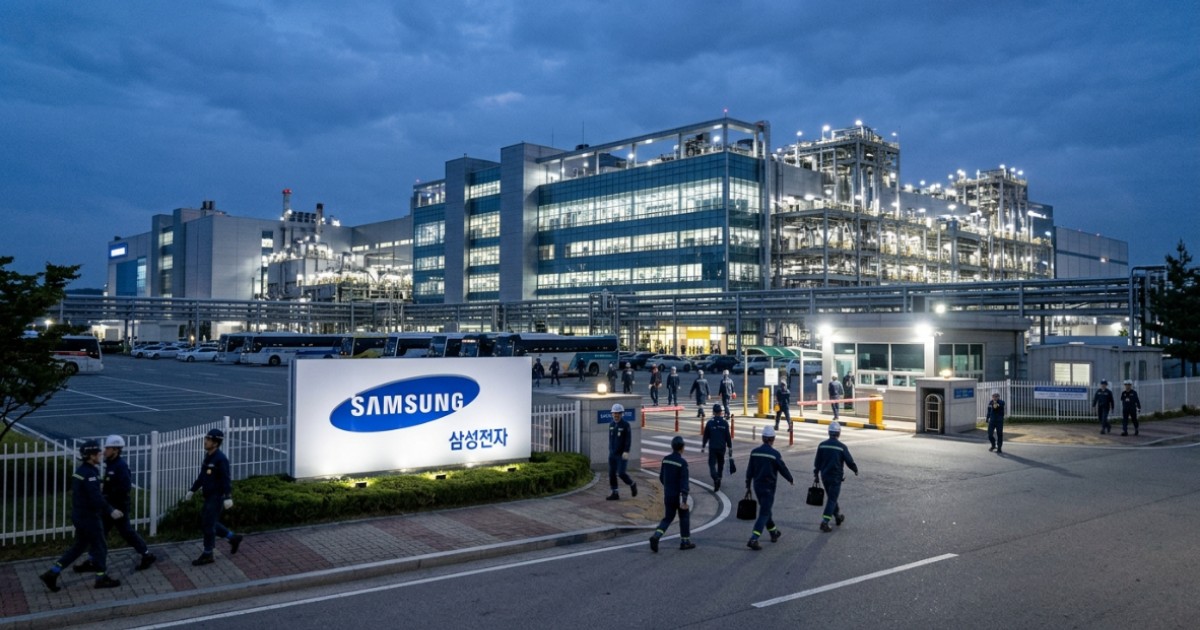
South Korean technology giant Samsung Electronics and its largest labor union have suspended a massive planned strike following a last-minute tentative pay agreement. The breakthrough occurred just 90 minutes before the walkout was scheduled to begin on Thursday, with South Korea`s Labor Minister Kim Young-hoon acting as a mediator. This sudden resolution has temporarily eased fears of severe disruptions at the world`s largest memory chipmaker during an unprecedented boom in artificial intelligence infrastructure. The union, which represents nearly 48,000 workers, confirmed that the industrial action planned for May 21 through June 7 will remain on hold while members vote on the deal between May 22 and May 27.
The core of the dispute revolves around how the massive profits generated by soaring global demand for AI memory chips should be distributed among employees.
Samsung management originally planned to distribute exceptionally generous bonuses to approximately 27,000 staff members working specifically in the advanced memory chip divisions. The proposed payouts were at least six times higher than those offered to workers producing standard chips and consumer electronics. The union strongly argued that the 23,000 workers manufacturing less advanced chips for major clients like Tesla and Nvidia should not be left behind in the profit-sharing structure. The resulting standoff raised serious concerns over potential disruptions to chip production, threatening both global supply chains and South Korea`s export-driven economy.
Samsung currently reigns as the world`s largest memory chipmaker by sales and serves as a crucial supplier of the hardware powering AI data centers, smartphones, and laptops.
The broader Samsung Group holds massive domestic importance, accounting for roughly one-fifth of South Korea`s entire economic output. The labor dispute struck at a highly sensitive moment as the company faces intensifying pressure from rivals SK Hynix and Micron. Surging AI-driven semiconductor demand has already strained global supply networks to their limits.
Samsung`s operating profit during the January to March quarter skyrocketed by about 750 percent compared to the same period last year.
The booming demand for AI hardware pushed the company`s stock market valuation past the one-trillion-dollar mark in May. Last year, local rival SK Hynix aggressively abolished its bonus pay cap for a 10-year period to retain talent. That policy shift led to bonuses more than three times higher than those offered to Samsung employees, prompting several key Samsung workers to jump ship to their competitor.
According to wage negotiation transcripts viewed by Reuters, Samsung later countered by proposing bonuses equal to 607 percent of the annual salary for its memory chip workers.
However, the same documents revealed that employees in other business units would only receive bonuses ranging from 50 to 100 percent of their salaries. The union responded by demanding that Samsung abolish its 50-percent annual salary bonus cap entirely and allocate 15 percent of its annual operating profit to a universal worker bonus pool. Samsung executives had warned that the strike could severely impact the broader South Korean economy through depressed sales, investment outflows, and a drop in tax revenue.
In a statement issued after securing the tentative agreement, the company promised to build a more mature and constructive labor-management relationship to prevent similar incidents in the future.
Financial markets reacted positively, with Samsung`s shares rising by more than eight percent on Thursday following the announcement. South Korea`s benchmark Kospi stock index experienced a similar jump of over eight percent on the same day. Financial analysts at JP Morgan estimated that the strike could have wiped out between 14 billion and 20.79 billion dollars from Samsung`s operating profit.
The impact of any potential walkout would likely have been restricted regardless, as a South Korean court had already granted Samsung Electronics an injunction.
The court mandate required the union to maintain normal staffing levels for safety protection, facility damage prevention, and product quality maintenance. It strictly barred union leaders from occupying company facilities or obstructing willing employees from entering the premises, with a daily fine of 74,000 dollars set for any breaches. The American Chamber of Commerce in Korea noted that in today`s interconnected global economy, disruptions in strategically important industries create ripple effects extending well beyond a single company.