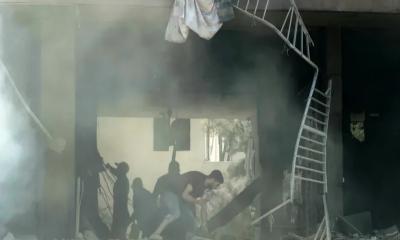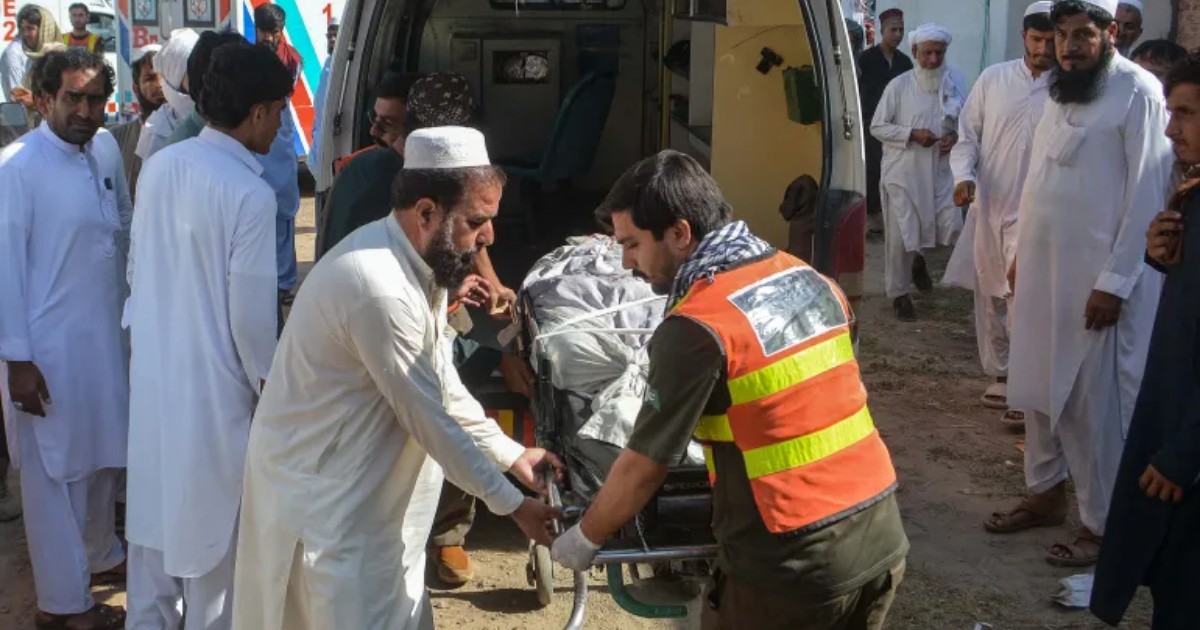
At least seven people were killed and three others injured in northwestern Pakistan`s restive Bannu district on Saturday following twin remote-controlled roadside bomb blasts, local police officials confirmed, according to the Associated Press and Reuters. The deadly incident took place in the Marka Bera area of Khyber Pakhtunkhwa province, a volatile region bordering Afghanistan that has faced recurrent militant activity in recent years. The first explosion directly struck a civilian passenger vehicle, while a secondary hidden device targeted emergency rescuers and local residents who had rushed to the scene to assist the victims.
Providing details on the mechanics of the attack, senior police official Yasir Afridi stated that a private pick-up truck carrying local passengers was targeted with a remote-controlled improvised explosive device. This initial explosion instantly killed five people on board and caused significant damage to the immediate surroundings. As courageous individuals tried to move the wounded survivors into nearby cars and arriving ambulances for emergency medical treatment, the second bomb was detonated. This secondary blast claimed the lives of two more individuals and left three others severely injured, prompting an immediate security lockdown of the entire district.
Pakistani President Asif Ali Zardari and Prime Minister Muhammad Shehbaz Sharif quickly issued strong statements condemning the horrific terrorist act and promising to bring the perpetrators to justice. In an official release, the president extended his deepest condolences to the grieving families and prayed for the rapid recovery of those wounded in the double bombing. Without explicitly naming a specific group, President Zardari issued a stern warning to the internal and external handlers of terrorism who provide financial assistance, logistical backup, and safe havens to violent networks operating inside Pakistan.
No militant group has claimed immediate responsibility for Saturday`s twin explosions, though suspicion is highly likely to fall on the Pakistani Taliban, known formally as Tehrik-e-Taliban Pakistan. The group operates extensively along the porous border with Afghanistan, where Pakistani authorities allege many high-profile insurgent leaders find sanctuary. Tensions between Islamabad and the Taliban government in Kabul have escalated significantly over recent months, marked by severe cross-border skirmishes and controversial Pakistani military airstrikes against suspected militant hideouts.
What remains unclear is how the two neighboring countries will resolve this deep diplomatic and security impasse, given that the escalation has completely frozen bilateral trade and restricted the movement of goods since October. Earlier this month, cross-border strikes resulted in highly conflicting claims, with Pakistan reporting the elimination of 26 Taliban fighters and Afghanistan alleging that 12 innocent civilians were killed instead. This persistent cross-border friction continues to heavily disrupt the lives of local populations in Khyber Pakhtunkhwa, as regional security forces launch an extensive search operation to find those behind the latest atrocity.