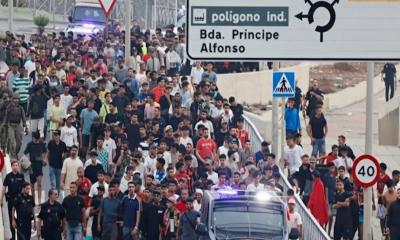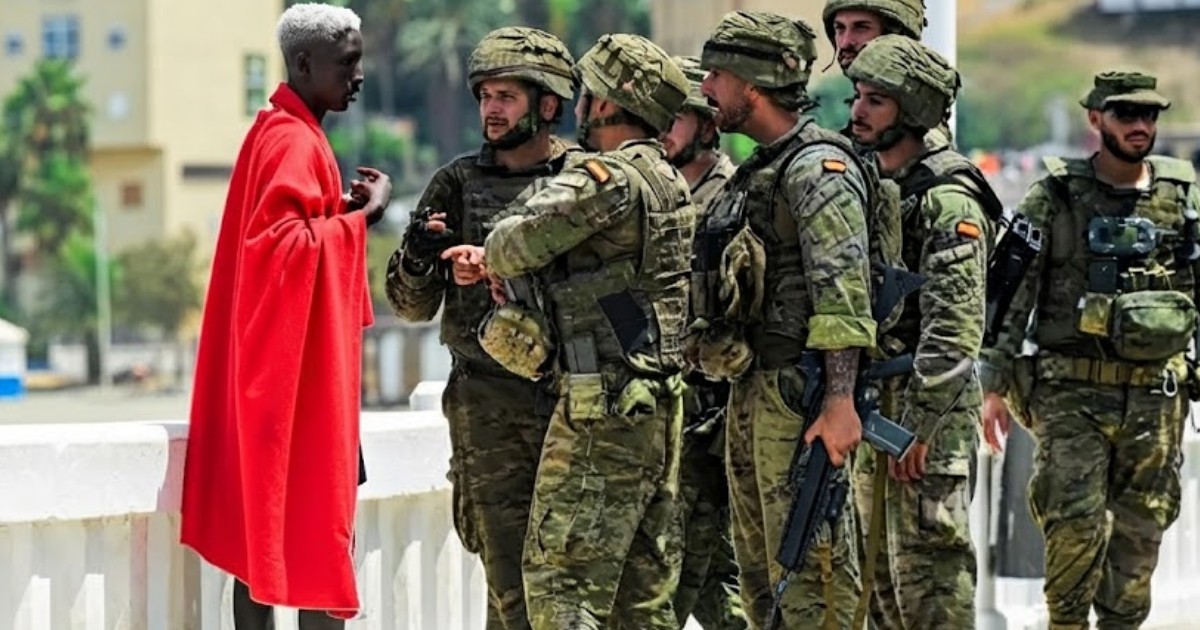
Spain has condemned the selfish, polarising, and unlawful reaction of several European Union countries following the recent influx of approximately sixty thousand migrants from Morocco into the Spanish North African enclave of Ceuta. Prime Minister Pedro Sanchez voiced strong frustration over the diplomatic fallout, asserting that the security of external borders is a shared responsibility of all member states rather than a burden for a single nation to bear alone.
The crisis unfolded during chaotic scenes at the Ceuta border as security controls experienced severe strain under the sudden wave of arrivals. However, Spanish Interior Minister Fernando Grande-Marlaska confirmed during a Saturday press briefing that the situation has now returned to near-normal conditions. He noted that almost all individuals who crossed into the enclave have departed, and local businesses have officially reopened, demonstrating that state authority and border integrity have been fully restored in less than forty-eight hours.
The developments have triggered sharp diplomatic divisions across Europe. Italy temporarily suspended the Schengen border-free arrangement with Spain, with Prime Minister Giorgia Meloni describing the events as shocking. Finland and Denmark expressed support for Rome`s decision, while Czech Prime Minister Andrej Babis called for a temporary suspension of Spain`s Schengen membership. In response to the escalating tensions, interior ministers from twenty-two out of the twenty-seven EU member states signed an open letter requesting urgent talks.
In a formal letter addressed to European Commission President Ursula von der Leyen, Prime Minister Sanchez expressed serious concerns regarding the hostile stance taken by certain European governments. He emphasized that the Spanish administration acted swiftly to prevent any unauthorized onward movement toward continental Europe. While expressing gratitude to nations that offered solidarity, Sanchez accused critics of being driven by prejudice, fake news, or domestic political interests, reiterating that Ceuta is geographically outside the Schengen zone.
Political analysts point out that the incident has laid bare deep-seated disagreements among European capitals regarding migration policy and burden-sharing mechanisms. The debate over border management continues to expose fractures within the bloc. An emergency video conference scheduled for upcoming days is expected to bring EU interior ministers together to address these friction points and formulate coordinated responses to future border pressures.
Meanwhile, international leaders have engaged in direct diplomatic communications to de-escalate the situation. UK Prime Minister Andy Burnham spoke with Sanchez to offer British assistance. Observers note that close cooperation between Spain and Morocco proved pivotal in reversing the crisis swiftly. As calm returns to Ceuta, the broader diplomatic debate over European border security and interstate solidarity remains a central focus of international attention.