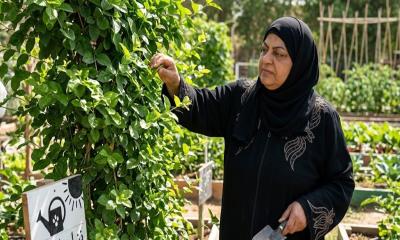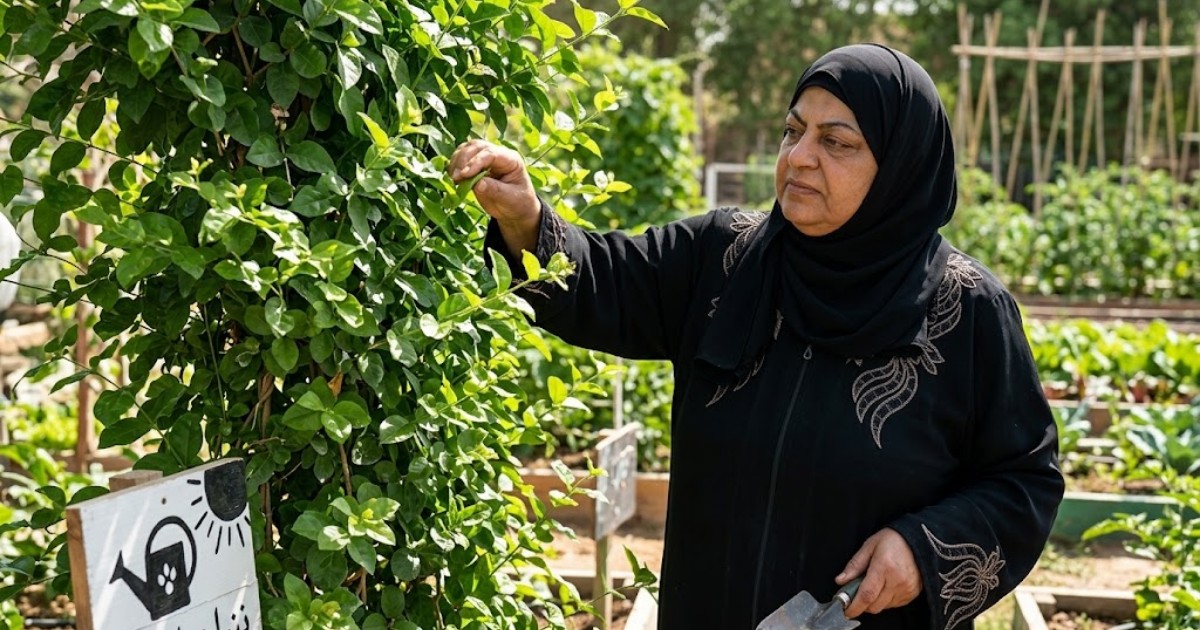
West Bank farmers in the town of Beit Ummar north of Hebron are maintaining daily vigils to protect their orchards and livestock from encroaching settler outposts, Al Jazeera reported. In the locality known to residents as Jabal Sabaa, escalating intimidation by ideological settlers has transformed customary agricultural routines into perilous confrontations. Fifty-six-year-old farmer Theeba al-Sabaa spends daylight hours watching over her remaining grapevines, which historically provided the primary income for her household. She stated that her attachment to the family property remains absolute, refusing to surrender decades of manual labor invested alongside her children.
Settlers deliberately release sheep into Palestinian plots to trample newly tilled soil.
Theeba observed that whenever residents begin seasonal soil preparation, groups from nearby hill outposts lead flocks directly through the rows, devouring and flattening vegetation. Immediate aggression follows any effort by property owners to intervene or document the intrusions. In adjacent plots, 59-year-old Anwar Sabarneh confronts comparable pressure alongside his seven brothers. Continuous incursions have already compelled two siblings to abandon their holdings, while reaching Anwar`s vineyards located 300 meters from his doorstep has become hazardous for his fourteen dependents.
Military forces routinely enforce administrative barriers that hinder Palestinian owners from tending their properties. Sabarneh stated that soldiers accompanying settlers frequently demand arbitrary permits simply to access private domestic courtyards and orchards. In addition, pastoral activities have halted entirely, forcing Sabarneh to confine his herd inside an enclosed shed for over eight months to prevent livestock theft by passing armed groups. Efforts by his sons to reclaim confiscated animals have resulted in physical beatings and detention by military patrols.
Agricultural sabotage operates as a systematic lever for rural displacement.
Official data from the Colonization and Wall Resistance Commission recorded 11,074 joint military and settler attacks throughout the occupied territory during the first half of 2026, encompassing 3,488 direct settler incursions. Hasan Breijieh, head of the commission`s regional monitoring directorate, explained that military roadblock gates and segregated bypass arteries have severed contiguous links between farming enclaves. These ongoing constraints have left families unable to harvest grapes, olives, or guavas for four consecutive seasons, leaving expansive groves unpruned and untended.
With many men arrested or killed during broader security sweeps, Palestinian women such as Theeba al-Sabaa increasingly shoulder primary responsibility for maintaining field vigil. Breijieh emphasized that historic ancestral ties to rural livelihoods ensure that farming communities continue their localized resistance despite intensifying economic devastation across the governorate.