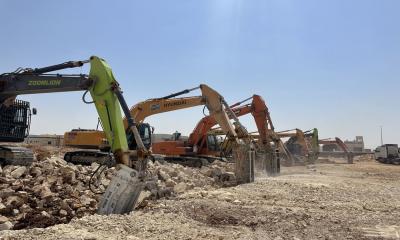
Saudi Arabia’s maritime and logistics sector has absorbed nine months of regional conflict without interruption to trade, according to a senior shipping executive. Red Sea ports are handling record cargo volumes despite ongoing challenges in the region.
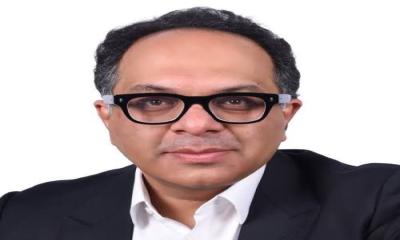
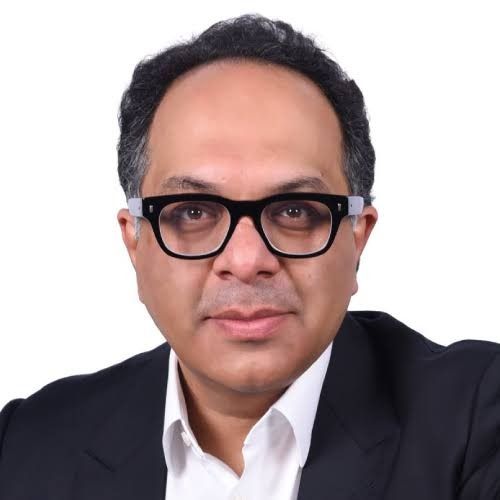
Speaking on Wednesday at the opening of the Saudi Maritime and Logistics Congress in Jeddah, ABSA Al Barrak Group group CEO Akshay Anand said the Kingdom benefits from a favorable geographic position with access to bodies of water on multiple sides.
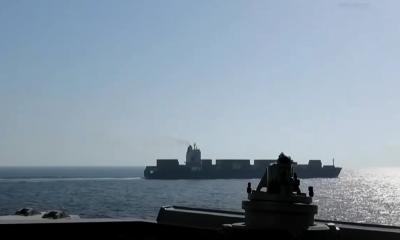
"From a logistics perspective, God has blessed us with seas on both sides," Anand said. "When the Strait of Hormuz became blocked, the Red Sea was open. The Red Sea had its own issues and problems over the past couple of years, but things improved and a lot of cargo started flowing through it."
Pressure has since shifted to the southern approach to the waterway. "With the current issues around Bab Al-Mandab, we face a constant challenge," Anand said. Even with these hurdles, cargo movement has remained steady through domestic ports.
He credited inland capacity for absorbing the strain and described the domestic transport network as very robust. Logistics is a priority sector under the Saudi Vision 2030 plan for national development and diversification.
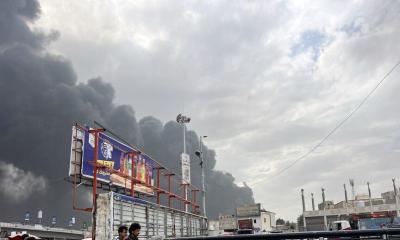
The remarks coincided with an announcement from the Coalition to Restore Legitimacy in Yemen. The coalition stated that air defences intercepted and destroyed five explosive-laden drones launched by the Houthi militia toward the Madinah and Eastern regions on Wednesday.
Coalition spokesperson Brig. Gen. Turki Al-Maliki reported no civilian casualties or damage to vital installations, and described the attacks as a flagrant violation of international humanitarian law. Arabic-language reports later indicated a ballistic missile was also intercepted over Riyadh.
Meanwhile, King Khalid International Airport in Riyadh reopened to a limited number of domestic flights on Wednesday. The reopening occurred 11 days after a closure following an October 10 Houthi missile strike on its terminal complex that killed 13 people and injured more than 300.
Airlines including Saudia and FlyNas resumed operations, while Lufthansa and Air France canceled services into the capital through mid-November.
Anand pointed to the logistics conference in Jeddah as a sign of broader national endurance. "The fact that we in Saudi Arabia can still hold an event of this magnitude, despite the troubles we are facing, is testament to our resilience as a nation," he said.
During an opening panel, Anand argued that global commerce adapts rather than halts. He cited cargo currently traveling to the Kingdom from Turkiye through Syria as an example. "I have always said that global trade has to flow despite any roadblocks, and that is exactly what is happening," he stated.
Anand also called for the financial costs of disruptions to be distributed more evenly across the supply chain. "Costs should not be imposed on the weakest party. They have to be shared among everyone," he said, advocating for updated contractual frameworks and arbitration panels. The two-day congress at the Jeddah Superdome concludes on Thursday.