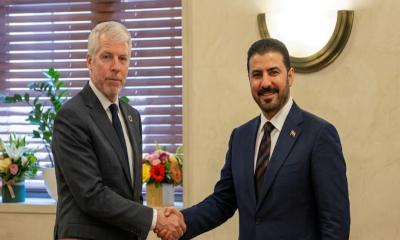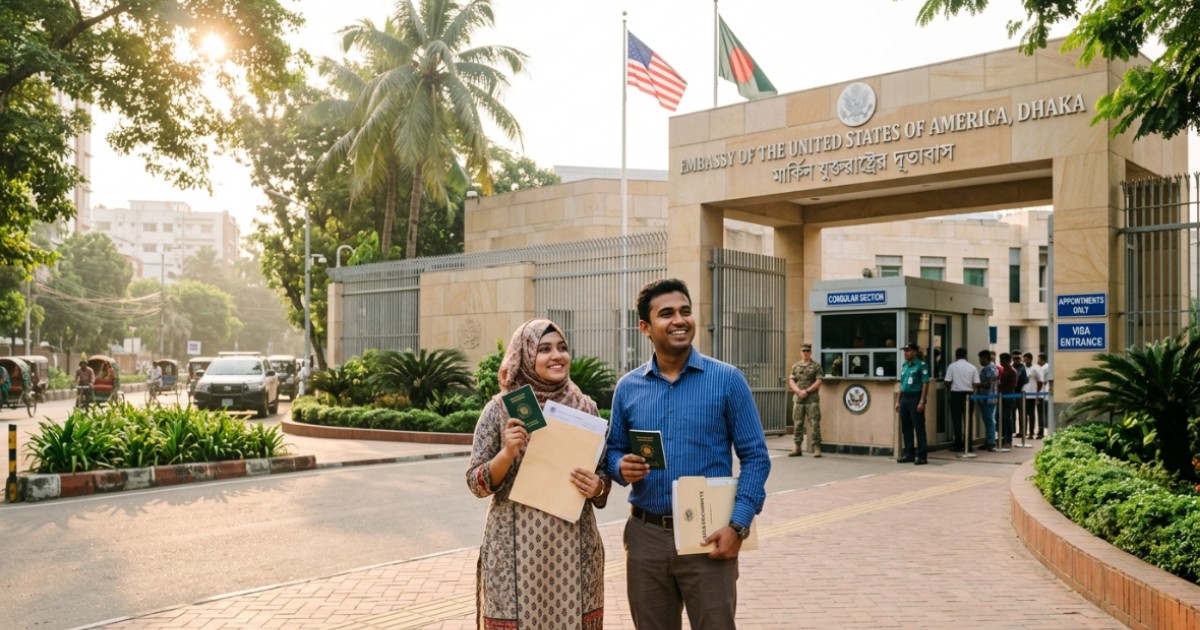
The U.S. Embassy in Dhaka officially announced that effective June 1, 2026, it will implement a rapid two-day processing framework for all immigrant visa categories. The landmark administrative update was shared via an official consular notice on Sunday, bringing significant clarity and relief to thousands of Bangladeshi applicants waiting for permanent residency options in the United States.
This structural reform aims to systematically reduce historical backlogs and optimize the operational efficiency of the consular section. Embassy leadership emphasized that this initiative represents a long-term commitment to upgrading user experiences and modernizing cross-border family reunification pipelines.
Under the newly established operational guidelines, visa applicants must adhere to a strict digital documentation protocol to qualify for the expedited track. The primary requirement dictates that all necessary supporting civil documents and affidavits must be fully uploaded to the Consular Electronic Application Center system prior to the appointment. Consular officials confirmed that any missing, outdated, or incomplete files will automatically disqualify the applicant from the fast-track timeline. Once the online portfolio is fully completed, applicants will be required to visit the embassy premises at least twice during the final stages of the adjudication process.
The initial visit to the embassy will focus primarily on document authentication and biometric collection. Applicants must attend the preliminary session on the specific date scheduled by the National Visa Center, carrying all original civil documents alongside clear physical photocopies. During this first stage, embassy staff will review the physical paperwork against the digital uploads, collect fingerprints, and capture digital photographs to ensure identity verification. If the file is deemed structurally complete with no outstanding requirements, the applicant will immediately receive an official appointment letter detailing the date and time for their definitive interview.
The definitive visa interview with a consular officer is typically scheduled within the same week as the initial document review. During this interim period, the embassy will temporarily retain all original civil paperwork for administrative purposes, except for the applicant`s primary passport. The applicant must return to the secure embassy facility on the designated date with their passport to complete the formal evaluation. The consular officer will review the merits of the underlying petition during this second interaction, and the final issuance determination will generally be delivered before the conclusion of the session.
Once a definitive determination is made, the embassy will issue a notification via email or automated text message when the visaed passport is ready for collection. Applicants must retrieve their passports in person or through an authorized representative within fourteen days of receiving the notification to avoid potential cancellation risks. However, specific exceptions remain where processing times will naturally extend beyond the standard forty-eight-hour window. Applications requiring extensive medical clearances, additional administrative processing, or localized background verifications will remain exempt from the accelerated schedule until all security protocols are fully satisfied.
This strategic operational upgrade follows a series of broader adjustments to U.S. visa policies implemented earlier this year on the sub-continent. In January, the Department of State introduced revised public charge standards and financial bond requirements for specific nonimmigrant classifications to safeguard domestic public resources. While security vetting frameworks remain highly strict across all immigrant pathways, this administrative fast-track for family and employment preference visas marks a substantial logistical advancement. By shortening the processing window to just forty-eight hours, the U.S. government effectively eliminates prolonged periods of uncertainty for immigrant families transitioning to their new lives.