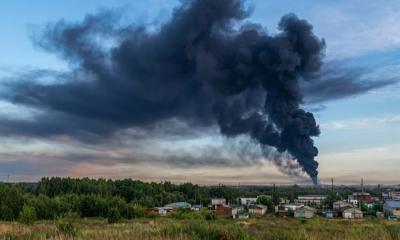
Iran fired drones and missiles at Kuwait and Bahrain on Sunday and claimed to have stopped two ships in the Strait of Hormuz following an eighth consecutive night of attacks by the United States, according to Al Jazeera and AFP.
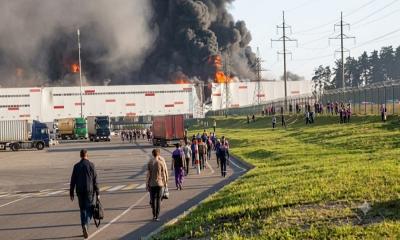
Kuwait and Bahrain reported multiple waves of Iranian strikes throughout the day. The Kuwaiti Ministry of Electricity, Water and Renewable Energy confirmed that one of the aerial attacks struck a crucial power and water desalination plant, triggering a massive fire across several facilities. In response, authorities immediately activated emergency protocols and urged citizens to ration their electricity consumption during this exceptional period. The ministry strongly condemned the incident, describing it as a heinous Iranian aggression against civilian infrastructure.
In neighboring Bahrain, which hosts the United States Fifth Fleet, the military stated that its air defense systems had successfully confronted, intercepted, and destroyed a series of treacherous Iranian aerial attacks. Journalists on the ground reported hearing loud explosions and air raid sirens echoing across the capital city of Manama, as well as in Kuwait City. Both Gulf nations, which house significant American military installations, have borne the brunt of the escalating cross-border violence since hostilities resumed earlier this month.
The Iranian army provided specific details regarding their targets. In a formal statement broadcast on the state-run IRIB network, military officials claimed that Sunday’s operation in Kuwait deliberately targeted a United States ammunition depot located at Camp al-Adiri. The strikes also aimed to cripple air defense radars stationed at the Ali Al Salem airbase, a facility that hosts American military personnel. The Iranian army emphasized that its soldiers would remain firm and steadfast in defending the Iranian people against those they described as enemies of Iran and humanity.
What remains unclear is how the United States will respond to these direct assaults on its regional allies and military assets. The renewed violence has completely shattered a recent ceasefire agreement between Washington and Tehran, pushing the Middle East closer to the brink of an all-out regional war. The situation in the strategic Strait of Hormuz also remains highly volatile, with both sides actively targeting shipping traffic. Iran insists it is intercepting vessels that violate navigation rules, while the United States maintains it is enforcing a strict naval blockade to protect one of the most critical energy transit routes in the world.