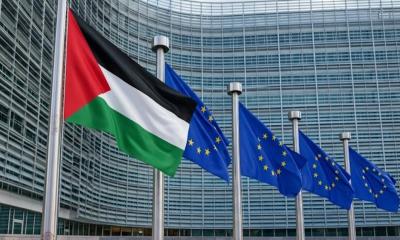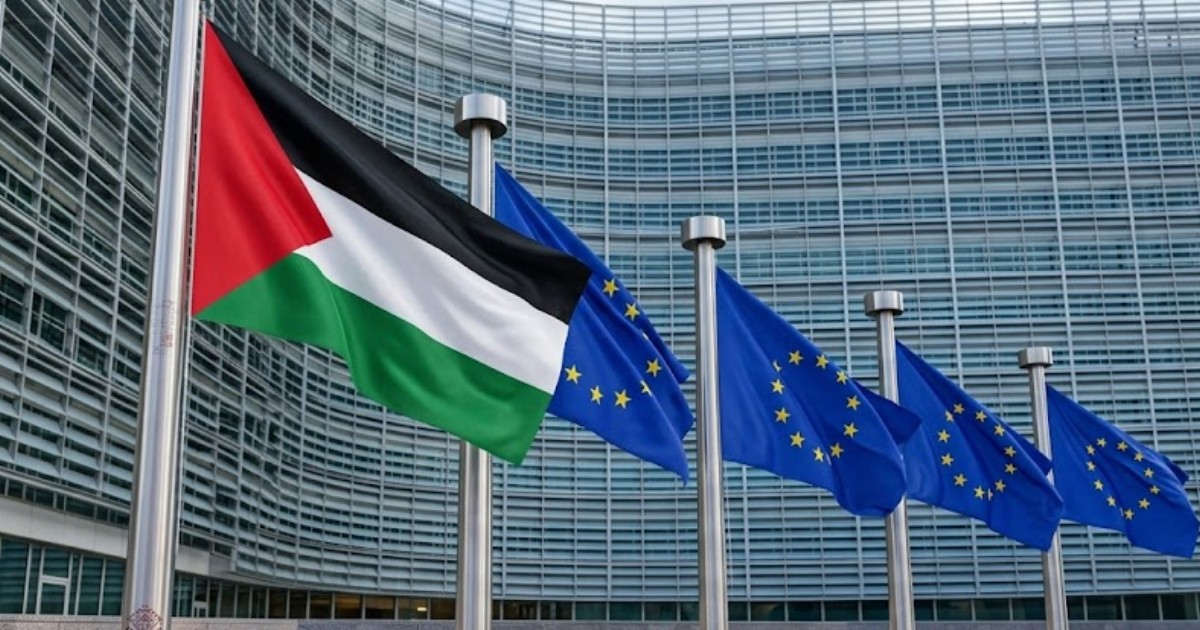
The Belgian federal government approved a comprehensive ban on importing goods produced in illegal Israeli settlements in the occupied Palestinian territories on Saturday, Al Jazeera and Anadolu Agency reported from Brussels. The landmark decision was finalized during the cabinet`s final administrative session immediately before the summer recess, according to the Belgian News Agency, Belga. The dynamic policy measure successfully fulfills a political commitment established late last year by the federal coalition in direct response to the intense military campaign in Gaza and the mounting civilian death toll. By executing this independent trade restriction, Belgium joins a small but rapidly growing faction of European nations acting unilaterally due to prolonged diplomatic deadlocks at the broader institutional level.
The strategic development occurred as European Union foreign ministers remain deeply divided over how to collectively restrict commercial trade with illegal Israeli settlements. Earlier this week, Belgian Foreign Minister Maxime Prevot directly pressed his regional counterparts during a high-stakes closed-door meeting convened in Brussels. He openly criticized the European Commission for offering member states a token gesture rather than presenting a genuine legislative strategy to advance accountability. While a strong coalition including France, Ireland, the Netherlands, and Spain strongly favors an absolute import ban, severe resistance from member nations like Germany and Italy has blocked unified progress. The split reflects deeper structural arguments within the bloc over whether settlement trade should be regulated purely as commercial policy or treated as formal diplomatic sanctions requiring absolute unanimity among all members.
In an effort to manage the widening policy split, the European Commission recently circulated an internal options paper detailing potential pathways, including tighter export licensing systems, increased tariff rates, or selective import bans. However, these regulatory ideas have not yet been translated into formal legislative proposals, leaving individual states unable to cast decisive votes. Meanwhile, the situation on the ground has deteriorated rapidly as Israeli authorities accelerate expansion projects across the West Bank. The Palestinian Colonization and Wall Resistance Commission warned that occupation authorities have advanced plans for 1,024 new settlement units on over 1,069 dunams of stolen land since the beginning of July. The localized projects are designed to cement a de facto annexation of the remaining territory, directly undermining global peace frameworks.
The continuous expansion of illegal Israeli settlements is widely condemned by the international community as a blatant violation of international humanitarian law and the primary obstacle to peace. The United Nations has repeatedly reaffirmed that these colonial outposts undermine the geographical viability of a sovereign Palestinian state and completely destroy the prospects for a viable two-state solution. The legal arguments against settlement trade gained immense strength following the 2024 International Court of Justice advisory opinion, which explicitly called on global states to halt economic relations that sustain unlawful territorial situations. The Belgian decision reflects this profound ethical shift, demonstrating that national trade policies are becoming necessary tools to enforce international human rights obligations.
What remains unclear is the exact legal framework through which the new trade rules will be enforced and which specific economic sectors will face immediate restrictions. Independent media outlets noted that specific execution terms, including the potential inclusion of transitional sunset clauses, are still being debated by local regulators. The broader regional humanitarian emergency remains acute, with Gaza health officials reporting that the ongoing military campaign since October 2023 has killed more than 73,000 Palestinians and displaced millions. This devastating loss of life has triggered massive public demonstrations across European capitals, adding intense domestic pressure on governments to sever ties with the occupation. In Brussels alone, thousands of peaceful demonstrators recently gathered outside the city`s major transit hubs to demand the immediate suspension of the comprehensive EU-Israel partnership agreement.
The implementation of this localized import restriction serves as a vital test for the diplomatic credibility of the European Union as a whole. If the regional bloc continues to label these outposts as illegal under international law while maintaining lucrative trade ties, it risks severely undermining its own legal framework. Belgium has effectively challenged the prevailing culture of institutional inaction by prioritizing human rights over short-term diplomatic considerations. This decisive step is expected to embolden allied European nations to pass similar legislations, accelerating global pressure to safeguard the rights of the Palestinian people.