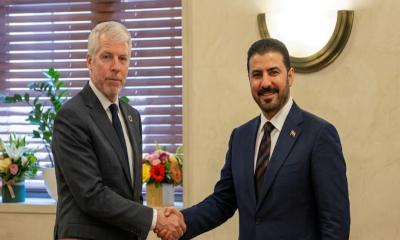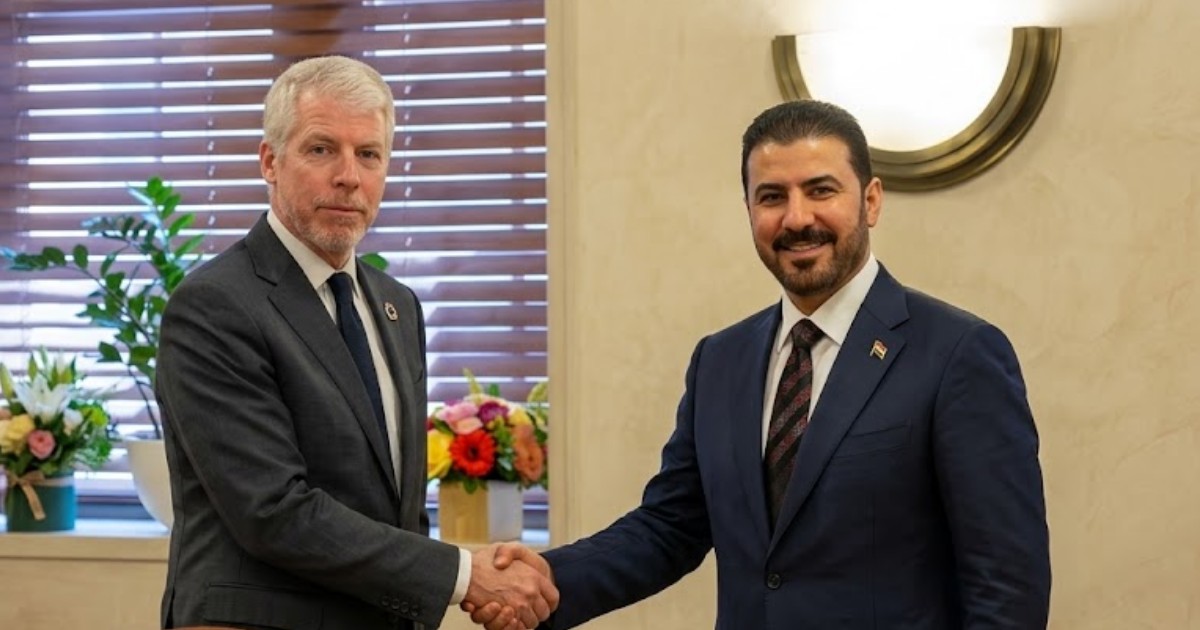
Iraq signed 48 comprehensive partnerships and economic cooperation agreements with major American companies during an official visit to Washington by Prime Minister Ali al-Zaidi on Friday, according to Reuters and AFP. The preliminary agreements were formally finalized during a high-level US-Iraq business summit hosted at the US Chamber of Commerce. The expansive Iraq-US agreement involves both public and private entities, aiming to fundamentally modernize Iraq`s critical energy, electrical infrastructure, and technology sectors after years of domestic conflict and infrastructure deficits.
Under these newly signed commercial arrangements, Iraq and Syria have entered a joint cooperation pact to completely reconstruct a long-defunct crude oil pipeline that has been inactive for decades. This vital infrastructure network stretches from the oil-rich Kirkuk region in northern Iraq directly to the strategic Mediterranean port of Baniyas in Syria. The Iraqi state news agency reported that the prominent American energy corporation Chevron will carry out the technical and financial aspects of the project under the terms of the new agreement. The United States Department of State formally welcomed the rehabilitation plan, confirming that a US-led international consortium would actively execute the technical phases.
American diplomatic officials noted that upon full reconstruction, this groundbreaking infrastructure asset will feature an initial transport capacity of 2 million barrels of crude oil per day. The State Department described the line as a critical energy corridor connecting Iraqi oil production directly to Mediterranean and global export markets. Baghdad is actively seeking to diversify its commercial trade routes to move away from its historical dependence on the Strait of Hormuz. Maritime shipping and energy exports through that vital strait have faced severe disruptions recently due to the ongoing military conflict involving the United States, Israel, and Iran.
Beyond the primary pipeline project, the comprehensive Iraq-US agreement encompasses strategic partnerships with several other leading American energy and engineering firms. The corporate entities participating in the revitalization effort include industry giants such as ExxonMobil, KBR, GE Vernova, Shell, and Halliburton. Additionally, the Iraqi government finalized a separate deal with Starlink, the dominant global satellite communications provider, to officially introduce high-speed satellite internet services across the country to drastically improve domestic connectivity.
What remains unclear is the exact timeline required for these large-scale infrastructure projects to achieve operational status given the complex security landscape inside Syrian territory. However, international economic analysts suggest that the successful execution of these agreements could fundamentally reshape the geopolitical dynamics of the Middle East and enhance Iraq`s long-term financial autonomy. The complete implementation of these commercial initiatives will likely dictate the future trajectory of Iraqi industrial capability and its broader economic integration with Western markets over the coming decade.