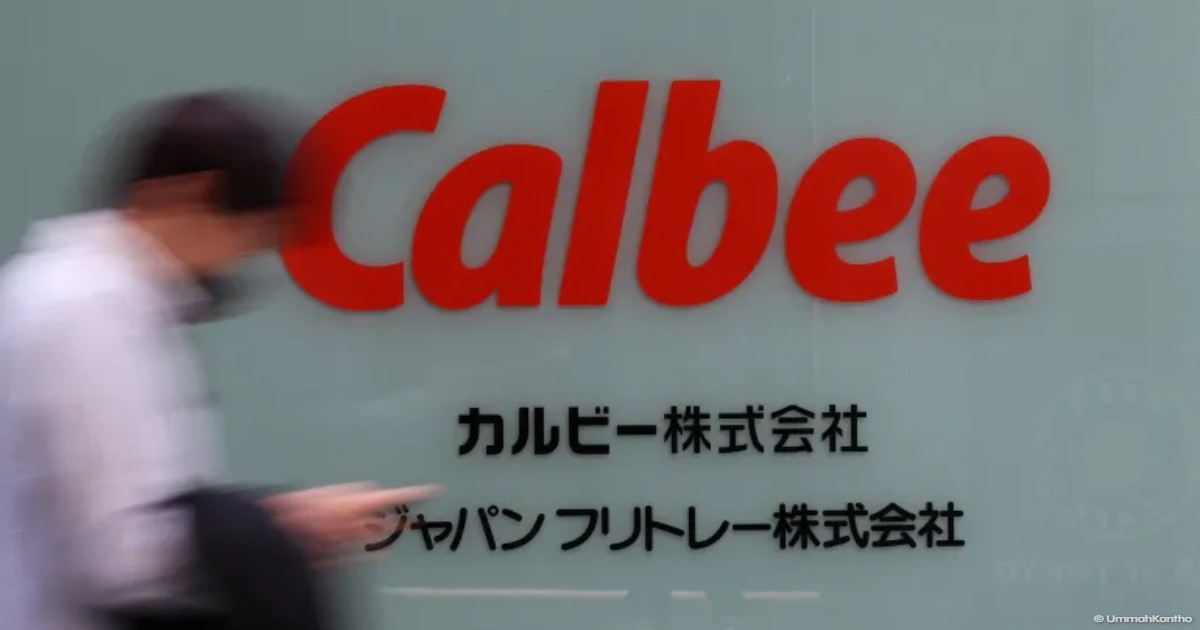
The US-Israeli war in Iran is literally draining the color from Japan’s retail landscape. In a move that highlights the far-reaching consequences of Middle Eastern instability, Tokyo-based snack giant Calbee has announced it will temporarily switch to black-and-white packaging for 14 of its flagship products, including its world-famous potato chips. This unprecedented aesthetic shift is not a design choice, but a desperate measure sparked by a global shortage of high-quality printing ink.
The root of the crisis lies in the effectively closed Strait of Hormuz. Since the war erupted in late February 2026, the maritime passage—responsible for one-fifth of the world’s petroleum transit—has been a combat zone. This disruption has throttled the supply of naphtha, a critical oil derivative used as a primary feedstock for manufacturing resins and solvents in the printing ink industry. Japan is particularly vulnerable, as it imports roughly 40 percent of its naphtha from the Middle East.
Calbee released a statement explaining that "supply instability affecting certain raw materials" necessitated this tactical retreat to monochrome. By simplifying its packaging, the company hopes to maintain a stable supply of snacks on shelves without succumbing to the skyrocketing costs of colored pigments. These "colorless" bags are scheduled to roll out across Japanese convenience stores and supermarkets starting May 25.
Here is the thing that makes this situation critical: the shortage extends far beyond the snack aisle. Naphtha is a cornerstone of modern manufacturing, used in everything from plastics and synthetic rubber to high-octane gasoline. While Deputy Chief Cabinet Secretary Kei Sato assured the public that the government is working to source imports from outside the Middle East, global giants like US-based Sun Chemical and Germany’s Hubergroup have already announced unavoidable price hikes. These firms cite the "scale and persistence" of cost pressures as a primary driver for a global increase in printing and logistics expenses.
What this really means for the global economy is a "supply shock" that mirrors the pandemic era, but with a sharper geopolitical edge. Despite a fragile ceasefire brokered in early April, the Strait remains blocked. US forces have recently enforced a naval blockade of Iranian ports following the collapse of peace talks in Pakistan, further tightening the noose on global energy flows. Until the geopolitical stalemate in the Gulf is resolved, the vibrant, colorful packaging consumers have taken for granted may remain a casualty of war, replaced by the stark reality of monochrome austerity.
As essential goods lose their vibrant branding due to war, do you think consumers will accept this "monochrome aesthetic" as a permanent fixture of a more resource-scarce world?