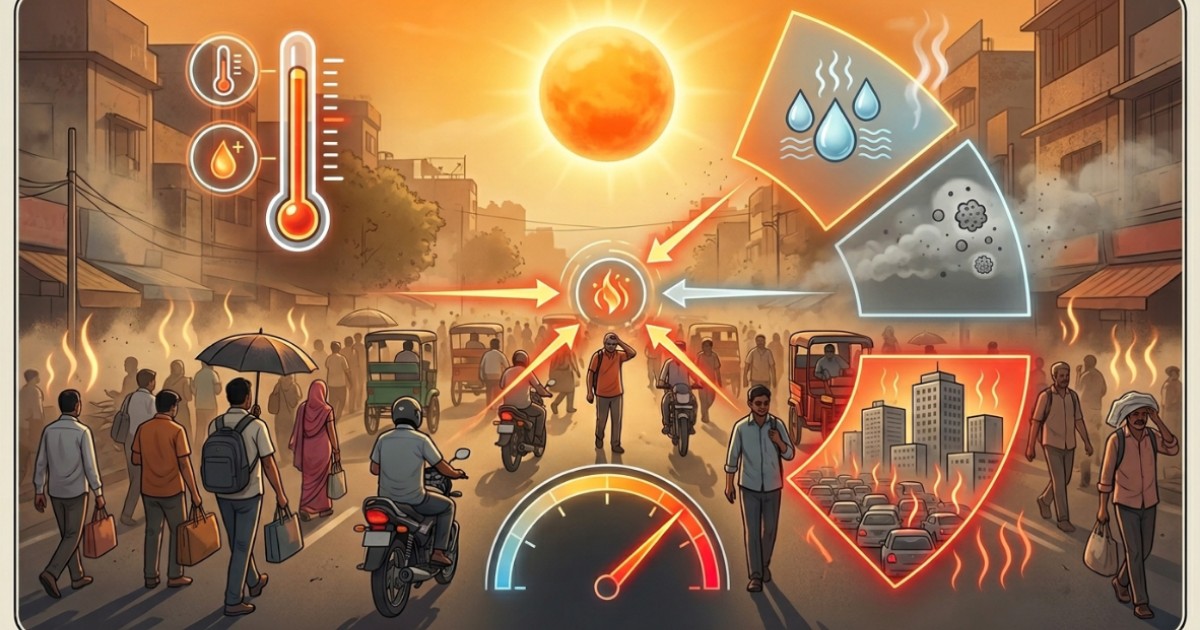
India`s capital, Delhi, has endured a severe heatwave for several weeks, with temperatures consistently rising above 40°C. On Tuesday, the Indian Meteorological Department (IMD) officially recorded the maximum daytime temperature at 43.5°C. While this official reading provides a standard measurement, the reality on the streets is significantly more intense. Research conducted by Greenpeace India using thermal imaging cameras recorded surface temperatures reaching as high as 64°C in some parts of the city.
The discrepancy between official data and reality stems from how temperatures are measured. The IMD records air temperature under standard conditions. In contrast, thermal cameras measure the temperature of physical surfaces. Roads, concrete infrastructure, and vehicles absorb radiation from the sun, becoming substantially hotter than the surrounding air. In urban areas where shade and vegetation are limited, this phenomenon makes the environment feel considerably hotter than the official records suggest.
Greenpeace researcher Nibedita Saha conducted thermal imaging assessments at one of Delhi`s busiest junctions, the IIT flyover in the south of the city. While the reading in the shaded areas beneath the flyover was 42°C, the device registered 64°C on surfaces exposed to direct sunlight, such as the area where bikers idle at traffic signals. Moving just a few feet to stand under a tree reduced the surface temperature to 39.8°C, highlighting the critical role that urban green cover plays in temperature regulation.
Public health experts warn that consistent exposure to these extreme conditions poses significant risks. Dr. A. Fathahudeen, a pulmonologist, noted that the core human body temperature is approximately 37°C. When this exceeds 40°C due to prolonged heat exposure, the body struggles to function normally. Common symptoms include severe sweating, headaches, and fatigue. In serious cases, patients can experience confusion, seizures, and multiple organ failure, which can be fatal if left untreated.
To mitigate health risks during this heatwave, medical professionals advise residents to maintain hydration regardless of thirst, wear lightweight clothing, and utilize umbrellas for protection when outdoors. Experts have also urged the government to issue strict advisories for outdoor laborers, recommending a halt to work between 10:30 a.m. and 3:00 p.m. However, such protective measures remain difficult to implement for the city`s vulnerable populations, who often lack the luxury of avoiding outdoor labor during peak heat hours.