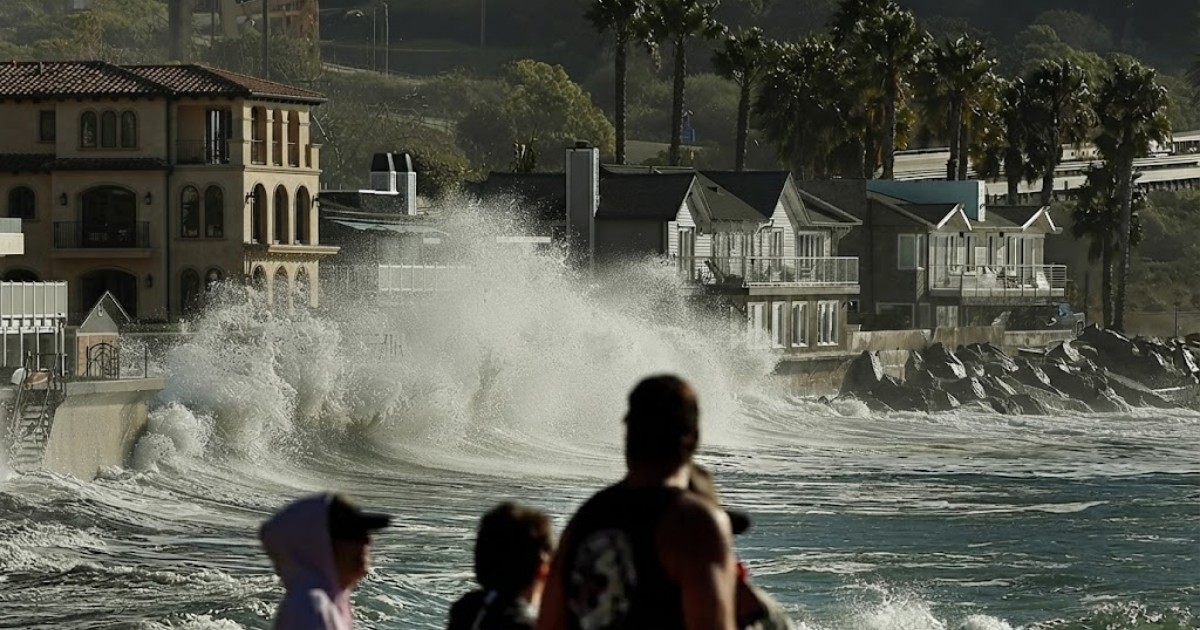
A rare and powerful combination of an immense marine heatwave and a super El Nino brewing in the Pacific Ocean is poised to profoundly impact United States weather patterns and marine ecosystems this autumn, according to BBC News reports.
In the northeast Pacific Ocean, an expansive and persistent heatwave is wreaking havoc on aquatic life. Andrew Leising, a research oceanographer at the National Oceanic and Atmospheric Administration, noted that surface temperatures across the ocean basin are running three to four degrees Celsius above average. This marine warming event is being significantly supercharged by a massive El Nino pattern developing further south, which is expected to intensify into one of the strongest warming events on record.
The convergence of these two massive thermal anomalies raises severe flood risks along the US West Coast. Coastal water levels in California are already fifteen centimeters above normal sea levels and are projected to rise even further during the peak of the El Nino cycle. Warmer ocean surfaces evaporate greater quantities of heat and moisture into the atmosphere, increasing the frequency of heavy atmospheric rivers, intense rainfall, and potential mudslides across inland regions.
Further north in the Pacific Northwest and Canada, the combined thermal effects are expected to diminish winter snowfall and exacerbate existing drought conditions. Larry O`Neill, a professor at Oregon State University, warned that reduced snowpack combined with dry soil could take multiple winters to recover, while simultaneously escalating wildfire risks across northern California and neighboring states.
Conversely, while Atlantic hurricane development tends to be suppressed by El Nino conditions, tropical storms in the eastern Pacific are projected to grow stronger due to elevated water temperatures. Marine biologists emphasize that these extreme heat anomalies are devastating local ecosystems off the California coast, drastically lowering oxygen levels and forcing fish populations to migrate into deeper waters.
Scientific research indicates that marine heatwaves have grown increasingly frequent over the past seven decades as global oceans absorb more than ninety percent of excess heat generated by climate change. Climatologists warn that these extensive warming anomalies in the Pacific are beginning to establish themselves as a permanent feature of the global climate system, with sea surface temperature anomalies expected to climb further as El Nino reaches its peak.