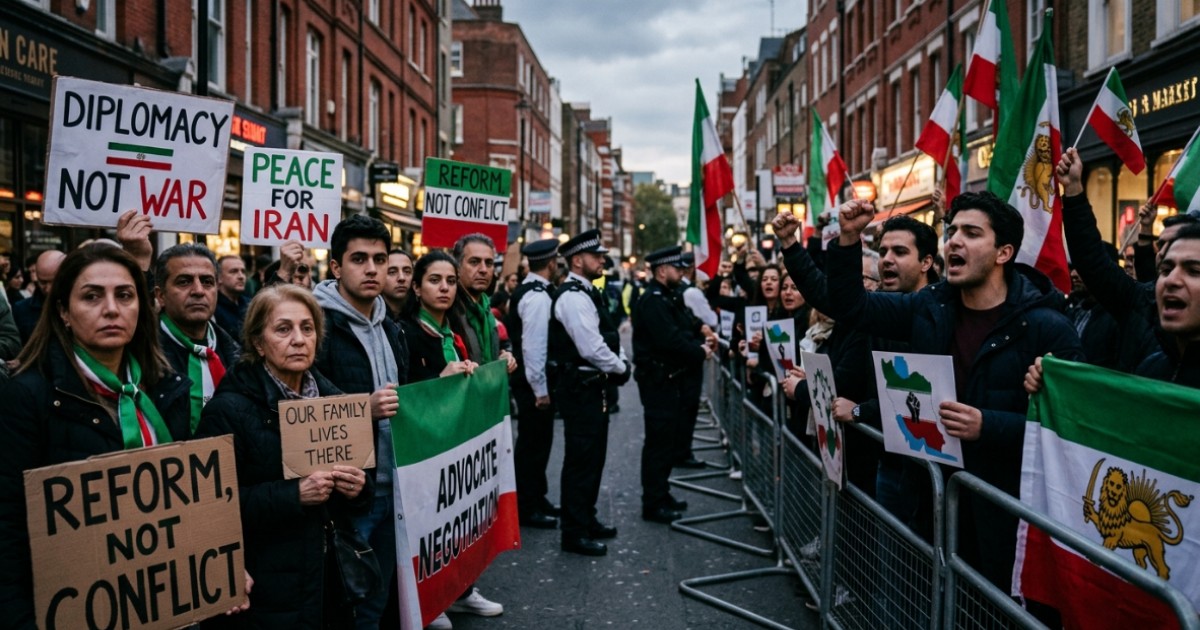
The ongoing military campaign by the United States and Israel against Iran has created deep ideological divisions among members of the Iranian diaspora living in western nations, according to Al Jazeera reports. Six months after the conflict erupted on February 28, exiled Iranians remain sharply polarized over both the ruling government in Tehran and the foreign military intervention.
Peyvand Khorsandi, who moved to the United Kingdom as a child in 1976, told Al Jazeera that the war has delivered a serious setback to pro-democracy advocates while inadvertently granting the government a new lease of life. His father, Hadi Khorsandi, was a prominent Iranian satirist who survived an assassination attempt in London in 1984, an attack allegedly orchestrated by state actors in Tehran.
Despite his staunch opposition to the Iranian leadership, Khorsandi condemned the US-Israeli strikes, characterizing the conflict as a colonial and racist endeavor that treats the lives of people from the Global South as expendable. He criticized diaspora members who believe western powers view them as political equals.
Conversely, other segments of the diaspora have actively rallied in support of the military strikes. These supporters frequently align with Reza Pahlavi, the exiled son of Iran`s deposed monarch, Shah Mohammad Reza Pahlavi, who was overthrown in the 1979 Islamic revolution. Proponents of foreign intervention argue that external pressure is necessary to weaken the ruling clerical establishment.
The broader conflict has severely impacted the global economy, triggered escalating energy prices, and resulted in thousands of civilian casualties across the region. This prolonged devastation has intensified debates within expatriate communities regarding sovereignty, opposition politics, and the ethics of foreign military action.
Analysts note that the diaspora`s internal fractures reflect the complex paradox faced by Iranians abroad, who remain fiercely opposed to domestic authoritarianism while deeply skeptical of foreign intervention. As the conflict enters its seventh month, consensus among the exiled population remains elusive.