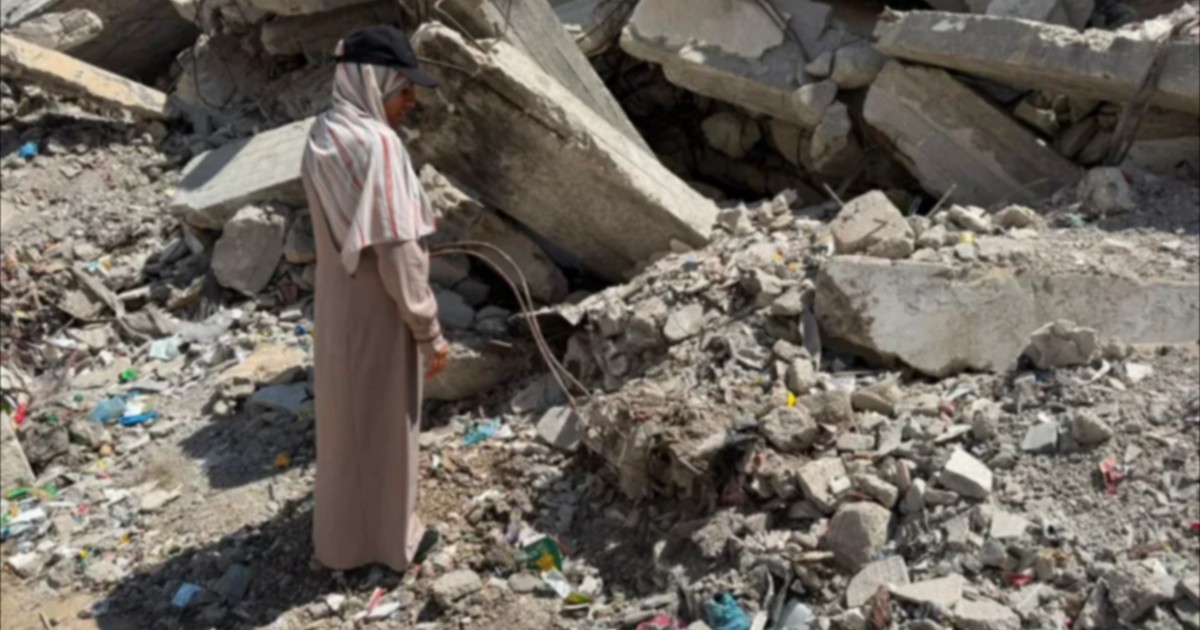
The Haji family home in the al-Zaitoun neighborhood of Gaza City, which once housed more than 30 extended family members, remains a grim testament to the ongoing devastation in the region. On November 16, 2023, an Israeli air raid reduced the three-story building to rubble in an instant. While Fidaa Haji and her four children survived, her husband, Adnan Haji, and the majority of their extended family were killed in the collapse. The family’s search for their loved ones has since become a painful, multi-year ordeal that highlights the broader humanitarian catastrophe unfolding across Gaza.
Fidaa and her children were displaced to the south for a significant period following the attack. When they returned to al-Zaitoun in October 2025, they were confronted with the debris of their former lives—a daily reminder of their tragic loss. Fidaa spoke to Al Jazeera about the psychological toll of this reality, noting that the inability to bury her loved ones or say a proper goodbye has left her in a state of suspended grief. The absence of a formal farewell makes the mourning process feel incomplete, leaving families like hers in a state of agonizing limbo.
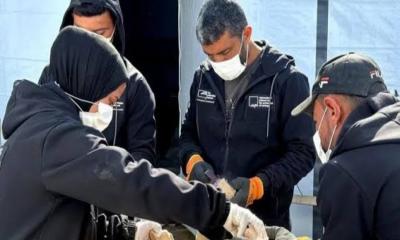
While Fidaa’s brother eventually managed to retrieve Adnan’s body for a provisional burial in the courtyard of al-Shifa Hospital, the fate of other family members remained unknown for years. On July 1, 2026, the family attempted to recover more remains themselves. Despite a severe lack of resources and heavy excavation equipment, they succeeded in retrieving six bodies. The process of identifying these remains after more than two years has proven extremely difficult, adding a new layer of trauma to an already devastated family.
Their struggle reflects a widespread reality across the Gaza Strip. According to the Gaza Civil Defence, thousands of bodies remain trapped under the ruins of destroyed buildings. Recovery operations are moving at a critically slow pace due to the lack of heavy machinery and excavation resources. Humanitarian organizations have warned that this delay causes profound psychological harm, as families are forced to live with the knowledge that their loved ones are physically present beneath the debris but unreachable, neither buried nor farewelled.
Ismail al-Thawabta, Director of the Government Media Office in Gaza, has emphasized that this situation reflects a complex humanitarian crisis with deep social and psychological impacts. Over time, the decomposition of remains makes identification increasingly difficult, prolonging the uncertainty for thousands of families. As Gaza continues to endure these conditions, the Haji family’s story remains a harrowing example of the long-term devastation faced by those left behind, struggling to find closure amidst the ruins of their homes.