Palestinian teams salvage ancient relics, pottery, and historic fragments across the Gaza Strip, racing against environmental decay and military devastation to preserve the enclave`s tangible history. The emergency initiative operates amid an offensive that has decimated communities and eroded historic landmarks spanning five millennia. According to documentation compiled by UNESCO, at least 164 registered historical monuments and cultural institutions were damaged or leveled between October 2023 and March 2026.
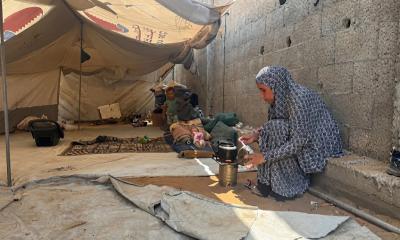
Centuries of archaeological history are sheltering in a canvas tent.
Among the damaged landmarks are Gaza City’s Great Omari Mosque, the medieval Hamam al-Sammara, the ancient fort of Qasr al-Basha, and the al-Qarara Cultural Museum near Khan Younis. The physical destruction unfolds alongside a staggering humanitarian toll that has seen more than 74,022 Palestinians killed and roughly 84 percent of all buildings damaged or demolished. Confronting the risk of complete cultural erasure, the Mayasem Association for Culture and Arts organized a specialised team named the Guardians of Heritage to recover artifacts stranded beneath collapsed masonry.
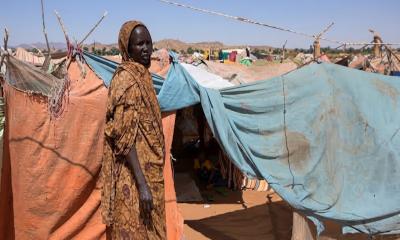
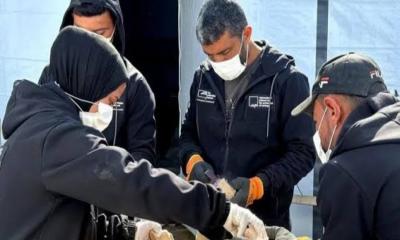
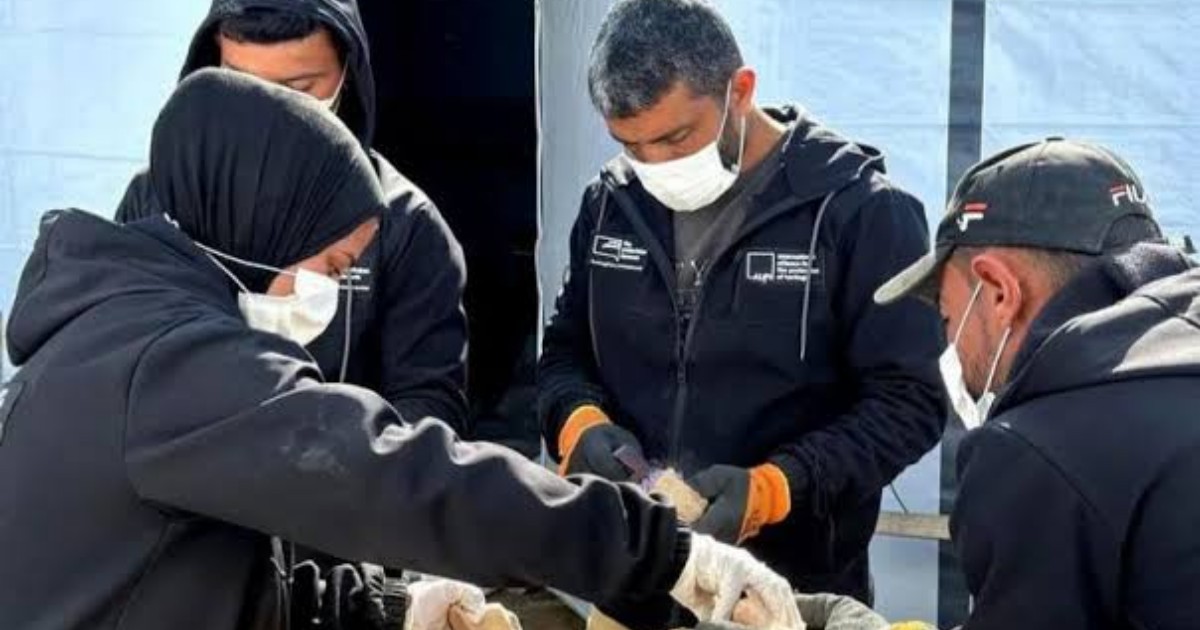
Shaimaa Mohammad al-Natour, assistant coordinator for the programme, confirmed that the team has retrieved and catalogued more than 1,700 distinct artifacts salvaged from four institutional museum collections. Operating out of a temporary tent pitched among displaced communities in the coastal al-Mawasi district of Khan Younis, the group coordinates makeshift conservation procedures without standard laboratory equipment. Their logistical routines are compounded by frequent forced relocations and systemic restrictions on the importation of specialized chemical adhesives and archival packaging.
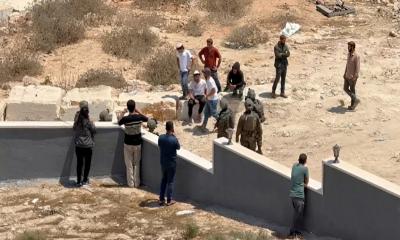
Military restrictions along the designated Yellow Line present the most lethal operational challenge. Since a formal ceasefire took effect in October 2025, Israeli forces patrolling the perimeter have killed at least 196 Palestinians in this restricted corridor. Al-Natour stated that while several major collections remain trapped behind this demarcation barrier, the organization maintains a strict operational threshold prioritizing human life over material recovery, leaving inaccessible zones unaddressed until security conditions shift.
The recovery workflow depends on reports submitted by displaced families clearing debris around temporary encampments. When a relic is located, specialists record the informant`s identity, the discovery coordinates, and the physical state of the object before retrieving it. Each item is photographed using mobile devices, assigned a unique registration code, and logged simultaneously into electronic spreadsheets and hand-bound paper ledgers to prevent data loss. Fragile glassware and ceramics undergo basic conservation first aid, utilizing soft bristle brushes to dislodge limestone powder without stripping delicate surface glazes.
Preserving ancient earthen pottery inside a maritime refugee camp exposes items to high humidity, wood rot, fungal mould, and rodent infestations. Repeatedly transporting crates across uneven terrain also subjects fractured pieces to structural vibrations that risk secondary breakage. Al-Natour underscored that the project urgently requires transition into climate-controlled storage facilities supported by professional training in emergency preventive conservation. Concurrently, the group hosts cultural workshops for displaced families, encouraging youths to document local oral history alongside the physical artifacts.