African aerospace engineers and research institutes are accelerating efforts to transition from importing foreign space applications to constructing sovereign satellite technologies locally. The initiative took center stage at the conclusion of the Africa Space Expo in Abidjan, where delegates prioritized practical applications over conventional space tourism. Technical working groups focused on leveraging geospatial mapping, high-frequency connectivity, and Earth observation arrays to address food security, coastal erosion, and maritime jurisdiction.
The central question remains whether Africa can build its own aerospace supply chain.
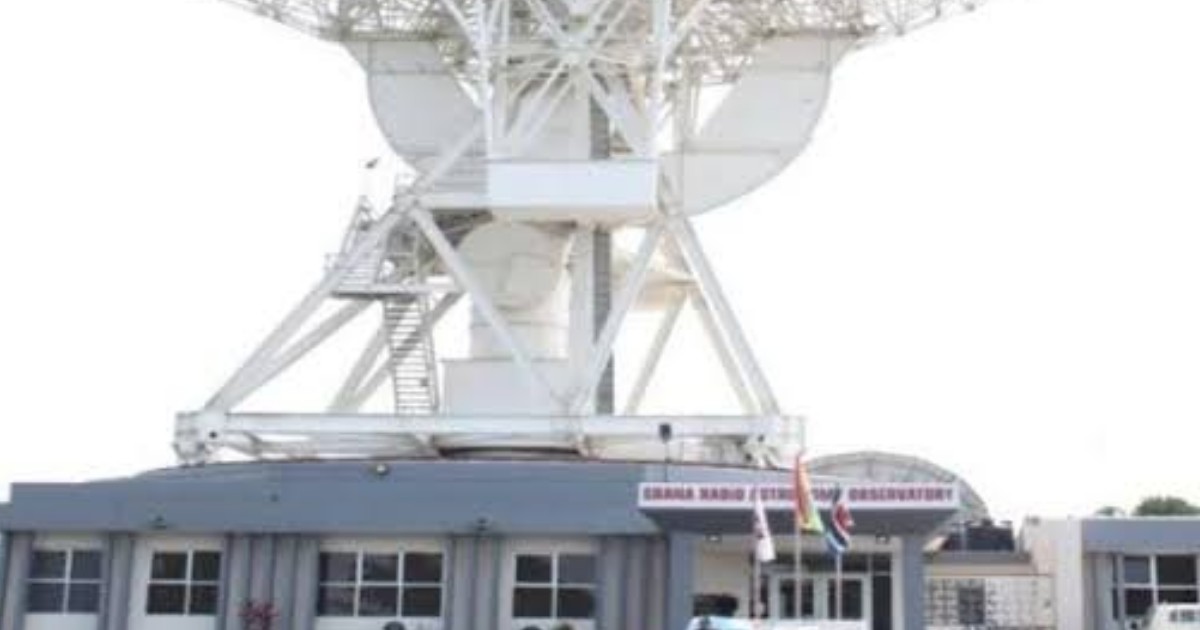
Ghana illustrates both the historical progress and persistent structural gaps confronting the continental sector. The country`s institutional roots date back to 1961, when the administration of President Kwame Nkrumah initiated nuclear research and established a national scientific commission. That framework eventually gave rise to the Ghana Space Science and Technology Institute. In partnership with South Africa, local engineers converted an obsolete 32-meter satellite dish at Kuntunse into an operational radio telescope in 2017, making Ghana the first partner nation to complete the regional astronomical array.
Yet the leap from observational facilities to indigenous manufacturing requires capital that remains elusive.
At the institutional level, director Joseph Tandoh confirmed that ongoing research focuses on processing raw satellite data to assist rural agriculture. A joint program with Belgian research institutions deployed artificial intelligence to categorize crop health and assess cultivation patterns. However, standard low-resolution Earth observation data struggled to accurately interpret soil moisture levels across smallholder plots with mixed vegetation. European research partnerships are funding revised models, while technical teams collaborate with Nigerian agencies on coastal modeling and deploy satellite imaging to track illegal forest clearing.
Commercial ventures attempting to develop hardware face severe capital constraints.
Private startup Galaxy Aerospace Ghana demonstrated technical viability in 2022 by launching a high-altitude balloon into near space to capture high-resolution territorial geography. The firm has since manufactured miniature propulsion prototypes for national institutes and secured 33,000 hectares of land in the Central Region to establish a dedicated aerospace academy. Chief executive Victor Tagborloh noted that despite viable technical blueprints and equatorial launch geographic advantages, the company has operated without institutional venture funding for six years. Without capital, planned ground receiving stations and data processing centers cannot materialize into physical infrastructure.
Regional policy specialists argue that private initiatives alone cannot bridge the manufacturing deficit without sustained state intervention.
Bright Atsu Sogbey, president of the Africa Development Council, stressed that relying permanently on borrowed foreign hardware compromises national sovereignty. He pointed to operational assembly facilities in South Africa, Egypt, and Nigeria as benchmarks that smaller economies must replicate through state-directed funding. While the Cairo-based African Space Agency provides an institutional umbrella for continental coordination, regional engineers emphasize that future industry assemblies must produce African-built components and domestic launch platforms.
Academic leaders continue to petition education ministries to integrate space systems engineering into secondary and university curricula. Creating a self-sustaining aerospace ecosystem across the continent will ultimately require matching domestic research ambitions with state-backed manufacturing capacity.