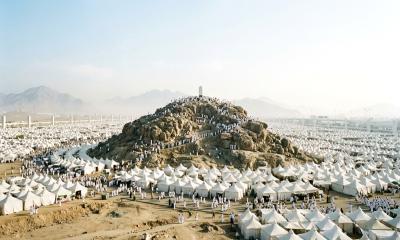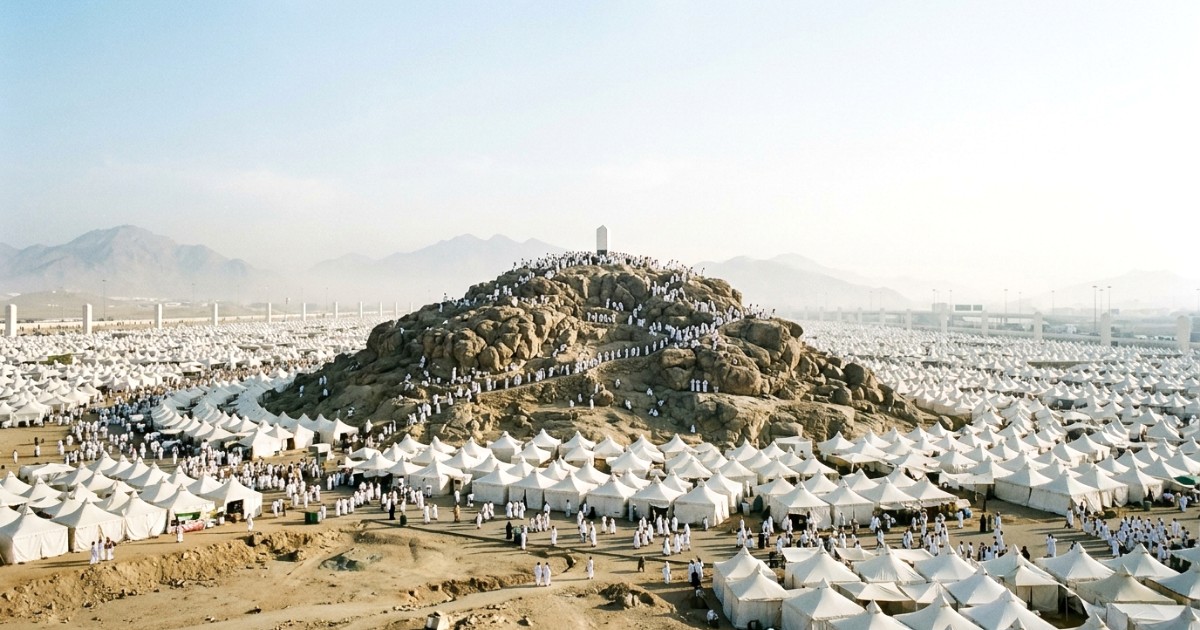
Located approximately 20 to 22 kilometers southeast of the holy city of Makkah along the highway to Taif lies a vast, historic desert plateau known as the plain of Arafat. Three sides of this sacred plain are ringed by rugged mountain ridges, while the famous Jabal al-Rahmah, or the Mountain of Mercy, rises prominently directly from its center. In Arabic lexicography, the term `Arafah` structurally signifies attaining knowledge, recognition, or formally acknowledging one`s transgressions. According to classical Islamic history and widespread consensus, this plain is the exact location where Prophet Adam and Hawwa recognized each other and reunited after a long earthly separation. The naming of this expansive sanctuary permanently preserves the historical memory of that monumental spiritual reunion.
Among the three absolute primary obligations of Hajj, the most critical foundational core is the act of standing at Arafat.
In Islamic jurisprudence, this pivotal ritual is officially designated as `Wuquf al-Arafah,` serving as an unalterable framework without which the entire pilgrimage becomes legally invalid. According to authentic traditions recorded within Musnad Ahmad and Sunan an-Nasa`i, Prophet Muhammad explicitly declared that Arafat constitutes the essence of Hajj itself. The narration transmitted by Abdur Rahman Ibn Yamur confirms that when a delegation questioned the Prophet regarding the core metrics of the pilgrimage, he responded that whoever secures their presence at Arafat before the dawn of Muzdalifah has fully completed their Hajj. Consequently, Islamic legal scholars unanimously maintain that physical presence within this designated perimeter during the ordained hours remains the definitive factor separating a valid pilgrimage from absolute systemic failure.
Mandatory Jurisdictional Boundaries and Crucial Timelines Explained
According to established prophetic protocols, pilgrims should ideally depart from the valley of Mina immediately following the dawn prayers on the 9th of Dhul Hijjah while maintaining an attitude of sincere repentance. However, fulfilling this central pillar requires strict adherence to an unalterable statutory timeline that must be executed with absolute precision by every believer. Islamic jurists outline that the mandatory window for standing at Arafat begins precisely when the sun passes its meridian at midday (Zawal) and extends until total sunset. Departing from the geographic boundaries of the plain even a few moments prior to sunset violates a critical operational obligation, requiring specific penal actions to rectify the legal oversight. The Prophet intentionally remained on the plains until the sun had completely set before migrating toward Muzdalifah, purposely differentiating Islamic monotheistic rituals from the pre-Islamic practices of solar-worshipping polytheists.
A common misconception among modern pilgrims is the belief that climbing the actual steps of Jabal al-Rahmah is a structural necessity for the pilgrimage. In reality, the entire expansive plateau constitutes the legal sanctuary of Arafat, meaning that remaining within one`s assigned residential tents satisfies the primary obligation perfectly. However, pilgrims must maintain extreme geographic awareness regarding the official boundary pillars established by local administrative authorities, as resting outside these structural markers invalidates the entire ritual. Specifically, the adjacent Wadi Urana is situated completely outside the legal jurisdiction of the sanctuary, meaning any pilgrim who spends the afternoon there fails to execute the core pillar of Hajj. While staying near the historic Namirah Mosque remains highly recommended, securing a valid space anywhere within the marked perimeter is fully sufficient for legal completion.
Prescribed Liturgical Rites and Rules for the Onward Journey
The liturgical order of the day dictates that the afternoon prayers of Dhuhur and Asr must be combined and shortened during the midday hour, a legal practice known as `Jama` Taqdim.` Pilgrims should ideally perform a ritual bath before the midday call to prayer and listen to the global sermon delivered from the Namirah Mosque, though this remains an optional spiritual benefit. Following this unified congregational assembly, the critical hours remaining until twilight represent the most spiritually significant window for intense individual supplication and emotional repentance before God. Fasting on this specific day is explicitly deemed reprehensible for active pilgrims, as the Prophet chose to drink milk publicly during his Farewell Pilgrimage to demonstrate the necessity of preserving physical vitality for continuous worship.
While facing the Qiblah with raised hands on the plain, the Prophet frequently repeated a specific monotheistic declaration recorded across multiple primary reference texts. According to Sunan at-Tirmidhi and Musnad Ahmad, the supreme supplication for this monumental afternoon is the declaration that there is no deity worthy of worship except Allah alone, without any partners, to whom belongs all dominion and praise, and who possesses absolute power over all creation. Alongside this specific invocation, continuous recitation of the Talbiyah, intense seekings of forgiveness, and blessings upon the Prophet constitute the primary spiritual actions of the gathering. Following sunset, pilgrims must immediately proceed toward the valley of Muzdalifah without performing the evening Maghrib prayers on the plains of Arafat. Performing Maghrib at Arafat directly violates the prophetic sunnah; instead, the evening and night prayers must be combined sequentially at Muzdalifah under a single call to prayer. This vast gathering ultimately serves as a stark historical preview of the Day of Judgment, where millions stand equal in identical white garments seeking ultimate divine absolution.