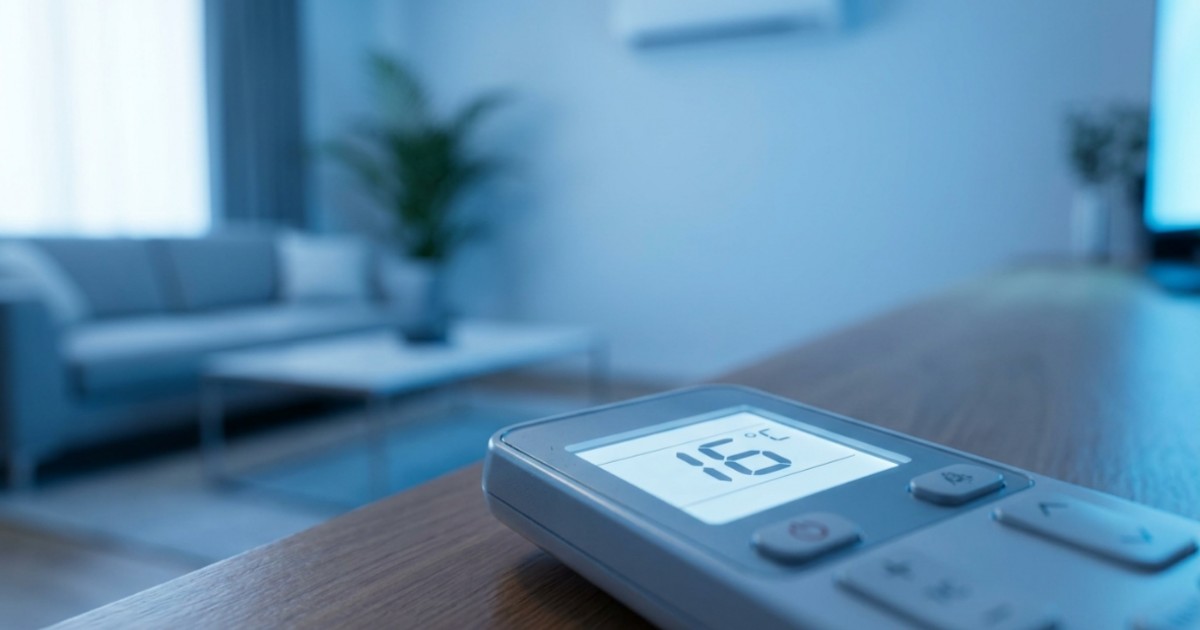
Air conditioners have become an absolute necessity to maintain comfort during intense heat waves. When external temperatures hover between 45 and 50 degrees Celsius, people often try to push their AC remotes to the absolute minimum temperature. However, you might have noticed that almost every air conditioner on the market is capped at a minimum temperature of 16 degrees Celsius.
There are vital scientific and technical reasons why this specific limit exists across the globe.
Every air conditioner contains an internal evaporator that cools the room air through a specialized coolant or refrigerant. If AC units allowed users to set temperatures below 16 degrees, the internal evaporator would likely freeze over due to extreme cold. Instead of cooling the room effectively, the internal components would become excessively cold, which could permanently damage or ruin the air conditioner. This safety limit is primarily built into the technology to preserve machine functionality and ensure long-term equipment protection.
The maximum temperature setting is similarly capped at 30 degrees Celsius.
Most humans remain perfectly comfortable when the ambient environment stays around 30 degrees. If you try to set the temperature higher than 30 degrees, the AC unit will stop emitting cold air and may begin blowing hot air instead. Since the primary function of an air conditioner is to cool the air rather than heat it, the maximum limit is permanently locked at 30 degrees. This built-in technical safeguard ensures the machine remains protected from unnecessary operational malfunctions.