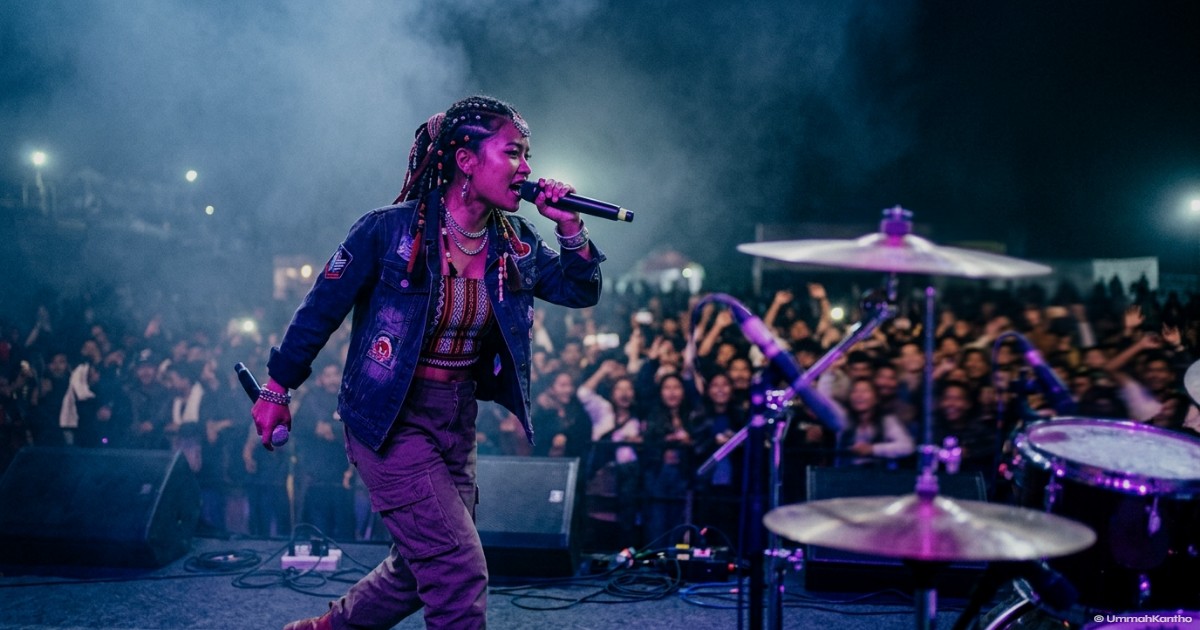
Hailing from the rain-soaked hills of Meghalaya, a 24-year-old artist has emerged as one of the most compelling new figures in music. Daiaphi Lamare, known professionally as Reble, is redefining regional expression within the country`s music ecosystem. By rapping in English as well as her native Khasi and Jaintia tribal languages, she is carving out a distinctive position in the mainstream market.
Her rapid rise reflects a significant cultural shift as musicians from Northeast India increasingly find national audiences.
Shillong, her hometown, is historically celebrated for rock bands, church choirs, and traditional guitar legends rather than hip-hop. This unique Indian hip-hop Reble breakthrough arrived with her participation in the soundtrack for the Bollywood action film Dhurandhar. Her crisp verses on high-energy tracks like Run Down the City: Monica, Naal Nachna, and Move - Yeh Ishq Ishq quickly turned her into a notable name. This week, the release of her dark, hypnotic single Praying Mantis has further solidified her status among listeners.
Geographically wedged between Bangladesh, China, and Myanmar, the Northeast region has often experienced cultural and political distance from the mainland. Many artists from these communities speak of being treated as outsiders within their own country. Reble openly challenges this dynamic by refusing to alter, translate, or dilute her native worldview for commercial consumption. She resists reshaping her art into something more familiar to external corporate executives or casual listeners.
Before adopting her rebellious stage persona, Lamare moved through various boarding schools dealing with a constant sense of isolation. She recalls spending her early childhood sitting alone in corners, regarded by classmates as an unusual misfit. This persistent loneliness eventually hardened into a resistance toward strict routines and institutional authority. Although she later earned an engineering degree in Bengaluru due to her interest in science, she rejected entering a standard corporate desk job.
That refusal to comply eventually became the defining catalyst for her musical career. She views her chosen stage name as an authentic manifestation of an ongoing personal rebellion. Rap provided a structured medium to organize and articulate complex emotions that she previously struggled to express. Driven by a fierce independence, she remains committed to protecting her creative autonomy from outside interference.