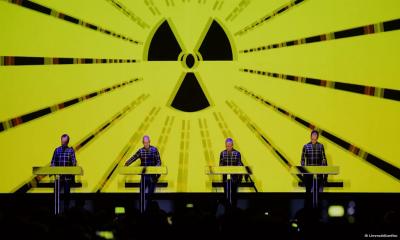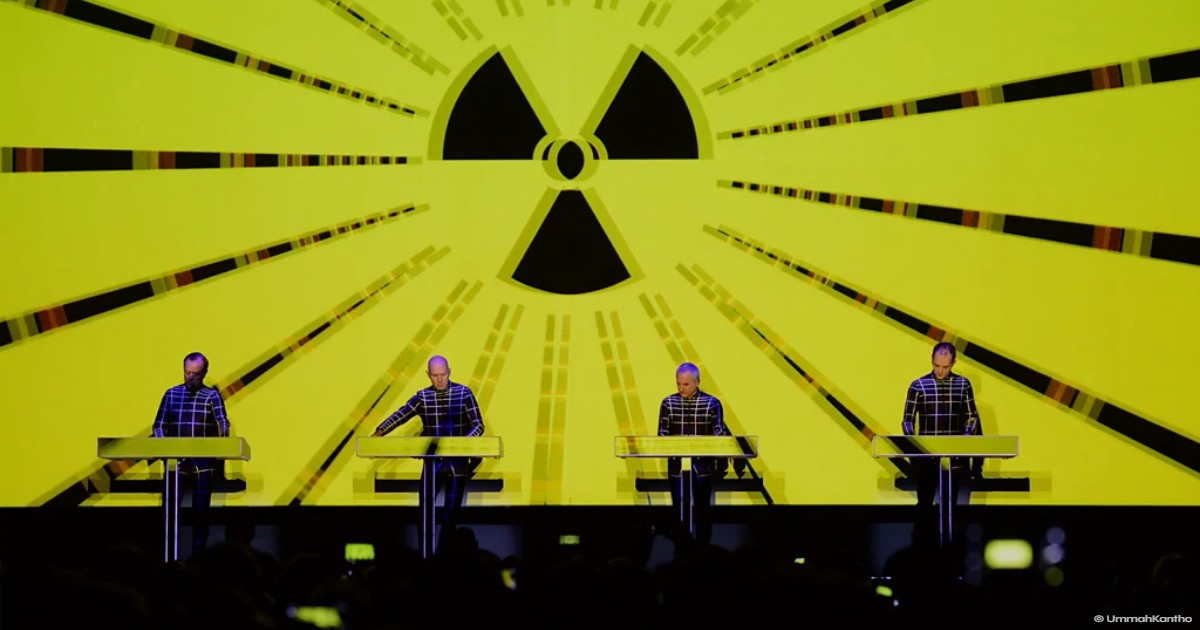
Fifty years ago this month, a track emerged from a windowless studio in Düsseldorf that would redefine the boundaries of popular music. Kraftwerk`s single "Radioactivity," the cornerstone of their 1975 album Radio-Activity, was a radical departure from the folk and jazz-influenced sounds that had preceded it. From its opening seconds—the rhythmic clicking of a Geiger counter followed by shrill Morse code and pulsating synthesizers—the track signaled the dawn of a new information age. What began as a scientific meditation on the unseen forces of the universe eventually morphed into the most potent political protest song in the history of electronic music.
The album was conceived during a period of intense creative activity for the German pioneers. Ralf Hütter and Florian Schneider, along with Karl Bartos and Wolfgang Flür, were perfecting their "classic" quartet lineup at the legendary Kling Klang studio. The title itself was a bilingual pun: "Radio-Activity" referred both to the transmission of radio waves—the soundtrack of the modern world—and the physical phenomenon of radioactivity. In the context of the mid-1970s, a period marked by Cold War anxieties and the rapid expansion of nuclear energy, the track carried a dual sense of wonder and existential dread. Hütter later described the album as a "speech symphony," blending horror and beauty through purely electronic means.
Technologically, "Radioactivity" was a masterclass in sonic innovation. The band discarded traditional instruments like the flute and violin in favor of the Minimoog and the eerie choral sounds of the Vako Orchestron. This transition was more than just a change in equipment; it was a philosophical shift. By embracing the "Man-Machine" aesthetic, Kraftwerk provided a blueprint for future genres like techno, synth-pop, and even early hip-hop. The track’s insistent hooks and "Sprechgesang" (spoken singing) created a detached, almost robotic atmosphere that perfectly captured the clinical nature of the nuclear age.
However, the most significant transformation of "Radioactivity" occurred in its message. The original 1975 lyrics—"Radioactivity / Is in the air for you and me"—were somewhat ambiguous, acting more as a scientific observation than a condemnation. This changed dramatically following the global shock of the Chernobyl disaster in 1986. By the time Kraftwerk re-recorded the track for their 1991 remix album The Mix, the tone had shifted from elegiac to accusatory. They added a direct command—"Stop Radioactivity"—and incorporated the names of nuclear disaster sites like Chernobyl, Harrisburg, Sellafield, and Hiroshima. Later performances even included Fukushima, ensuring the song remained a contemporary clarion call against nuclear proliferation.
Fifty years on, the reissue of the Radio-Activity album reminds us of the track’s enduring relevance. In an era where debates over energy security and environmental preservation dominate the global agenda, Kraftwerk’s sonic warning continues to crackle with urgency. The track proved that electronic music, often dismissed as cold or soulless, could carry a profound human and political weight. By turning a scientific concept into a haunting anthem, Kraftwerk did more than just write a song; they created a permanent reminder of the delicate balance between human progress and planetary safety. Today, the pulse of "Radioactivity" remains a vital part of the global cultural landscape, proving that true art is capable of constant mutation.