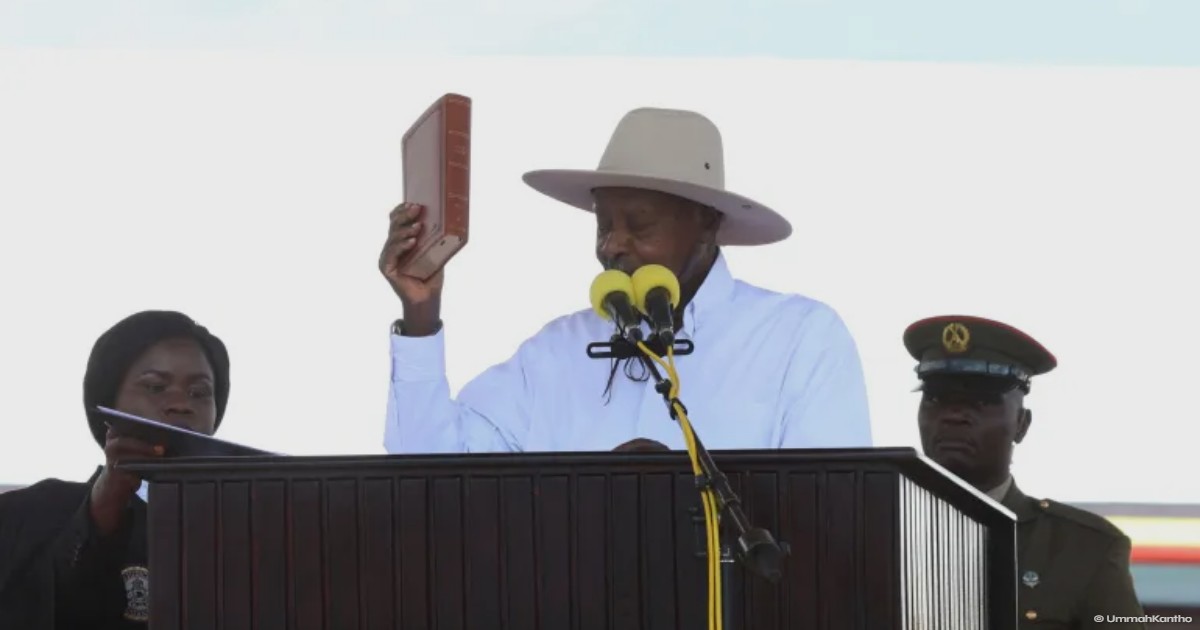
President Yoweri Museveni of Uganda was sworn in for a seventh term on Tuesday, solidifying his position as one of Africa’s longest-serving heads of state. The 81-year-old leader, who has held power since 1986, took the oath of office at the Kololo Independence Grounds in the capital city of Kampala. The ceremony followed a landslide victory in the controversial January general elections, which extended his tenure to a staggering four decades. According to reports from Reuters and Al Jazeera, thousands of supporters attended the event, where Museveni arrived in an armored military vehicle to a cheering crowd.
The road to this seventh term was marked by significant domestic and international friction. The January elections were conducted under a nationwide internet blackout and amid widespread reports of state-sponsored intimidation and the abduction of opposition figures. Official data from Uganda’s Electoral Commission stated that Museveni secured 71.65 percent of the vote, while his primary challenger, Robert Kyagulanyi—better known as the entertainer Bobi Wine—received 24.72 percent. Wine has consistently described the election results as a product of massive ballot stuffing and fraudulent practices.
International observers and human rights groups have raised serious alarms regarding the post-election environment in Uganda. Human Rights Watch accused the government of intensifying its attacks on the National Unity Platform, the country’s main opposition party. The organization reported mass arrests of supporters and the unexplained disappearance of two senior opposition leaders following the vote. During the campaign, security forces frequently disrupted Bobi Wine’s rallies, leading to several arrests and at least one confirmed death of a supporter. Wine himself reported being placed under de facto house arrest immediately following the election day.
Museveni’s long grip on power has been facilitated by strategic constitutional amendments. Since taking office as a former rebel leader in 1986, he has twice pushed through changes to the national constitution to remove both presidential term limits and age restrictions. These moves have drawn criticism from those who point to Museveni’s own earlier rhetoric, where he once famously claimed that the root of Africa`s problems lay in leaders who overstayed their welcome. Despite these contradictions, many Ugandans still credit him with maintaining national stability and overseeing consistent economic growth after the chaotic years following independence from Britain in 1962.
As Museveni begins this new term, the question of his eventual successor remains a central topic of discussion in Ugandan politics. While he has not officially named a replacement, his son, General Muhoozi Kainerugaba—the current Chief of Defence Forces—is widely seen as the most likely candidate to take the mantle. The extension of Museveni’s rule suggests a continuation of his current policies and a firm military grip on the nation’s governance. For now, the 81-year-old president shows no signs of relinquishing his control over the East African nation as he embarks on another five years in office.